TRENDING

Friday, 23 October 2026
----------------------
12 Jumada Al-Awwal 1448 AH
The World Health Organization warns that the 2026 Ebola surge now spans three African nations, complicating response efforts. Ordinary citizens, from market vendors to diplomatic families, bear the brunt of a crisis that tests regional power structures.
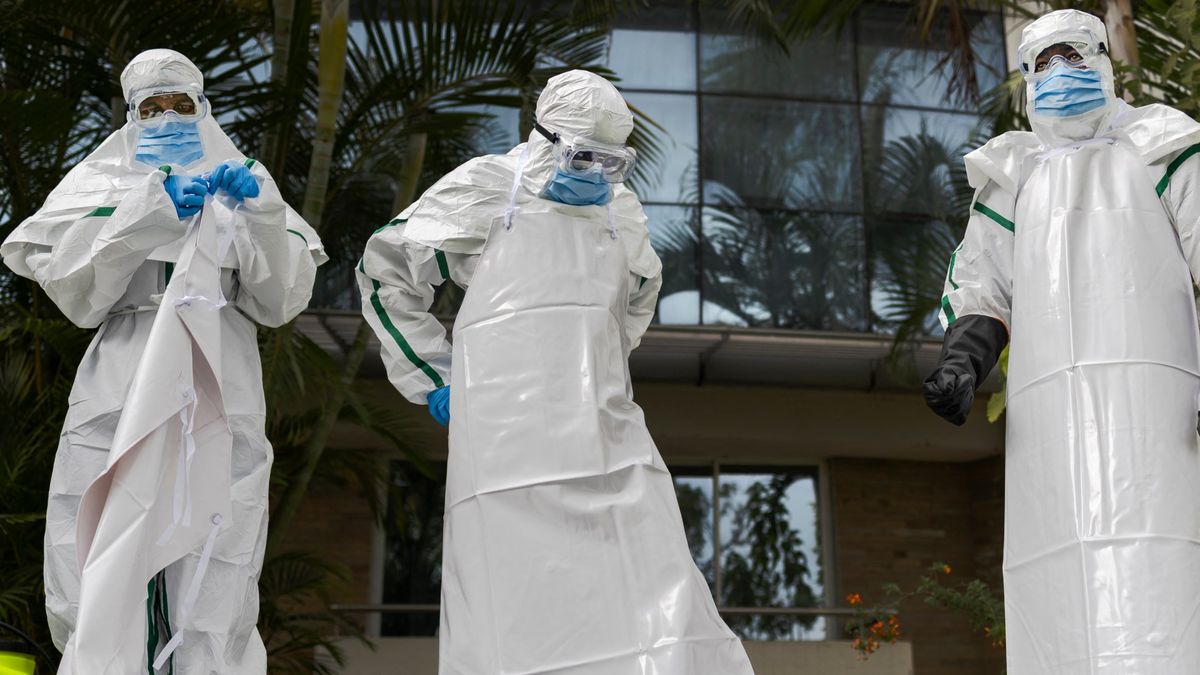
The World Health Organization announced on 22 October 2026 that the Ebola outbreak first identified in the Democratic Republic of Congo (DRC) has become “more complex,” with confirmed cases now in Kenya, Nigeria, and the DRC itself. The strain involved is the Bundibugyo variant, which has already claimed over 4,000 lives in the DRC since May. Nigeria’s first patient is the Ugandan‑born wife of a Swiss diplomat, while Kenya’s initial case emerged earlier in the month. Both countries have launched contact‑tracing operations, but the exact transmission pathways remain unclear, prompting a multi‑nation investigation.
The outbreak tests the Africa Centres for Disease Control and Prevention (Africa CDC) and its ability to coordinate cross‑border surveillance. The agency’s mandate—to harmonise health responses across 55 states—relies on the political will of national ministries, many of which are juggling elections, budget shortfalls, and security challenges. Funding for emergency stockpiles, supplied largely by Western donors, is tied to performance metrics that favour rapid containment over long‑term health system strengthening.
The involvement of a Swiss diplomat’s family adds a layer of diplomatic immunity that can slow information sharing. Switzerland, while not a major aid donor in the region, wields influence through its diplomatic network. Its statements downplay the likelihood of infection occurring in Uganda, a stance that shields its personnel but complicates the epidemiological picture. This diplomatic cushioning creates a subtle incentive for other foreign missions to seek similar protections, potentially fragmenting the transparency needed for swift outbreak mapping.
Kenya and Nigeria sit on key trade routes linking East and West Africa. Border closures or heightened screening can disrupt the flow of goods worth billions of dollars annually. Governments therefore balance public health imperatives against the risk of economic shock. The decision to keep airports operational while imposing selective testing reflects a compromise that preserves revenue streams but may allow asymptomatic carriers to slip through.
Both Kenya and Nigeria have sizable security apparatuses engaged in counter‑terrorism operations. Military logistics—such as rapid deployment of medical teams and the use of air‑lift capabilities—are repurposed for health emergencies. However, the same chains of command that prioritize combat readiness can deprioritise civilian health missions, especially when funding is diverted to security budgets.
In the DRC’s remote provinces, community health volunteers risk infection daily, often without adequate personal protective equipment. Their families face stigma, loss of income, and the psychological toll of watching neighbours die. In Kenya’s urban slums, informal traders experience sudden market closures, cutting off daily earnings for thousands of households.
Outbreak zones in eastern DRC have forced villages to evacuate, leading to overcrowded camps where sanitation is poor. Children miss school for months, jeopardising literacy gains made over the past decade. In Nigeria, the patient’s hospitalization sparked fear among schoolchildren, prompting temporary closures of several primary schools in Abuja.
Both Kenya and Nigeria rely heavily on informal sectors—street vending, transport, and small‑scale agriculture. Quarantine measures and travel restrictions reduce daily cash flow, pushing many into food insecurity. Women, who dominate market stalls, report a 30‑percent drop in sales since the outbreak was declared.
While official statements highlight “solidarity,” donor nations are quietly reassessing aid allocations. The United States and European Union have signaled a shift toward “targeted funding” for vaccine stockpiles, potentially sidelining broader health infrastructure projects. This re‑prioritisation is not widely reported, yet it reshapes the long‑term capacity of African health systems.
Western media outlets often focus on the Swiss diplomat’s family as a human‑interest angle, glossing over the broader pattern of diplomatic immunity that can hinder outbreak transparency. Local African journalists, constrained by limited resources, receive less amplification, leaving a gap in public understanding of how diplomatic privileges intersect with disease spread.
The surge in demand for personal protective equipment and antiviral drugs has exposed a fragile supply chain dominated by Asian manufacturers. Prices have spiked, and smaller African clinics struggle to procure essentials. This price inflation is rarely mentioned in official briefings, even as it directly limits the capacity of frontline responders.
The next weeks will reveal whether contact‑tracing data can pinpoint the transmission node linking the Kenyan and Nigerian cases. Watch for any joint statements from the Africa CDC and the World Health Organization that propose a unified vaccination strategy, especially as the experimental rVSV‑ZEBOV vaccine rolls out in the DRC. Additionally, monitor diplomatic cables for any shift in how foreign missions handle health disclosures, as any relaxation could set a precedent for future outbreaks. Finally, keep an eye on trade data from the East African Community and the Economic Community of West African States; sudden changes in cargo volumes may signal the indirect economic ripple of containment measures.
The Bundibugyo strain likely traveled via air routes linking the DRC, Uganda, and major hubs in Nairobi and Abuja. Investigations focus on passenger logs and hospital visits to map the exact transmission chain.
Diplomatic immunity can limit the sharing of travel and health data for foreign personnel, slowing contact tracing. This creates gaps in the epidemiological picture and may hinder rapid containment.
An experimental rVSV‑ZEBOV vaccine is being deployed in the DRC and may be extended to neighboring countries. Access depends on international funding and coordinated distribution through the Africa CDC.
Source referenced: ALJAZEERA
This brief was synthesized by our Editorial Engine and reviewed by The Ground Narrative team.