TRENDING

Friday, 23 October 2026
----------------------
12 Jumada Al-Awwal 1448 AH
Russia's 'hybrid war' against Europe has intensified, moving beyond cyberattacks to overt kinetic sabotage and drone strikes. This shift tests Europe's collective will and exposes a fundamental debate over how to respond to a creeping conflict.
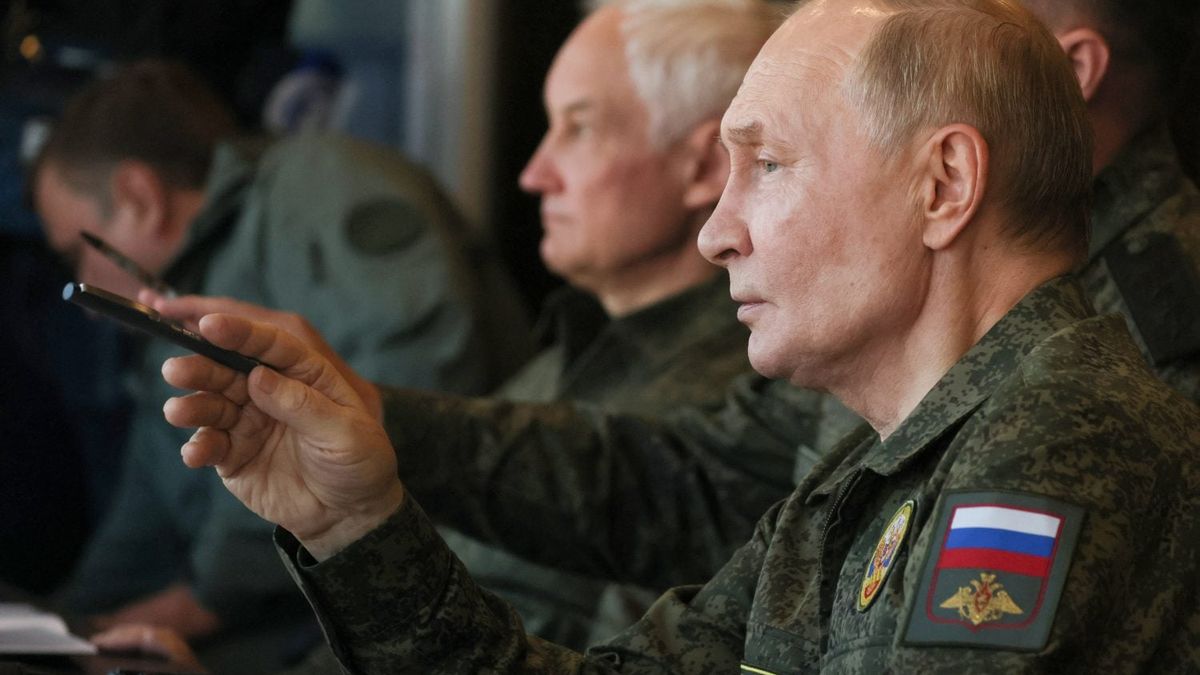
Over recent months, Europe has witnessed a significant and unsettling escalation in what has been termed Russia's 'hybrid war' campaign. The nature of these attacks has shifted dramatically, moving from primarily cyber operations and disinformation tactics to more overt kinetic actions. This new phase includes the deployment of drones, explosives, and direct sabotage targeting critical infrastructure across the continent. Crucially, Moscow has become notably less concerned with maintaining plausible deniability, openly signaling its involvement in incidents that previously would have been cloaked in ambiguity. This brazen approach marks a new chapter, where the Kremlin appears to be actively testing the boundaries of Europe's collective response.
Concrete examples of this escalation abound. In August, Germany reported a failed Russian drone strike, laden with explosives, targeting a Ukraine-bound cargo plane at Leipzig/Halle Airport. Days later, a Russian frigate reportedly fired flares at a Danish military helicopter in the Baltic Sea, while another drone, likely carrying explosives, was intercepted and shot down over Lithuania. Perhaps most provocatively, a Russian drone struck a train at Yahodyn, a village just inside the Ukrainian border with Poland, mere minutes after a separate train carrying former European leaders, including former British Prime Minister Boris Johnson, had departed the area. These incidents collectively illustrate a clear pattern of increasingly aggressive and less deniable actions, forcing European leaders to grapple with the reality of a conflict that is no longer confined to the digital realm or distant battlefields.
The shift in Russia's hybrid tactics is rooted in a calculated assessment of Europe's previous responses and a strategic objective to erode Western cohesion. Moscow likely interpreted Europe's reactions to earlier cyber and disinformation campaigns as feeble, signaling an opportunity to escalate without triggering a prohibitive counter-response. The Kremlin's primary aim is not merely physical destruction, but the systematic weakening of Western institutions, political will, and the credibility of alliances like NATO. By moving towards kinetic attacks with reduced deniability, Russia sends a clear message: it is willing to impose tangible costs, and it believes Europe lacks the resolve to respond effectively.
At the core of this strategy is the concept of a 'political threshold.' Russia meticulously calibrates each attack so that its individual impact remains below the level that would compel a serious, unified European or NATO retaliation. This allows Moscow to gradually raise the threshold of what is considered acceptable, normalizing low-level aggression. For liberal democracies, mobilizing the political capital necessary to confront a threat that resembles a 'slowly rising tide' rather than an immediate 'raging fire' is inherently difficult. This dynamic allows Russia to exploit internal divisions, legal complexities, and the natural hesitancy of governments accountable to their electorates.
Europe's internal debate over whether to label these actions as 'hybrid war,' 'acts of war,' or 'state-sponsored terrorism' is a symptom of this strategic paralysis. While terminology matters for legal and political frameworks, the focus on *naming* rather than *doing* plays directly into Russia's hands. The ultimate test of this power dynamic could be a limited incursion into a Baltic state, designed to test NATO's Article 5 collective defense clause and expose any cracks in allied deterrence. While Europe possesses significant economic and financial levers—such as energy sanctions, the seizure of frozen Russian assets, and increased military aid to Ukraine—political will, legal hurdles, and the fear of domestic economic repercussions often prevent their full and timely deployment. This hesitation, ironically, transforms Europe's potential strengths into vulnerabilities that Moscow actively exploits.
The escalation of Russia's hybrid war, particularly its kinetic dimension, directly impacts the lives of ordinary citizens across Europe, often in ways that are subtle yet profoundly unsettling. This is not a distant conflict; it is a creeping threat that infiltrates daily existence, eroding the sense of security and stability that many have long taken for granted.
The most immediate human cost is the pervasive sense of insecurity. When critical infrastructure—from airports and railway lines to energy grids—becomes a target, the public's trust in the reliability of essential services and the safety of their environment is undermined. Citizens in Germany, Lithuania, Denmark, and other nations now face the unsettling reality that their daily commutes, energy supply, or even air travel could be disrupted or endangered by state-sponsored sabotage. This creates a constant, low-level anxiety that permeates society, affecting mental well-being and overall quality of life.
Attacks on infrastructure, even if unsuccessful in their primary aim, necessitate increased security measures, repairs, and contingency planning. These costs are ultimately borne by taxpayers and consumers. Supply chain disruptions, potential energy price hikes due to perceived vulnerabilities, and the diversion of public funds from social programs to defense and security all translate into a tangible economic burden for ordinary households and businesses. A single act of sabotage, while not causing widespread devastation, can ripple through local economies, impacting jobs, prices, and livelihoods.
The constant threat, even if not always visible, fosters a climate of fear and uncertainty. This psychological strain can lead to increased stress, distrust in public institutions, and a general sense of vulnerability. Furthermore, the debate among political leaders about how to categorize and respond to these attacks can exacerbate existing societal divisions. If governments appear indecisive or unable to protect their citizens effectively, it can fuel political polarization, undermine democratic processes, and ultimately play into Russia's overarching goal of fragmenting Western societies. The public, caught between the reality of attacks and the political rhetoric, may struggle to understand the true nature of the threat, making it harder for leaders to forge a unified and robust response.
Perhaps the most profound human cost, though indirect, is the impact on Ukraine. Russia's hybrid campaign aims to wear down European support for Kyiv. Any weakening of European resolve, any hesitation in providing military or financial aid, directly prolongs the conflict in Ukraine, leading to more deaths, displacement, and suffering for the Ukrainian people. The 'human cost' of Russia's actions in Europe is thus inextricably linked to the ongoing tragedy unfolding on Europe's eastern flank.
What often goes unsaid by powerful actors in Europe is that the very debate over terminology—whether to call Russia's kinetic actions 'hybrid war' or 'acts of war'—serves as a convenient political shield. By framing these incidents as 'hybrid,' some governments and officials inadvertently downplay the severity of the threat, avoiding the difficult and potentially escalatory decisions that a declaration of 'acts of war' would demand. This semantic sidestep allows them to postpone confronting their publics with the full reality of an undeclared, yet very real, conflict on European soil.
Many Western governments may be implicitly downplaying the cumulative effect of these seemingly isolated attacks. They might hope that by treating each incident as a separate criminal act or a low-level provocation, they can contain the situation without triggering a broader confrontation. However, this approach ignores Russia's strategic intent: to systematically chip away at European resilience and unity. The powerful are omitting that this 'slowly rising tide' is designed to overwhelm through attrition, not through a single, decisive blow. The focus on individual attribution, while necessary, often overshadows the larger pattern of strategic erosion that Moscow is pursuing.
There's an unspoken assumption among some powerful circles that the public cannot handle the truth about the escalating nature of the threat, or that a clear articulation of the danger would lead to panic rather than resolve. This underestimation of public intelligence prevents leaders from clearly communicating the stakes, hindering the development of a unified societal response. By not fully explaining the 'why' behind Russia's actions and the long-term consequences of inaction, governments inadvertently foster a climate where disinformation can thrive, and public support for robust countermeasures remains fragmented.
While European nations rightly condemn Russia's blatant disregard for Ukrainian sovereignty, the increasingly overt kinetic attacks within Europe's own borders represent a direct assault on their sovereign territory and infrastructure. The reluctance to unequivocally label these as 'acts of war' can be seen as a subtle downplaying of the violation of their own sovereignty, perhaps out of a desire to avoid direct military confrontation. This creates a dangerous precedent where a major power can conduct hostile actions on another's soil without facing the full, proportional consequences typically associated with such aggression, effectively normalizing a new form of interstate conflict.
The coming months will be critical in determining Europe's capacity to adapt to this new phase of Russia's hybrid war. Observers should closely monitor several key indicators.
First, watch for any shifts in European unity regarding a common deterrence doctrine for hybrid threats. The current debate over terminology must evolve into concrete, coordinated actions. Will European Union and NATO members agree on a unified definition of what constitutes an 'act of war' in the hybrid domain, and more importantly, what constitutes a proportionate response? A failure to move beyond rhetoric will only embolden Moscow.
Second, pay close attention to the deployment of Europe's economic levers. Will there be a collective decision to implement more stringent energy sanctions, despite the potential domestic economic costs? Will the legal and political dilemmas surrounding the seizure of frozen Russian assets be overcome to create a tangible financial deterrent? The willingness to impose predictable and significant costs on Russia for each act of aggression will be a crucial test of European resolve.
Third, observe the resilience of European publics. As low-level sabotage continues, will public opinion fracture, or will it galvanize support for stronger, more unified action? The ability of governments to clearly communicate the nature of the threat and rally their citizens will be paramount. Any signs of widespread public fatigue or political fragmentation will be a victory for Moscow's strategy.
Finally, the role of the United States will remain pivotal. Will Washington exert greater pressure on its European allies to strengthen their collective response, particularly if the threat to NATO's eastern flank intensifies? A line that Europe fails to draw below the Article 5 threshold could eventually become a line that the alliance, and the United States with it, may have to defend above that threshold. The next few months will reveal whether Europe can turn Russia's escalation into a miscalculation, or if it will simply become another step towards Western fragmentation.
Russia's hybrid war in Europe involves a combination of tactics, now escalating from cyberattacks and disinformation to overt kinetic actions like drone strikes and sabotage of critical infrastructure. This aims to destabilize European nations and weaken their support for Ukraine.
Russia is escalating to kinetic attacks because it perceives previous European responses to cyber warfare as weak. Moscow seeks to wear down European political will, erode support for Ukraine, and test the collective defense capabilities and cohesion of Western institutions like NATO.
The human costs include an erosion of public trust and security due to attacks on infrastructure, economic disruptions from increased security costs and potential supply chain issues, and psychological strain from constant low-level threats. It also indirectly prolongs suffering in Ukraine by weakening European support.
Source referenced: FOREIGNPOLICY
This brief was synthesized by our Editorial Engine and reviewed by The Ground Narrative team.