TRENDING

Friday, 23 October 2026
----------------------
12 Jumada Al-Awwal 1448 AH
A tragic infrastructure collapse ignited a student movement challenging Serbia's entrenched political power ahead of snap elections. This analysis uncovers the mechanics of power and the deep human cost.
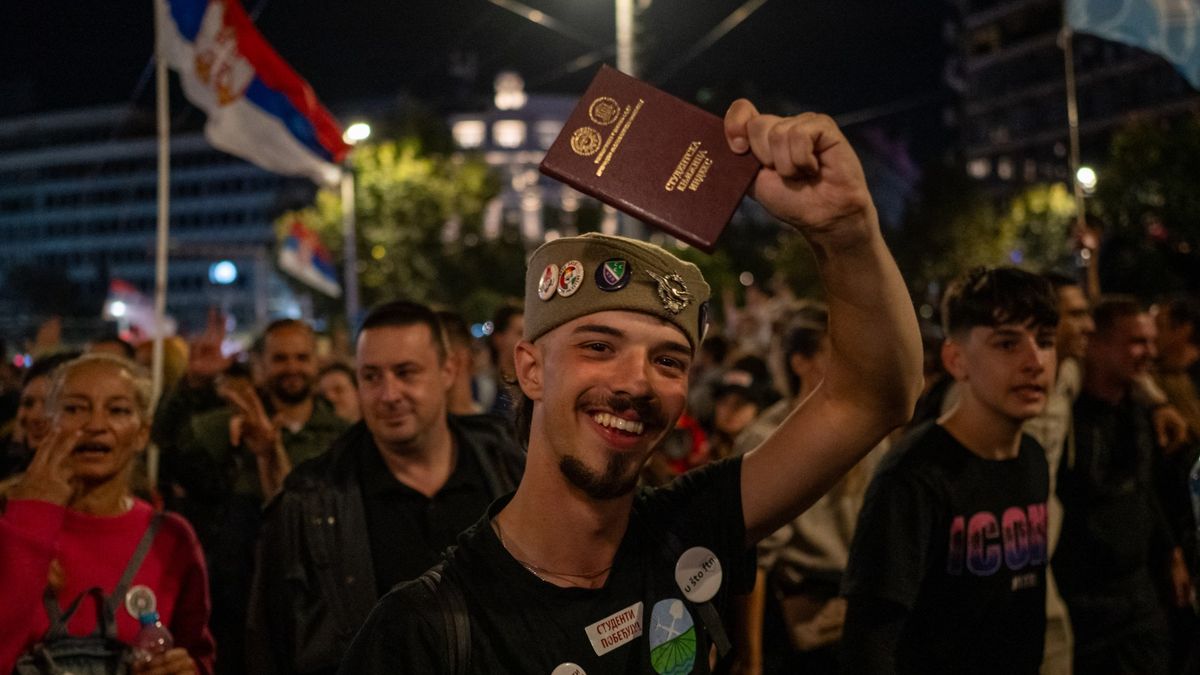
On the eve of Serbia's October 25, 2026, snap elections, a student-led movement, "Student List–Students Win," emerged as a significant challenger to the long-standing rule of President Aleksandar Vucic and his Serbian Progressive Party (SNS). This movement, which began with street protests, gained momentum following the tragic collapse of a concrete canopy at the Novi Sad railway station in November 2024, an event that killed sixteen people and ignited widespread public outrage over alleged corruption and safety failures. The students, joined by citizens, teachers, and experts, are now seeking a fundamental overhaul of what they describe as a deeply corrupt system.
The Serbian Progressive Party (SNS), under Aleksandar Vucic, has systematically consolidated power over more than a decade, transforming the presidency from a largely ceremonial role into the central pillar of the state. This consolidation has been built on a carefully constructed network of influence, economic patronage, and control over state institutions and media. Vucic's strategy has involved presenting himself as the indispensable guarantor of stability and national interest, particularly concerning the contentious issue of Kosovo and the country's delicate balance between Western integration and ties with Russia and China. The snap elections themselves are a classic power play, often called by incumbent parties to capitalize on perceived weakness in the opposition or to preempt larger, more organized challenges. By calling an election, Vucic aims to re-legitimize his rule and potentially fragment any nascent opposition, including the student movement, before it can fully coalesce.
The student movement, in contrast, operates on a decentralized, leaderless model, which is both its strength and potential vulnerability. This structure makes it difficult for authorities to co-opt or dismantle through traditional means of targeting leaders. Their emphasis on peaceful protest, democratic decision-making through plenums, and a focus on specific, tangible grievances like corruption and institutional decay directly challenges the top-down, personality-driven politics of the SNS. The movement's demands for a special prosecutorial police unit and a law on the origin of assets directly target the perceived impunity of the ruling elite and their alleged ties to organized crime, as highlighted by Transparency International's worsening corruption index for Serbia.
However, the power mechanics also reveal the deep entrenchment of the existing system. The SNS controls significant state resources, including state-affiliated media, which it uses to malign opponents, labeling the students as "terrorists" or dismissing their program. This media control shapes public perception and can delegitimize dissent. Furthermore, accusations of voter bribery and violence against opponents underscore the willingness of the ruling party to deploy coercive power to maintain its grip. The challenge for the student movement is not just to win votes, but to dismantle a system that has systematically eroded democratic checks and balances and concentrated power in the hands of a few. The skepticism expressed by figures like Natasa Kandic, a prominent Serbian peace activist, about the movement's transformative potential highlights the deeply ingrained cultural and political narratives—such as the celebration of convicted war criminals and the unwavering stance on Kosovo—that the current power structure skillfully exploits to maintain nationalistic cohesion and deflect criticism.
The human cost of entrenched corruption and unchecked power in Serbia extends far beyond the tragic loss of life at Novi Sad. It manifests in a pervasive sense of injustice, economic stagnation for ordinary citizens, and a steady erosion of public trust in institutions designed to protect them.
The Novi Sad railway station collapse is a stark symbol of this cost. Sixteen lives were lost due to what many allege was shoddy construction and inadequate oversight, directly linked to corruption. This extends to other critical public services:
- Healthcare: The "Student Plan" specifically mentions the renovation of rural medical clinics, indicating a decline in healthcare access and quality outside urban centers. This means ordinary Serbians in smaller towns and villages often lack basic medical care, forcing them to travel long distances or go without.
- Infrastructure: Beyond the railway station, the quality of roads, bridges, and other public works is compromised when contracts are awarded based on cronyism rather than merit, leading to dangerous conditions and inefficient systems that impact daily life and economic activity.
- Education: The student movement highlights an "education system vanishing before our eyes." This implies underfunding, declining standards, and a lack of opportunities for young Serbians, forcing many to seek education and employment abroad, contributing to a brain drain.
Dubious privatizations and money laundering, as cited by the students, directly translate into wealth concentration for a select few connected to the ruling elite, while the majority of the population struggles with limited economic prospects.
- Small Businesses and Entrepreneurs: A corrupt system stifles fair competition. Small and medium-sized enterprises (SMEs) often cannot compete against politically connected businesses, leading to a lack of innovation and job creation.
- Rural Communities: The mention of "dying villages" points to economic neglect and a lack of investment in agricultural and rural development, leading to depopulation and a widening urban-rural divide.
- Youth Exodus: For a generation coming of age in this environment, the lack of perceived opportunity, coupled with a desire for a more just society, drives many young, educated Serbians to emigrate, further depleting the country's human capital.
Living under a system perceived as being run by "mafia and criminals" takes a significant psychological toll.
- Fear and Apathy: Citizens may become fearful of speaking out against injustice, leading to self-censorship and political apathy. This erodes civic engagement and the foundational principles of a democratic society.
- Judicial System Failure: When the judiciary is seen as compromised, ordinary citizens have no recourse for justice, whether in civil disputes or criminal matters. This undermines the rule of law and fosters a sense of helplessness.
- Police Corruption: The replacement of police with "thugs" means citizens cannot rely on law enforcement for protection, but rather fear it, creating an environment of insecurity and distrust.
The human cost is thus a multifaceted burden, impacting physical safety, economic well-being, and the very fabric of social cohesion, leaving ordinary Serbians to bear the brunt of decisions made by powerful actors.
While the official narrative from Aleksandar Vucic and the Serbian Progressive Party (SNS) often focuses on stability, national sovereignty, and economic progress, what is consistently downplayed or omitted is the systemic nature of the issues the student movement is highlighting. The powerful actors are not merely denying isolated incidents of corruption; they are actively obscuring the deep structural rot that underpins their long-term grip on power.
The most significant untold story is how corruption has become not an anomaly, but an integral part of the governance model in Serbia. When students speak of the state belonging to "mafia and criminals," they are not using hyperbole; they are describing a system where public funds are allegedly siphoned off through dubious privatizations, public tenders are rigged, and political loyalty is rewarded with economic favors. The tragic Novi Sad collapse, for instance, is framed by authorities as an unfortunate accident or a technical failure, rather than a predictable outcome of a system where quality control and safety standards are routinely bypassed for profit and political expediency. The SNS narrative attempts to isolate such incidents, preventing a broader public understanding of how these events are symptoms of a deeply compromised state apparatus.
Another crucial omission is the extent to which national identity, particularly the unresolved status of Kosovo and historical narratives, is instrumentalized to deflect criticism and consolidate power. As Natasa Kandic points out, the celebration of convicted war criminals and the branding of neighboring politicians as enemies are not tangential issues; they are deliberate strategies. By constantly invoking external threats or historical grievances, the ruling elite can rally nationalist sentiment, portray themselves as the sole defenders of Serbian interests, and effectively silence dissent by labeling critics as unpatriotic or foreign-influenced "terrorists." This tactic shifts public attention away from domestic issues like corruption and institutional decay, making it harder for movements like "Student List–Students Win" to gain broad traction on their core anti-corruption platform without being accused of undermining national unity.
The snap elections themselves, while presented as a democratic exercise, often mask a deeper manipulation of the political landscape. The SNS controls the media narrative, limiting alternative viewpoints and effectively denying citizens access to unbiased information. Accusations of voter bribery and violence against opponents, if true, indicate a systematic undermining of the electoral process itself. The "untold story" here is that while the mechanism of elections exists, the conditions for a truly free and fair contest are severely compromised. The powerful actors want to present a façade of democratic legitimacy to international observers and their own populace, while internally ensuring that the playing field is heavily tilted in their favor, making genuine political change through the ballot box exceptionally difficult without a massive, unified surge of public will. The lack of fixed deadlines in the "Student Plan" is a pragmatic acknowledgement of this entrenched system, recognizing that a true overhaul requires more than just winning an election; it demands a fundamental shift in the very foundations of power.
The upcoming snap elections on October 25, 2026, will be a critical barometer for the future of Serbia and the resilience of its democratic institutions.
First, observe the election results themselves. While the student movement may not secure an outright victory, their performance will indicate the extent of public dissatisfaction and the potential for a sustained, organized opposition. A strong showing, even without winning, could energize further civic engagement and force the SNS to acknowledge a growing demand for accountability. Conversely, a weak performance might embolden the ruling party to further entrench its power.
Second, pay close attention to the response of the authorities post-election. If the student movement gains significant ground, will the government resort to harsher tactics to suppress dissent, or will it be compelled to make superficial concessions to appease public anger? Look for any shifts in media coverage, the treatment of protestors, or the initiation of token reforms that do not address the systemic issues. The actions of the police and judiciary in the aftermath will reveal the true extent of the government's commitment to the rule of law.
Third, monitor the cohesion and evolution of the student movement. Can "Student List–Students Win" maintain its leaderless, democratic structure and broad appeal beyond the immediate election cycle? The challenge for any protest movement transitioning into a political force is sustaining momentum and translating street power into institutional change. Watch for their ability to forge alliances with other opposition groups, articulate a more detailed policy platform, and resist attempts at co-optation or fragmentation. The long-term impact on Serbia's political landscape will depend on whether this generation can transform its anger into enduring political agency.
Finally, keep an eye on international reactions and pressure. While the focus is internal, external scrutiny from the European Union and other international bodies can play a role. Will there be increased calls for electoral reform, media freedom, and anti-corruption measures, or will geopolitical considerations overshadow concerns about democratic backsliding? The level of international engagement could influence the government's calculus and provide a crucial external check on power.
The protests were initially sparked by public outrage following the collapse of a concrete canopy at the Novi Sad railway station in November 2024, which killed sixteen people. This tragedy highlighted deep concerns about corruption and construction safety under the current government.
Aleksandar Vucic is the President of Serbia and leader of the Serbian Progressive Party (SNS). He has held significant power since becoming Prime Minister in 2014 and President in 2017, consolidating influence over state institutions and media.
The student movement demands a fundamental overhaul of the political system, focusing on combating corruption, reforming the judiciary, improving local conditions, and addressing issues like dubious privatizations and the erosion of public institutions.
Source referenced: ALJAZEERA
This brief was synthesized by our Editorial Engine and reviewed by The Ground Narrative team.


