TRENDING

Wednesday, 21 October 2026
----------------------
10 Jumada Al-Awwal 1448 AH
Young people across Europe are taking to the streets, driven by a profound sense of hopelessness as the traditional promise of hard work leading to a dignified life and upward mobility appears broken. This wave of protests signals a deep structural crisis in Western economies, where the social contract has eroded, leaving a generation struggling to secure basic economic stability.
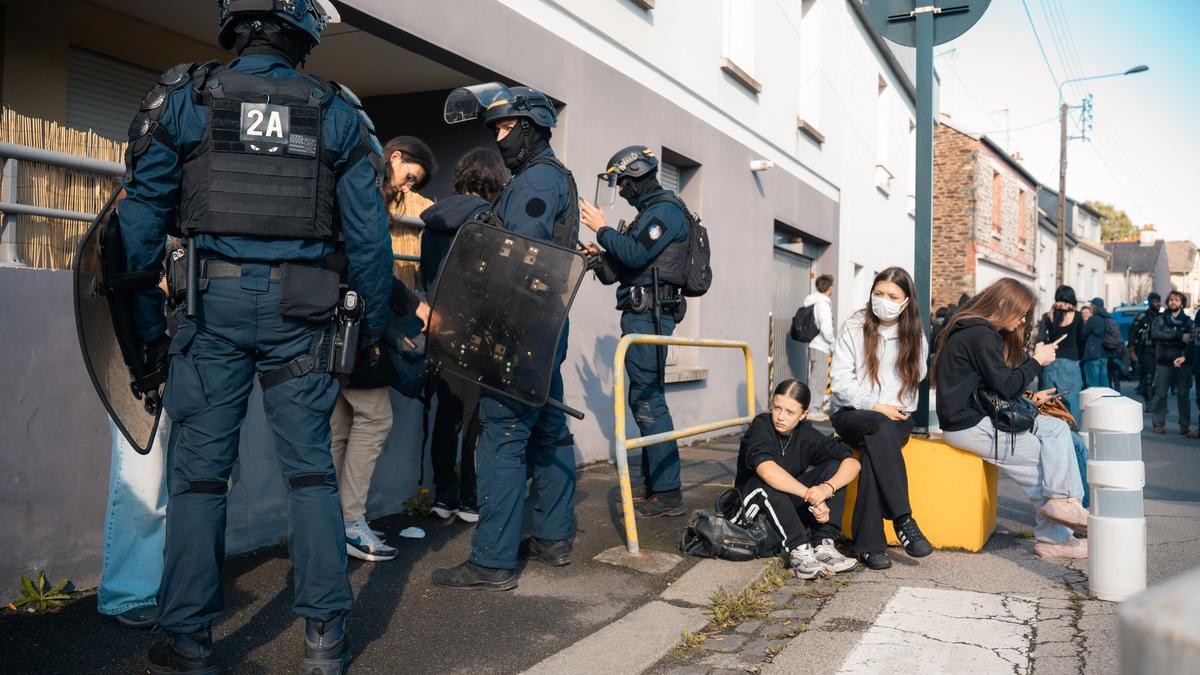
Across various nations in Europe, young people are increasingly taking to the streets in widespread protests. From Rennes, France, to cities in Italy and beyond, these demonstrations are not isolated incidents sparked by single policy decisions, but rather a symptom of a deeper, pervasive sentiment: a profound crisis of hopelessness. Despite living in some of the world's wealthiest societies, a growing number of young citizens feel that the economic and social systems are no longer organized to serve their fundamental interests, leading to a visible breakdown of the traditional social contract.
The current wave of protests is rooted in a decades-long shift in the fundamental mechanics of Western economies. Since the 1970s, the share of total economic output paid to workers in the form of salaries and benefits—known as the labor share of GDP—has steadily declined. In OECD countries, this share peaked at around 70 percent in the 1970s but has since dropped to between 50 and 60 percent. This means that ordinary citizens are receiving a significantly smaller portion of the overall economic pie, even as productivity has increased.
Simultaneously, wealth accumulation has become disproportionately concentrated in residential real estate. Housing has emerged as a unique asset class that not only provides daily utility but also serves as a primary vehicle for wealth growth through rising prices. For younger generations, however, this means the housing ladder is increasingly out of reach. Their salaries, after accounting for soaring rents, leave them with diminishing prospects for independent life decisions, homeownership, or building intergenerational wealth. This dynamic forces many into greater dependence on social security systems, even as they work full-time.
A critical power dynamic at play involves businesses and governments. For decades, businesses have benefited from keeping minimum wages low, often below the actual cost of labor. This practice effectively externalizes a portion of labor costs onto the state, as governments are then compelled to provide widespread social support to prop up living standards. What began as support for the underskilled gradually expanded to include more skilled laborers, creating a perverse incentive structure where enterprises rely on state subsidies to maintain a competitive advantage based on suppressed wages. This system, while seemingly beneficial for corporate balance sheets in the short term, has proven unsustainable, eroding the tax base and creating a dependency cycle.
The competition among countries for investment and business development, often predicated on offering low wages, further entrenches this cycle. Governments find themselves in a difficult position, feeling powerless to break the pattern without risking capital flight. This creates a feedback loop: suppressed wages lead to lower tax revenues from the shrinking middle class, which in turn strains public budgets. This pressure then impacts public sector salaries, meaning that even essential professionals like teachers, nurses, and police officers increasingly find themselves needing social support, particularly in wealthier urban areas where they can no longer afford to live and work without assistance.
The most profound impact of these shifting power mechanics is borne by ordinary citizens, particularly the younger generations, who face a future that appears less promising than that of their parents.
For young people, the erosion of the social contract translates into a palpable sense of intergenerational hopelessness. Despite pursuing education and working diligently, the traditional markers of a successful adult life—homeownership, financial independence, and the ability to raise a family without constant economic anxiety—are becoming increasingly unattainable. They are forced to defer major life decisions, delay starting families, and often remain dependent on parental support or state assistance, even with full-time employment. This creates a deep psychological burden, fostering resentment and a feeling that the system is fundamentally rigged against them.
The economic shifts have profoundly impacted the middle class. Where a single income often sufficed for a decent life in Western societies in the 1970s, today, two average salaries rarely provide the same quality of life. Families struggle to afford rising costs of living, quality education for their children, and adequate healthcare, pushing them closer to the brink of financial precarity. This constant struggle erodes self-esteem and creates a pervasive sense of unfairness among those who work hard and pay taxes but still cannot make ends meet.
Even dedicated public sector professionals—teachers, nurses, police officers—are increasingly caught in this economic squeeze. In many wealthy areas, their salaries are insufficient to afford housing or cover basic living expenses, forcing them to rely on social support systems designed for the economically vulnerable. This undermines the dignity of essential work and threatens the quality of public services as skilled professionals are driven away from high-cost regions, exacerbating societal inequalities.
The reliance on social support, even for those working full-time, strips individuals of agency and dignity. When one's labor does not command a living wage, and basic needs are met through state provisions, it creates a dependency that limits choices and opportunities. People become
Source referenced: FOREIGNPOLICY
This brief was synthesized by our Editorial Engine and reviewed by The Ground Narrative team.