TRENDING

Thursday, 22 October 2026
----------------------
11 Jumada Al-Awwal 1448 AH
Montenegrin President Jakov Milatovic met with Chinese Foreign Minister Wang Yi, signaling a desire for deeper cooperation while Montenegro pursues EU accession. This meeting highlights the strategic choices small nations face between Western integration and Chinese investment.
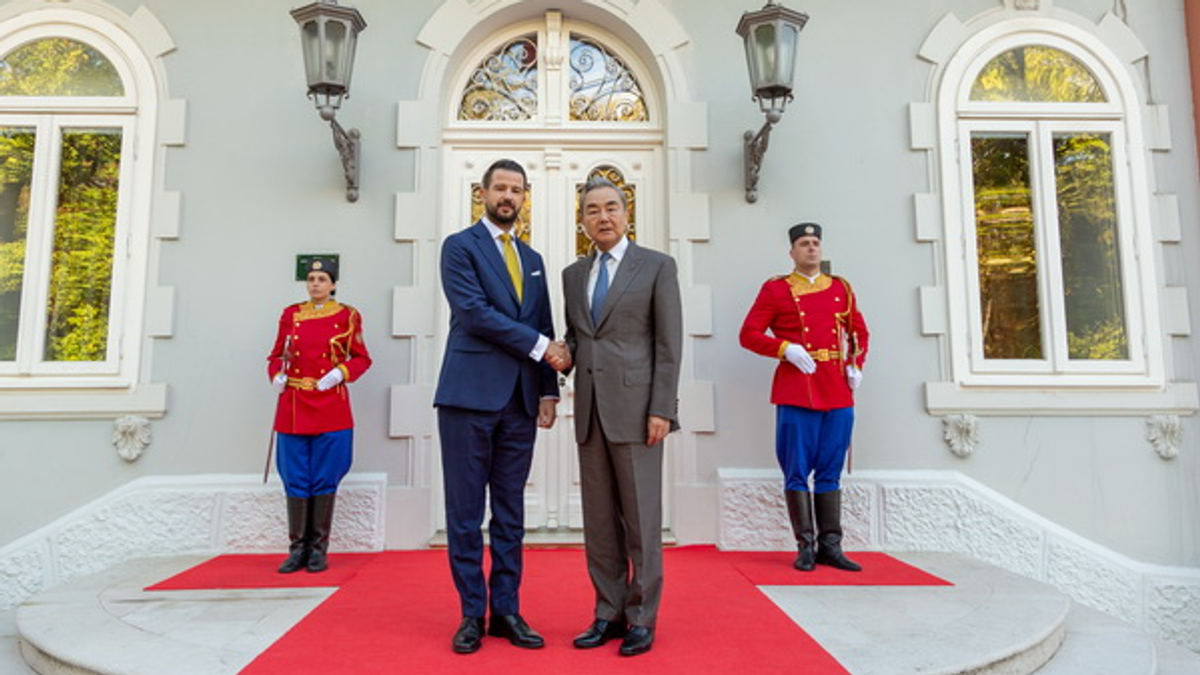
Montenegrin President Jakov Milatovic recently met with Chinese Foreign Minister Wang Yi in Cetinje, a historic city near Montenegro's capital. The high-level meeting, marking the 20th anniversary of diplomatic relations between the two nations, underscored Montenegro's stated desire to deepen friendly relations and practical cooperation with China across various sectors, including infrastructure, trade, and tourism. While Montenegro reiterated its primary foreign policy goal of European Union (EU) accession, it also emphasized the importance it places on its relationship with Beijing, affirming adherence to the one-China principle and a commitment to mutually beneficial cooperation.
At its core, this meeting highlights the delicate balancing act small nations like Montenegro must perform when navigating a world shaped by competing global powers. Montenegro, a nation of just over 600,000 people, aspires to integrate fully into the European Union, a process that demands alignment with EU standards and values. Yet, its economic realities often push it towards alternative partners willing to invest where Brussels has been slow or hesitant.
China's engagement in Montenegro is a classic case study of its broader Belt and Road Initiative (BRI) strategy in the Western Balkans. For Beijing, projects like the Bar-Boljare highway are not merely commercial ventures; they are strategic footholds. By providing substantial loans for critical infrastructure, China gains influence, builds goodwill, and creates economic dependencies that can translate into political leverage. The highway, often lauded by Beijing as a "landmark project," serves as a tangible symbol of China's capacity to deliver large-scale development, contrasting with the often bureaucratic and slow pace of EU integration funds. This strategy allows China to project its power into Europe's perceived backyard, challenging the EU's exclusive sphere of influence without direct confrontation.
For Montenegro, the calculus is one of immediate developmental needs versus long-term strategic alignment. The promise of modern infrastructure, such as the highway connecting its Adriatic coast to Serbia and eventually Central Europe, is a powerful incentive for a country eager to boost its economy and connectivity. However, these benefits come with significant financial exposure. The initial phase of the Bar-Boljare highway was financed by a nearly one-billion-dollar loan from China Exim Bank, representing a substantial portion of Montenegro's annual GDP. This indebtedness creates a complex web of obligations, where the pursuit of economic growth can inadvertently constrain foreign policy autonomy.
The rhetoric of "equality" and "mutual respect" from Wang Yi is a standard diplomatic framing, designed to reassure smaller partners that their sovereignty is respected. However, the inherent power imbalance between the world's second-largest economy and a microstate means that "equality" often operates on China's terms. Montenegro's reiteration of the one-China principle, a standard diplomatic courtesy, also serves as a necessary prerequisite for maintaining Beijing's economic engagement. China's explicit statement that Montenegro's EU accession is "fully compatible with deeper cooperation with China" and its hope that Montenegro will become "another good friend of China within the EU" reveals a clear strategic objective: to cultivate allies within the EU bloc, potentially influencing EU policy towards China from within. This approach aims to dilute any unified EU stance critical of Beijing's actions, turning potential adversaries into advocates.
The grand narratives of infrastructure development and geopolitical influence often obscure the tangible impacts on the everyday lives of ordinary citizens. In Montenegro, the pursuit of the Bar-Boljare highway, while promising future economic gains, has already imposed a significant burden on the public. The initial phase of the highway, costing approximately €809 million, pushed Montenegro's public debt to unprecedented levels, at one point exceeding 80% of its GDP. Servicing this debt consumes a substantial portion of the national budget, diverting funds that could otherwise be allocated to essential public services such like healthcare, education, or social welfare programs. This means fewer resources for local schools, hospitals, or pensions, directly impacting the quality of life for ordinary Montenegrins.
Moreover, large-scale infrastructure projects, particularly those with foreign financing and construction, often raise questions about transparency and accountability. Contracts for BRI projects have frequently been criticized for their opaque terms, making it difficult for the public to scrutinize the true costs, environmental safeguards, or labor practices involved. While the highway promises to connect isolated northern regions, the benefits for local communities must be weighed against potential environmental damage, land expropriation, and the long-term financial strain. The construction of the highway has already faced criticism for its environmental impact, particularly concerning the Tara River Canyon, a UNESCO-protected site. Though Wang Yi mentioned the restoration of the Tara River Bridge, a symbolic gesture referencing a historical Yugoslav film, the broader ecological footprint of the entire project remains a concern for environmental groups and local residents.
The reliance on foreign labor for certain aspects of construction also means that the promised job creation for local populations might not fully materialize, limiting the direct economic benefits for Montenegrin workers. Furthermore, the risk of becoming economically beholden to a single powerful creditor can erode national sovereignty in subtle but profound ways. If Montenegro were to default on its loan, the terms of the agreement could potentially grant China significant control over strategic assets or resources, a scenario that has played out in other BRI recipient nations. This potential loss of economic and political autonomy ultimately affects the ability of Montenegro's government to act solely in the best interests of its citizens, as it must constantly consider the implications for its relationship with Beijing.
Beyond the direct financial debt, there are less visible costs. The influx of foreign capital and influence can sometimes exacerbate existing issues of corruption or create new avenues for it, as large sums of money change hands with limited public oversight. This can erode public trust in institutions and divert resources from genuine public good to private gain. The long-term implications for Montenegro's democratic governance and its alignment with EU rule of law standards become a critical concern.
While increased Chinese tourism is presented as a benefit, its economic impact must be realistically assessed. While it can certainly boost local economies, the scale of tourism revenue needed to offset a multi-billion-dollar infrastructure debt is immense. Furthermore, the development of tourism infrastructure often requires significant local investment and can lead to its own set of environmental and social challenges if not managed carefully. The promise of tourism, therefore, can be a distraction from the more pressing financial liabilities.
What often goes unsaid in the official communiqués from both Podgorica and Beijing is the full context of Montenegro's strategic bind and China's calculated long-term objectives. The narrative presented by China focuses on "win-win cooperation" and "mutual respect," carefully sidestepping the inherent power asymmetry and the strategic implications of its investments. For instance, the celebration of the Bar-Boljare highway as a "landmark project" by Wang Yi downplays the significant financial distress it caused Montenegro, pushing the country to the brink of a debt crisis that required intervention and assistance from EU institutions to manage. The initial phase of the highway, while technically complete, is often referred to as a "highway to nowhere" by critics, as it connects two points within Montenegro but does not yet reach its intended destination at the Serbian border, limiting its immediate economic utility. The true cost-benefit analysis for Montenegro is far more complex and less rosy than official statements suggest.
The EU's role in this unfolding dynamic is also frequently omitted or downplayed. While Montenegro prioritizes EU accession, the reality is that the EU's enlargement process has been slow, cumbersome, and often perceived as lacking concrete economic incentives compared to China's rapid deployment of capital. This perceived vacuum allowed China to step in, offering a seemingly quicker path to development. The EU has been critical of the financial sustainability of Chinese loans in the Western Balkans but has struggled to offer a sufficiently attractive and timely alternative for large-scale infrastructure projects. This creates a narrative where Montenegro is forced to choose between slow, conditional EU integration and faster, albeit riskier, Chinese development. The EU's own internal divisions and bureaucratic hurdles contribute significantly to this dilemma, a fact rarely acknowledged by Brussels itself.
Furthermore, China's vision of Montenegro as a "good friend within the EU" is not merely an expression of goodwill; it is a clear articulation of a strategic objective. Beijing seeks to cultivate influence within the EU by fostering strong bilateral ties with individual member states or aspiring members. This strategy aims to prevent a unified EU front on issues sensitive to China, such as human rights, trade disputes, or geopolitical competition. By establishing economic dependencies and political goodwill, China hopes to create a network of advocates who can temper EU criticism or promote Chinese interests from within Brussels. This long-term geopolitical play, which extends far beyond Montenegro's borders, is never explicitly stated but is a crucial subtext of Wang Yi's visit.
The focus on infrastructure and tourism, while important, often overshadows China's broader interest in the Adriatic Sea region. Montenegro's coastline and port access, though small, hold strategic value for China's maritime trade routes and its ambition to establish a stronger presence in the Mediterranean. While not directly stated in the meeting, the potential for future investments in port infrastructure or logistics hubs remains a silent possibility, further integrating Montenegro into China's global economic and strategic network.
The coming years will reveal the true trajectory of Montenegro's delicate balancing act. A key indicator will be the fate of the second phase of the Bar-Boljare highway. Will Montenegro secure further Chinese financing, or will the EU finally present a viable, competitive alternative that aligns with its accession goals and financial sustainability principles? The decision on this next phase will signal Montenegro's long-term economic and geopolitical orientation.
Beyond infrastructure, observe the pace and nature of Montenegro's EU accession negotiations. Will Brussels intensify its engagement and offer more tangible incentives, or will the process continue to be protracted, leaving room for China to deepen its influence? Any acceleration or stagnation in EU talks will directly impact Montenegro's strategic choices.
Also, pay close attention to Montenegro's voting patterns and diplomatic stances within international forums, particularly if it achieves EU membership. Will it consistently align with EU consensus, or will it occasionally diverge, reflecting its strong ties with Beijing? This will be a critical test of China's strategy to cultivate "friends within the EU."
Finally, monitor the broader economic health of Montenegro. How effectively does it manage its existing debt obligations? Do the promised benefits of Chinese investment, particularly in tourism, materialize sufficiently to offset the financial risks? The human cost of these large-scale decisions will ultimately be borne by the Montenegrin people, and their economic well-being will be the most telling measure of success or failure.
The Bar-Boljare highway is a critical infrastructure project for Montenegro, aimed at connecting its coast to Serbia and Central Europe. However, its first phase was largely financed by a significant Chinese loan, contributing substantially to Montenegro's national debt.
China gains strategic influence in Europe's backyard through infrastructure investments like the highway, expanding its Belt and Road Initiative. It also aims to cultivate political goodwill and potential allies within the EU, should Montenegro join the bloc.
The primary human cost is the burden of national debt, which can divert funds from essential public services like healthcare and education. There are also concerns about environmental impact, transparency in contracts, and potential erosion of national sovereignty due to economic dependency.
Source referenced: CGTN
This brief was synthesized by our Editorial Engine and reviewed by The Ground Narrative team.