TRENDING

Wednesday, 21 October 2026
----------------------
10 Jumada Al-Awwal 1448 AH
China is convening a major international forum in its 'city of the future,' Xiongan, to present its blueprint for a reformed global governance system. This move signals a deliberate effort to challenge existing norms and build a new international order.
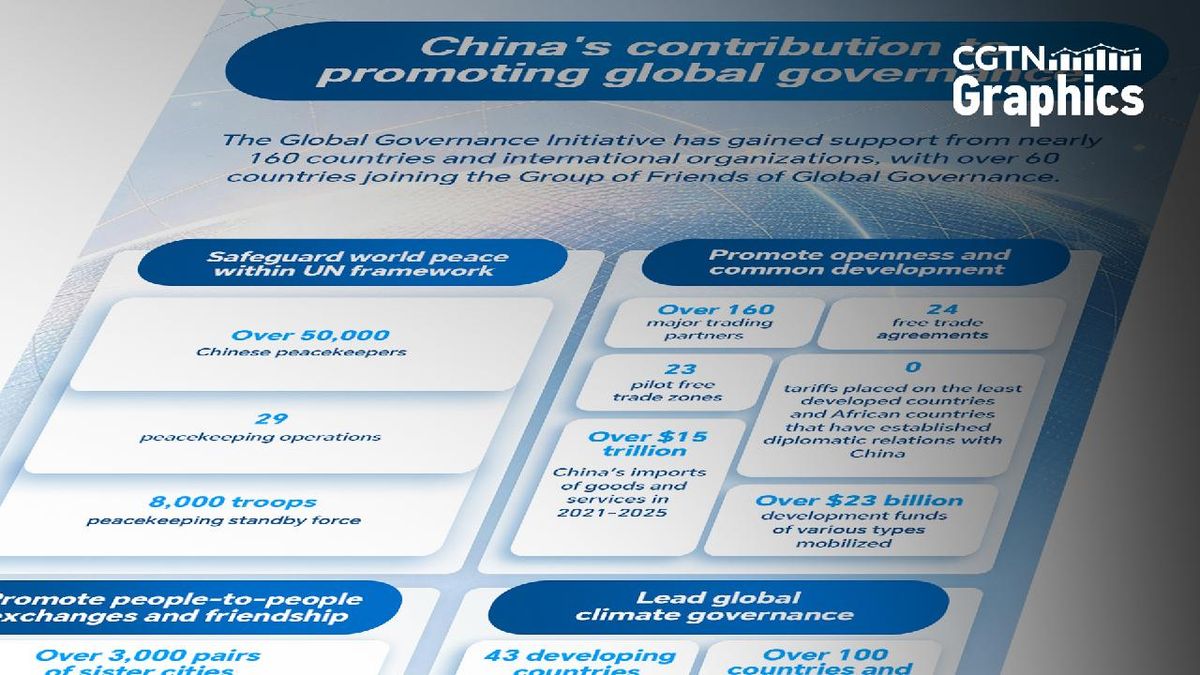
In October 2026, China is set to host the Global Governance Forum in its ambitious Xiongan New Area, a planned city touted as a model for future urban development. Under the theme, "Rebuilding Confidence and Cooperation: Reforming and Improving Global Governance in a Transforming World," the forum will gather delegates from nearly 100 countries spanning the Global South, Europe, and America. This gathering is framed around a recently published Chinese white paper, "Building a More Just and Equitable Global Governance System: China's Vision, Initiatives and Actions," which outlines Beijing's contributions and proposals across areas like peacekeeping, global development, cultural exchange, and climate action, positioning China as a key architect of a new global order.
This forum is a clear and calculated move by China to assert its influence and actively reshape the architecture of global governance, an order that has largely been defined by Western powers since the end of World War II. By hosting such a high-profile event and presenting a comprehensive white paper, Beijing is not merely participating; it is attempting to lead the conversation and set the agenda for international cooperation. The choice of Xiongan New Area as the venue is strategically significant, serving as a powerful symbol of China's modern developmental prowess and its vision for the future, a tangible showcase for delegates, particularly from the Global South. It projects an image of a nation capable of not only rapid economic transformation but also innovative governance.
China's overt appeal to the Global South is a cornerstone of its strategy. Many nations in this bloc feel marginalized by the existing international institutions, which they perceive as biased towards Western interests. Beijing positions itself as a reliable partner for development, offering an alternative to the conditional aid and often prescriptive policies of Western institutions. This strategy leverages China's massive economic footprint, particularly through initiatives like the Belt and Road Initiative (BRI), which provides infrastructure and investment that many developing nations desperately need. This economic engagement translates directly into political influence, securing diplomatic support and alignment in international forums, thereby chipping away at the long-standing dominance of the United States and its allies.
The forum's theme, focusing on "Reforming and Improving Global Governance," implicitly critiques the current system, which China views as unrepresentative of the changing global power balance. Beijing seeks to introduce and normalize concepts such as a "community of shared future for mankind" and "win-win cooperation," which, while sounding benign, are designed to promote a framework where China's growing power is accommodated and its interests are prioritized. This effort to redefine global norms is a fundamental shift from merely adhering to existing rules to actively shaping the rules themselves, pushing for a more multipolar world where China plays a central, rather than peripheral, role. This is a direct challenge to the liberal international order and its underlying principles of democracy, human rights, and market economies.
While China's vision for global governance promises development and cooperation, the practical implementation of its initiatives often carries significant human costs that are rarely discussed in official forums. The rapid pace of Chinese-funded development projects, particularly under the Belt and Road Initiative, frequently overlooks local environmental concerns and social impacts, leading to long-term consequences for communities and ecosystems.
For many nations in the Global South, the allure of large-scale infrastructure projects funded by Chinese loans is undeniable. However, these loans often come with opaque terms and high interest rates, pushing recipient countries into significant debt. This can lead to a loss of economic sovereignty, as nations might be compelled to cede control over strategic assets, such as ports or mines, when they struggle to repay their debts. The economic stability of entire populations can be jeopardized, trapping future generations in a cycle of dependency rather than fostering genuine self-sufficiency. Local economies, while potentially benefiting from new infrastructure, can also be overwhelmed by the influx of Chinese labor and materials, stifling local industry growth and job creation.
The construction of dams, roads, and mines, often part of China's development packages, can have devastating environmental impacts. Deforestation, pollution, and habitat destruction displace indigenous communities, disrupt traditional livelihoods, and exacerbate climate vulnerabilities in countries already susceptible to environmental degradation. Local populations often have little say in these large-scale projects, finding their homes and ancestral lands appropriated with inadequate compensation or consultation. The promise of progress can thus come at the expense of cultural heritage and the well-being of the most vulnerable citizens.
China's principle of "non-interference" in the internal affairs of sovereign nations, while ostensibly respecting national autonomy, can inadvertently prop up authoritarian regimes. By providing economic lifelines without demanding governance reforms or adherence to human rights standards, Beijing can enable leaders to maintain power despite popular discontent. This can stifle democratic aspirations, perpetuate corruption, and delay necessary political reforms, ultimately impacting the fundamental freedoms and rights of ordinary citizens in partner countries. The emphasis on state-to-state relations often bypasses civil society and local populations, leaving their concerns unaddressed in the grand schemes of global cooperation.
Behind the rhetoric of "rebuilding confidence and cooperation" and creating a "more just and equitable global governance system," lies a more complex reality that official statements and state media, like CGTN, carefully omit or downplay. The narrative presented at the Xiongan Forum is a meticulously crafted vision designed to serve China's strategic interests, rather than a purely altruistic endeavor for global betterment.
While China champions multilateralism and a rules-based order, its engagement is often selective. Beijing readily embraces international institutions and norms that align with its interests, such as its permanent seat and veto power in the UN Security Council, but frequently disregards or challenges others. For instance, China's rejection of international arbitration rulings concerning the South China Sea or its actions in the Xinjiang region and Hong Kong stand in stark contrast to its proclaimed commitment to international law and human rights. The "justice" it seeks often refers to a rebalancing of power that favors China, not necessarily a truly egalitarian system where all nations have equal voice and protection.
The vision of global governance promoted by China abroad often contrasts sharply with its domestic realities. A nation that advocates for "cooperation" and "confidence-building" on the international stage maintains strict state control, pervasive censorship, and a highly centralized political system at home. The lack of political freedoms, the suppression of dissent, and documented human rights abuses within China's borders are never part of the discussion at forums like Xiongan. This internal contradiction is crucial for understanding the limits of China's proposed global governance model, which prioritizes stability and state sovereignty over individual liberties and democratic accountability.
The Global Governance Forum is not merely an academic exercise in international relations; it is a direct and strategic move in the ongoing geopolitical competition with the United States and its allies. By presenting itself as a responsible global leader and an alternative to Western hegemony, China aims to peel away support from Washington's sphere of influence, particularly among the Global South. The forum's theme of "reforming and improving" implicitly frames the existing Western-led order as flawed and outdated. This underlying competition for influence, power, and the future direction of global norms is the unspoken driver of the event, carefully veiled by language of shared prosperity and mutual respect.
As the Global Governance Forum in Xiongan concludes, its immediate impact will be less about revolutionary change and more about the subtle shifts in global alignment and narrative. The real story will unfold in the months and years that follow, revealing the true efficacy of China's diplomatic offensive.
Pay close attention to any specific agreements, investment pledges, or joint declarations that emerge from the forum. These tangible outcomes will indicate the level of commitment from participating nations and the practical avenues through which China intends to implement its global governance vision. The nature of these commitments – whether they are bilateral or multilateral, and which countries are prominent signatories – will offer clues about the evolving geopolitical landscape and China's success in forging new alliances.
Observe how countries from the Global South react to and integrate China's proposed frameworks. Will they actively champion Beijing's vision in other international bodies, like the United Nations or the World Trade Organization? A noticeable shift in voting patterns, diplomatic support, or economic partnerships away from traditional Western alignments would signal a significant win for China's long-term strategy to reshape the international order. Conversely, any reluctance or pushback from these nations could indicate the limitations of China's appeal.
The United States and European Union will be closely watching the developments from Xiongan. Their response will be critical. Will they increase their own engagement with the Global South, offering alternative development models or more attractive financing options? Or will they double down on existing alliances and institutions, potentially leading to further fragmentation of the global order? The competition for influence will likely intensify, with both sides working to present their respective visions as the most beneficial for global stability and prosperity.
The long-term success of Xiongan New Area itself will serve as a powerful barometer for China's broader global governance ambitions. If Xiongan truly flourishes as a sustainable, innovative, and equitable "city of the future," it will lend significant credibility to China's development model and its capacity to lead. Conversely, if the project faces significant challenges or fails to live up to its ambitious promises, it could undermine the very narrative Beijing is trying to project globally. Its progress will be a visible test of China's ability to deliver on its grand visions, both at home and abroad.
Source referenced: CGTN
This brief was synthesized by our Editorial Engine and reviewed by The Ground Narrative team.


