TRENDING

Wednesday, 21 October 2026
----------------------
10 Jumada Al-Awwal 1448 AH
Tanzania has significantly tightened health screening for international travelers in response to an Ebola outbreak in the Democratic Republic of Congo and a related case in Kenya. These new measures, including online forms and 21-day monitoring, are set to profoundly impact cross-border movement and livelihoods.
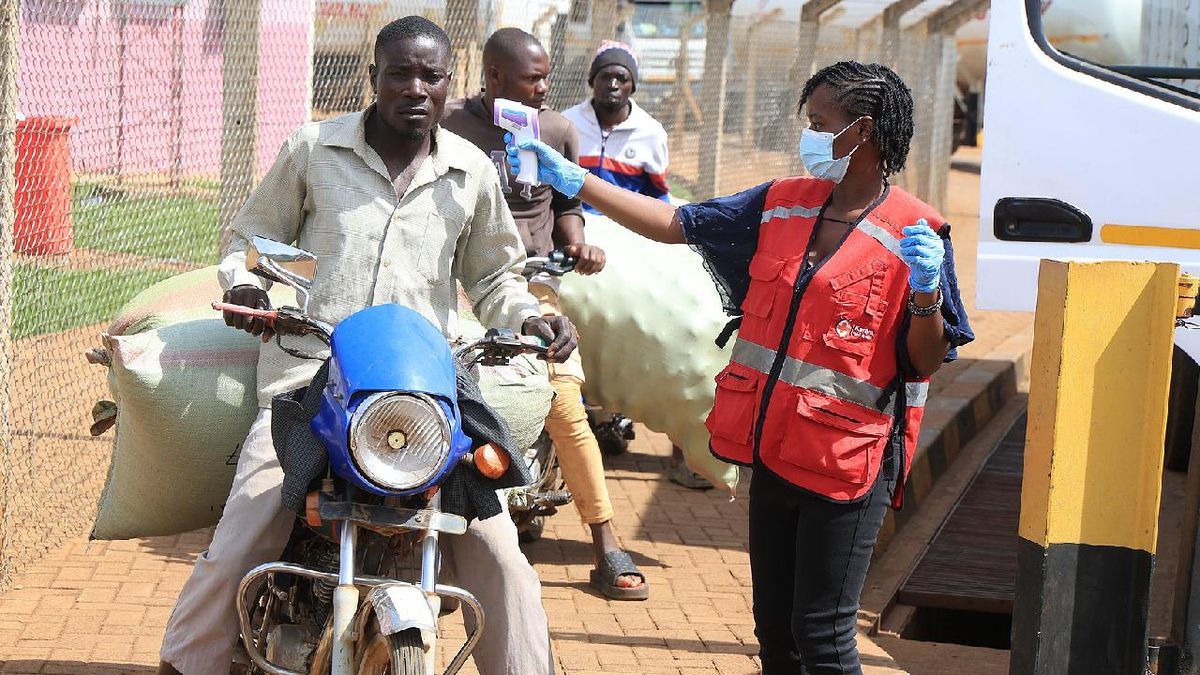
Tanzania has initiated a comprehensive tightening of health screening and surveillance protocols for all international travelers entering the country. This decisive action comes as a direct response to a confirmed Ebola virus disease (EVD) outbreak in the neighboring Democratic Republic of Congo (DRC), coupled with a recent case identified in Kenya involving a patient who had traveled from the DRC. Effective immediately, the new measures mandate that all incoming travelers complete an online health surveillance form either before their departure for Tanzania or upon their arrival. They are required to provide accurate information through the Ministry of Health's online portal and retain a confirmation QR code or reference number for verification by port health authorities. Furthermore, all individuals entering the country via airports, land borders, and seaports will undergo health screening, including temperature checks. Those suspected of exhibiting EVD symptoms or other infectious diseases will be managed according to national screening procedures. High-risk travelers will be subjected to daily health monitoring for 21 days, facilitated through automated messages or other communication channels, with cooperation required even after they depart Tanzania. The advisory also urges travelers and transport operators to observe stringent infection prevention measures, such as hand hygiene, the use of sanitizers, and avoiding unnecessary physical contact. Any transport vehicle or vessel contaminated by a suspected case, cargo, or human remains associated with EVD will undergo decontamination at the point of entry. Travelers are advised to report suspected symptoms to the nearest health facility or relevant authorities via a toll-free number or email, and the advisory will be reviewed as necessary, with travelers leaving Tanzania expected to comply with the entry requirements of their destination or transit countries.
Tanzania's swift implementation of stringent health screenings underscores a complex interplay of national sovereignty, regional interdependence, and economic self-preservation. While presented as a public health imperative, these measures are also a potent assertion of state power, designed to control narratives and manage perceptions both domestically and internationally.
The decision by Tanzania highlights the inherent tension between a nation's sovereign right to protect its borders and the deeply interwoven fabric of East African economies and societies. Borders in Africa are often colonial constructs, dividing ethnic groups, trade routes, and communities that have historically shared common spaces. The free flow of people, goods, and services is a cornerstone of regional integration efforts, such as the East African Community (EAC). However, a health crisis like Ebola forces states to prioritize national security, even if it means disrupting these established patterns of movement. The power dynamic here is that the state, in the name of public health, can unilaterally impose restrictions that override the everyday realities of regional interconnectedness, asserting its ultimate authority over individual freedoms of movement.
The Democratic Republic of Congo (DRC) has regrettably become a recurrent epicenter for Ebola outbreaks. This is not merely a biological phenomenon but a deeply rooted geopolitical consequence. Decades of internal conflict, weak governance, resource exploitation by various actors, and a chronically underfunded public health infrastructure have created a fertile ground for diseases to emerge and spread. The DRC's vast, often ungoverned territories, coupled with the movement of displaced populations and armed groups, make effective disease surveillance and containment incredibly challenging. Tanzania's response, therefore, is not just to a virus, but to the systemic instability and vulnerability that the DRC's geopolitical landscape represents. The power dynamic is that the instability of one nation can dictate the policies and impose costs on its more stable neighbors, creating a regional ripple effect.
The economic cost of an uncontrolled Ebola outbreak is catastrophic, far outweighing the expense and inconvenience of stringent border controls. Industries such as tourism, trade, and foreign investment are highly sensitive to perceptions of safety and stability. Tanzania, with its vital tourism sector, has a powerful economic incentive to demonstrate proactive and robust public health measures. Being perceived as a safe destination is crucial for its economic survival and growth. The power here lies in the global market's punitive response to health crises; nations are compelled to act decisively to protect their economic interests, even if it means implementing measures that are disruptive to daily life. The cost of inaction is simply too high, forcing governments to prioritize visible containment efforts.
While screening measures and online forms provide a visible and reassuring demonstration of state action, the reality of porous borders, informal trade routes, and the incubation period of Ebola means that complete containment through border checks alone is incredibly difficult, if not impossible. The virus does not respect official checkpoints, and asymptomatic carriers can bypass initial screenings. The power dynamic at play is the government's ability to create a perception of control, both for its own citizens and for the international community. This perception is vital for maintaining social order, preventing panic, and sustaining economic confidence, even if the actual efficacy of such measures in fully stopping a highly transmissible disease is limited. It's a performance of power as much as it is a practical application of public health.
Tanzania's advisory, while primarily focused on its own borders, implicitly exerts pressure on neighboring states, particularly Kenya and the DRC, to strengthen their own containment efforts. By implementing strict measures, Tanzania sets a regional standard and creates an expectation for its neighbors to follow suit. The requirement for travelers to comply with destination country rules also subtly shifts some burden of responsibility onto individuals and, by extension, their home countries. This is a form of health diplomacy where one nation's actions can influence the public health policies and standards across an entire region, leveraging its position to encourage broader collective action, even if unstated.
While governments focus on national security and public health data, the tangible impact of these heightened screening measures falls squarely on the shoulders of ordinary citizens, particularly those in border communities and those reliant on cross-border movement for their livelihoods.
For countless individuals and small businesses across East Africa that rely on cross-border trade and travel, these new measures translate into significant delays, increased operational costs, and potential loss of income. Informal traders, who often move small quantities of goods like agricultural produce, textiles, or household items across borders daily, face unprecedented hurdles. The requirement for online forms and QR codes introduces a digital barrier for many who lack internet access, smartphones, or digital literacy. Delays at checkpoints mean perishable goods spoil, market opportunities are missed, and daily wages are lost. This disproportionately affects the most vulnerable populations, pushing them further into economic precarity.
East Africa's borders are often artificial lines drawn through culturally and ethnically homogenous communities. Families frequently live across national boundaries, maintaining close ties through regular visits for social events, support, or simply to see loved ones. Heightened screening, the fear of being flagged as
Source referenced: CGTN
This brief was synthesized by our Editorial Engine and reviewed by The Ground Narrative team.


