TRENDING

Wednesday, 21 October 2026
----------------------
10 Jumada Al-Awwal 1448 AH
A US special envoy is now in Russia to meet President Putin, following 'positive' talks with Ukraine's President Zelenskyy, signaling a direct American push to end the four-and-a-half-year conflict. This diplomatic offensive unfolds amidst growing US frustration with Kyiv and accusations of intelligence and internet service cutbacks.
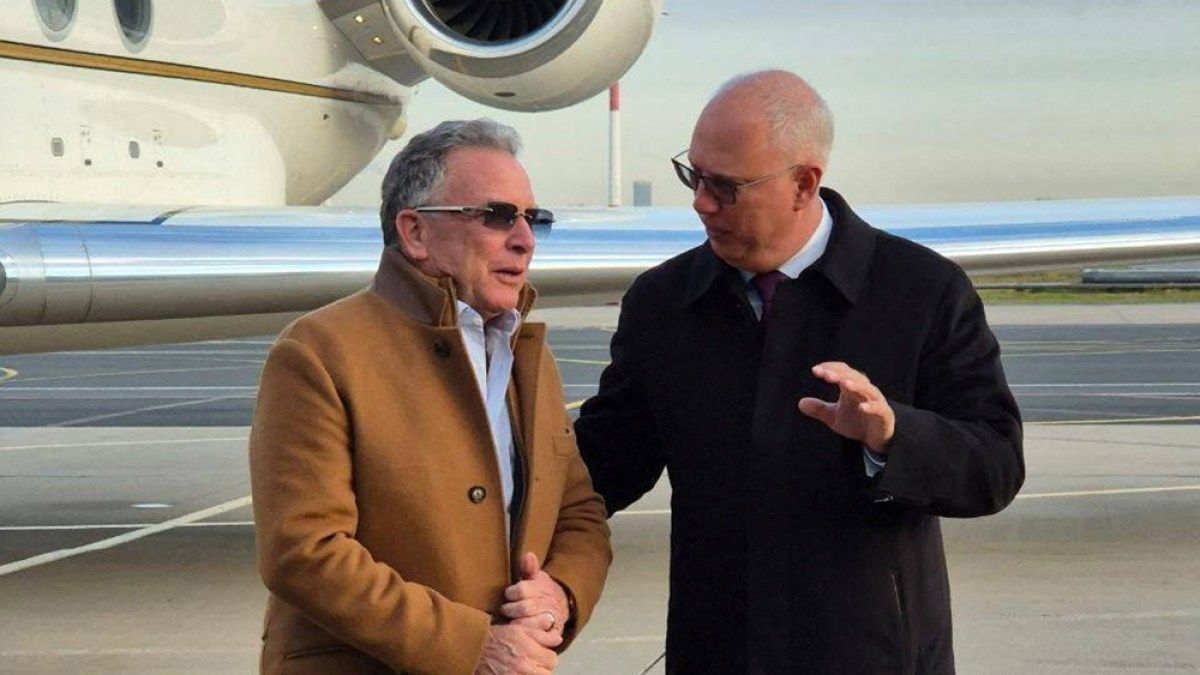
United States Special Envoy Steve Witkoff has arrived in St. Petersburg, Russia, for discussions with Russian leaders, including President Vladimir Putin, after concluding what US Secretary of State Marco Rubio described as “positive” talks with Ukrainian President Volodymyr Zelenskyy in Norway. These high-stakes meetings are aimed at brokering an end to the war in Ukraine, which has raged for over four and a half years since Russia’s full-scale invasion. Notably, Jared Kushner, President Donald Trump’s son-in-law, is also participating virtually in the talks. This diplomatic push comes amidst public friction between President Trump and President Zelenskyy, with the Ukrainian leader accusing the US of suspending crucial intelligence sharing and slowing down Starshield internet services vital for battlefield operations. Despite these diplomatic overtures, intense fighting continues, with both Ukraine and Russia reporting long-range attacks and casualties in recent days.
The current diplomatic flurry, spearheaded by Washington, reveals a significant shift in the power dynamics surrounding the Ukraine war. The United States, under President Trump, appears to be moving from a primary enabler of Ukraine’s defense to an assertive mediator determined to conclude the conflict, potentially on its own terms.
President Trump’s increasing frustration with Zelenskyy and his public suggestion that someone else should negotiate on Kyiv’s behalf are not mere rhetorical flourishes; they are signals of a fundamental re-evaluation of US engagement. For Trump, ending the war could be framed as a political victory, fulfilling a campaign promise and reducing a significant financial and diplomatic burden on the US. This domestic political calculus now heavily influences America’s foreign policy, overriding previous commitments to Ukraine’s territorial integrity or long-term security. The dispatch of Witkoff and Kushner directly to Moscow after a brief stop in Oslo underscores a preference for a direct US-Russia channel, potentially sidelining European allies who have been deeply invested in the conflict's outcome.
Zelenskyy’s accusations regarding suspended intelligence sharing and the slowdown of Starshield services highlight Ukraine’s precarious position. These are not minor grievances; they point to a deliberate exertion of pressure by the US. Intelligence and secure communication networks like Starshield are the lifeblood of modern warfare, and their disruption can cripple battlefield effectiveness. By controlling access to these critical resources, the US holds immense leverage over Kyiv, effectively forcing Ukraine to the negotiating table with less room to maneuver. The
Steve Witkoff is the US Special Envoy, dispatched by President Trump to mediate an end to the Ukraine war. His meeting with Russian President Vladimir Putin follows talks with Ukrainian President Volodymyr Zelenskyy, signaling a direct American push for a peace settlement.
Zelenskyy's accusations of suspended US intelligence sharing and Starshield internet slowdowns highlight Ukraine's diminishing leverage and the pressure being exerted by the US. These critical resources are vital for Ukraine's defense, and their disruption signals a shift in US strategy towards compelling a peace deal.
Elon Musk's SpaceX provides Starshield, a military-grade internet service crucial for Ukraine's battlefield operations. The controversy surrounding its control and potential slowdown reveals the significant, yet largely unaccountable, power a private entity can wield in a major international conflict, influencing a nation's ability to defend itself.
Source referenced: ALJAZEERA
This brief was synthesized by our Editorial Engine and reviewed by The Ground Narrative team.