TRENDING

Wednesday, 21 October 2026
----------------------
10 Jumada Al-Awwal 1448 AH
Elon Musk's pledge to give SpaceX shares to every US child, valued at over $10 billion, arrives just before critical midterm elections. This analysis uncovers the strategic political and financial motivations behind the unprecedented gift.
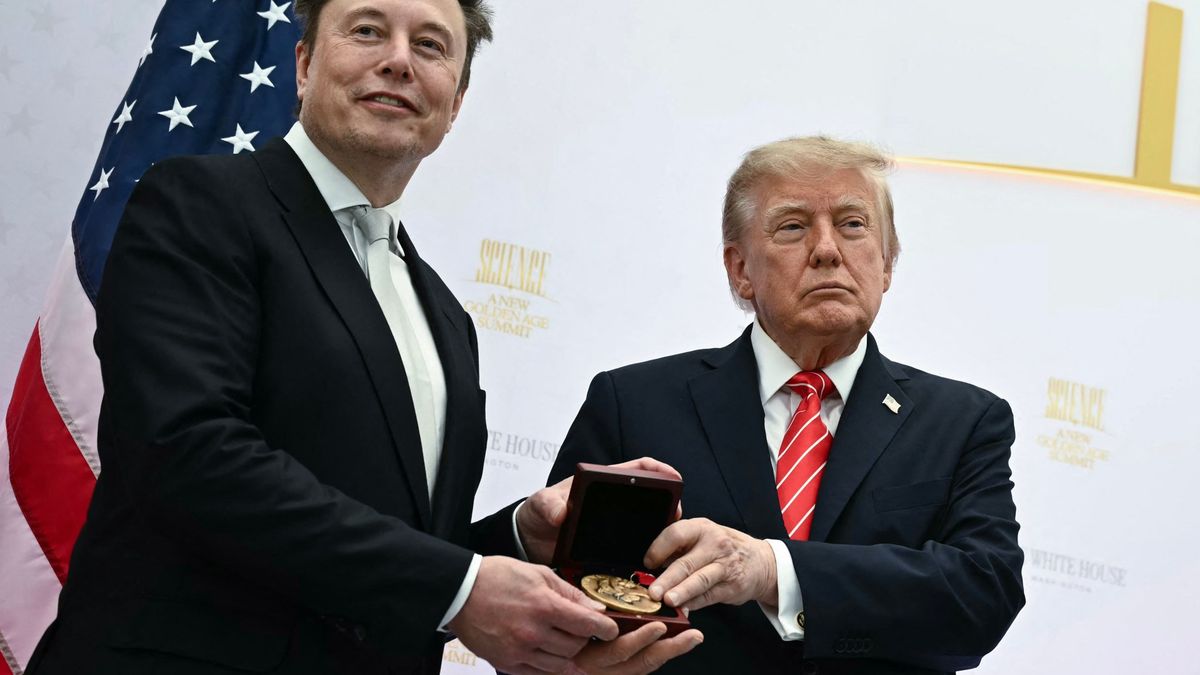
In a move that has sent ripples through the American political and financial landscape, Elon Musk, the world's richest man, announced a pledge to gift one SpaceX share to every child in the United States. Valued at approximately $10.7 billion based on current market prices, this unprecedented donation is intended to be distributed through the newly established "Trump Accounts" – tax-friendly investment vehicles for children under 18. The announcement comes with striking timing, just two weeks before the crucial November 3 midterm elections, and has been publicly embraced by former President Donald Trump, who credits the gift as a validation of his administration's financial policies.
Musk's $10 billion pledge is far more than simple philanthropy; it is a masterclass in leveraging immense private wealth for multi-faceted political and financial gain. At its core, this act illuminates the intricate web of incentives that drive powerful actors in the global arena, revealing how personal fortune can be deployed to shape national discourse, influence elections, and secure corporate interests.
One of the most immediate and tangible benefits for Musk is the significant tax relief. By donating appreciated stock, he can bypass capital gains tax, potentially saving himself up to $2.5 billion on the $10.7 billion value of the shares. This is a common, yet often opaque, practice among the ultra-wealthy, where charitable giving can be strategically aligned with personal financial optimization. Beyond the tax savings, the creation of 73 million new SpaceX shareholders serves as a powerful, albeit subtle, corporate defense mechanism. Each of these new shareholders, even with a single share, now has a vested interest in the company's success and, crucially, in "minimising its regulatory burdens." This effectively creates a massive, diffuse lobbying force, making it politically challenging for future administrations to impose stringent regulations or anti-trust measures on SpaceX without facing potential backlash from millions of ordinary American families.
For Donald Trump and the Republican Party, Musk's pledge arrives as a significant political boon, especially given the proximity to the midterm elections where Trump's approval ratings are low and the party faces the prospect of losing seats. Trump has wasted no time in claiming the gift as a direct validation of his "Trump Accounts" initiative, framing it as a tangible benefit of his tax and spending law – a law that "every single Democrat voted against." This narrative allows Trump to position himself as a champion of the common American family, delivering wealth directly to children, while simultaneously drawing a stark contrast with his political opponents. The public reconciliation between Musk and Trump, following a reported "little dispute" in 2025, further solidifies a powerful alliance between a leading tech titan and a prominent political figure, amplifying their combined influence in the run-up to the elections.
This event underscores a deeper structural issue within the United States' political system: the outsized role of external donors in elections. While legal, the scale of Musk's contribution – both directly to Republican groups ($276 million since July) and indirectly through this massive public gesture – raises profound ethical questions about the fairness and integrity of the democratic process. When a single individual can deploy billions of dollars to influence public sentiment and election outcomes, it challenges the fundamental principle of equal political voice. The power dynamics shift dramatically, allowing concentrated wealth to disproportionately shape the political agenda, drown out smaller voices, and potentially dictate the direction of national policy.
While framed as a generous gift to the nation's children, the true human cost of Musk's pledge is multifaceted, extending beyond the immediate beneficiaries to touch the very fabric of democratic governance and economic equity.
For the 73 million children and their families, the receipt of a SpaceX share is presented as a windfall. However, this "gift" comes with significant caveats and potential risks. First, the shares are volatile; their value can fluctuate dramatically, as evidenced by SpaceX's 35.3 percent drop since its peak. There is no guarantee that the initial $146 value will be maintained. Second, families cannot refuse the shares and are generally restricted from selling them for five years or until the child turns 17, whichever comes sooner. This means the "gift" is illiquid and tied to the long-term performance of a single, high-risk company, rather than offering immediate, flexible financial security. The choice of investment is removed from the family, replaced by a politically motivated allocation.
Musk's ability to avoid up to $2.5 billion in capital gains tax by donating appreciated stock represents a direct cost to the public purse. This is tax revenue that could otherwise fund public services, infrastructure, or reduce the national debt. While legal, such practices highlight how existing tax laws often favor the ultra-wealthy, allowing them to convert potential tax liabilities into public relations victories and political influence. This erosion of the tax base, coupled with the perception that the rich play by different rules, can further diminish public trust in institutions and exacerbate feelings of economic injustice among ordinary citizens who bear the brunt of taxation.
The most profound human cost lies in the subtle but significant erosion of democratic principles. When elections and policy debates can be swayed by the immense financial power of a few individuals, the voices of ordinary citizens can become marginalized. The focus shifts from policy substance to the spectacle of mega-donations, creating a political environment where access and influence are increasingly tied to wealth. This can lead to policies that favor corporate interests or the agendas of powerful donors, rather than reflecting the broader public good. The ethical concerns raised by economists about the "outsized role that external donors play in US elections" are not abstract; they translate directly into a system where the public's will can be overshadowed by private fortunes, ultimately impacting the quality of governance and the fairness of societal outcomes.
Beneath the headlines of generosity and political triumph lies a more complex narrative, one where powerful actors are carefully downplaying or omitting crucial aspects of this unprecedented event. The official statements focus on the benefits to children and the validation of political initiatives, but the deeper strategic implications are left unsaid.
One of the most striking untold stories is the co-option of a progressive policy concept for a conservative political agenda. For decades, progressive thinkers have advocated for Child Development Accounts (CDAs) – investment accounts for every newborn designed to reduce wealth inequality. These ideas, championed by groups like the Democracy Collaborative, struggled to gain federal traction due to political resistance. Now, the "Trump Accounts" have effectively mainstreamed a version of this concept, but under a different brand and with a different political benefactor. What was once a tool envisioned to systematically address inequality is now being used as a vehicle for a billionaire's tax strategy and a political party's election campaign. The original intent of broad, equitable wealth building is subtly twisted, becoming a narrative of individual generosity rather than systemic change.
While the public narrative emphasizes the gift to children, the creation of millions of new SpaceX shareholders is a shrewd long-term strategic move for Musk's company. This isn't just about a tax break; it's about building a regulatory moat. In an era where large tech and aerospace companies face increasing scrutiny over market dominance, labor practices, and ethical conduct, having millions of small, retail shareholders creates a powerful, diffuse constituency. Any future government attempt to impose stricter regulations, break up the company, or investigate its practices could be framed as harming the financial interests of millions of American children. This makes SpaceX more politically resilient, insulating it from potential government oversight and ensuring its continued growth with minimal interference.
The public reconciliation between Musk and Trump is presented as a minor detail, a "little dispute" now resolved. However, this overlooks the profound implications of such a high-profile alliance. Musk, a figure with immense influence over technology, communication (via X), and future industries (SpaceX, Tesla), now actively aligns with a specific political faction, having also spearheaded Trump's "Department of Government Efficiency initiative" in the past. This isn't just a personal truce; it signifies a powerful convergence of corporate and political power, where the resources and platforms of a tech titan are openly deployed to bolster a political movement. The untold story here is the deepening entanglement of private enterprise with partisan politics, blurring the lines between business interests and national governance.
The reverberations of Musk's $10 billion pledge will continue to unfold across several critical fronts. Observers should pay close attention to the immediate political fallout, the long-term implications for corporate governance, and the evolving dynamics of wealth and power in the United States.
First, the most immediate indicator will be the outcome of the November 3 midterm elections. Whether the Republican Party sees a boost in its fortunes, particularly in key swing districts, could be directly attributed, in part, to the narrative surrounding Musk's gift and Trump's promotion of the "Trump Accounts." A strong performance by Republicans could embolden similar high-profile, wealth-driven political interventions in future election cycles.
Second, the performance and regulatory environment of SpaceX will be a crucial watchpoint. How will the company's valuation evolve over the next five years, and what will that mean for the actual value of the shares held by millions of children? More importantly, will the newly minted shareholder base indeed act as a buffer against potential governmental scrutiny or regulation? Any legislative or regulatory proposals targeting large tech or aerospace firms will be met with the implicit, or explicit, argument that such actions could harm the financial interests of millions of young Americans.
Finally, the broader debate around the influence of mega-donors and the ethics of wealth in politics will intensify. This event sets a new precedent for the scale and nature of private financial intervention in public life. Watch for discussions around campaign finance reform, changes to tax laws concerning charitable donations of appreciated stock, and the growing public discourse on economic inequality and the concentration of power. The "gift" to children may just be the opening act in a much larger story about who truly holds the reins of power in the modern world.
Source referenced: ALJAZEERA
This brief was synthesized by our Editorial Engine and reviewed by The Ground Narrative team.