TRENDING

Thursday, 22 October 2026
----------------------
11 Jumada Al-Awwal 1448 AH
U.S. Defense Secretary Pete Hegseth slipped into Israel for an unannounced meeting with Prime Minister Benjamin Netanyahu, a move that dovetails with a contentious election and shifting U.S. political calculations. The visit reveals how high‑level security ties, domestic politics, and regional conflict intersect, while ordinary citizens on both sides bear the hidden price.
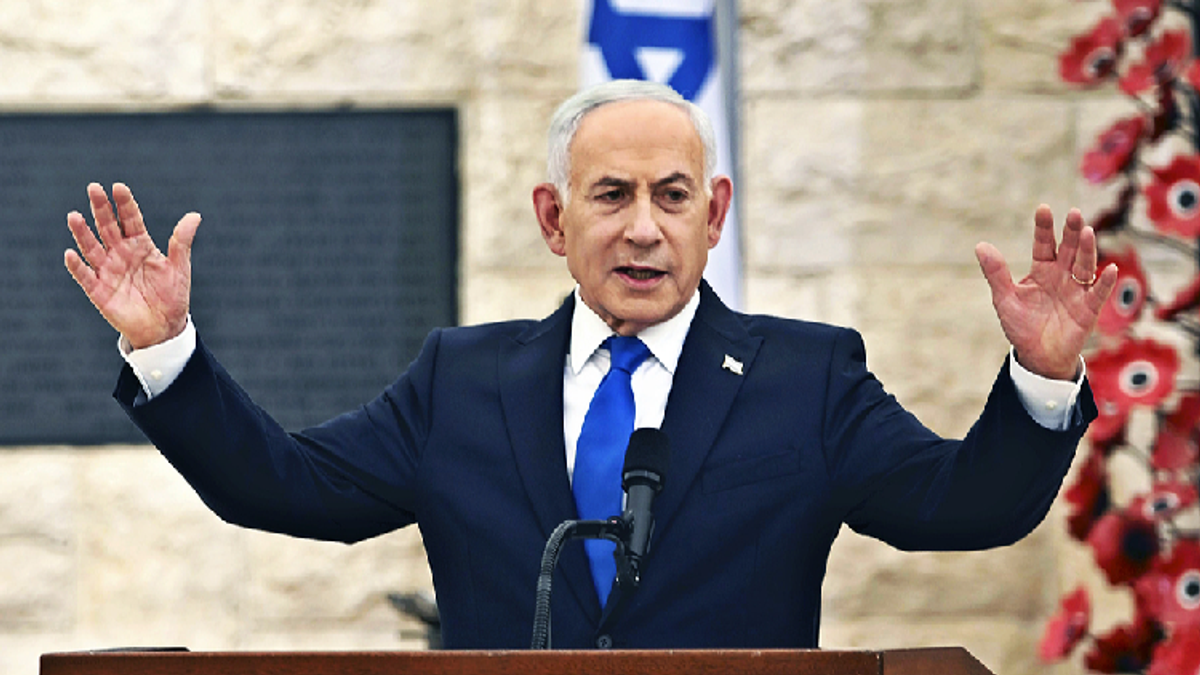
U.S. Defense Secretary Pete Hegseth arrived in Israel on Monday for a discreet, unannounced meeting with Prime Minister Benjamin Netanyahu, according to sources cited by *Axios*. Neither the Pentagon nor the Israeli Embassy confirmed the trip, and official statements remain silent. The visit comes a day after former President Donald Trump publicly endorsed Netanyahu ahead of Israel’s parliamentary election, the first since the Oct. 7, 2023 Hamas attack that thrust the country into a multi‑front conflict.
The timing of Hegseth’s stop is no accident. In Washington, the defense establishment is navigating a fraught electoral landscape. Donald Trump’s endorsement is a calculated signal to the pro‑Israel lobby and to defense contractors that stand to profit from heightened security aid. By sending the defense chief, the administration signals continuity in military assistance without overtly tying the gesture to a specific candidate, preserving diplomatic flexibility while placating a powerful constituency.
Domestically, Vice President JD Vance’s refusal to endorse Netanyahu underscores a split within the Republican hierarchy. Vance, campaigning for the 2026 midterms, chose to focus on American races, implicitly distancing the administration from foreign election meddling. This maneuver protects his political capital at home while allowing the Pentagon to pursue its own agenda.
For Israel, the coalition led by Netanyahu is fragile. The Likud‑led bloc, bolstered by ultra‑Orthodox parties, faces a projected loss of its governing majority. An overt show of U.S. defense support could shore up Netanyahu’s security credentials, a key selling point for voters still reeling from war fatigue. At the same time, the Israeli Ministry of Defense must balance the need for advanced weaponry with the political risk of appearing overly dependent on external aid.
Regionally, the visit signals to adversaries—particularly Iran and Hezbollah—that the United States remains a committed security partner despite the political turbulence in Washington. The presence of the defense secretary, even without a formal announcement, serves as a deterrent cue, reinforcing the status quo of U.S. military backing in a volatile theater.
The ongoing conflicts in Gaza, Lebanon, and the looming threat from Iran have exacted a heavy toll on Israeli civilians. Air‑raid sirens, displacement, and the psychological strain of living under constant threat have disrupted daily life for millions. A renewed flow of U.S. defense equipment, while bolstering military capability, also prolongs a security environment that keeps ordinary households in a state of emergency.
U.S. military assistance directly fuels the asymmetry of power in the Gaza Strip, where civilian casualties have surged since the Oct. 7 attacks. Advanced weaponry supplied under the umbrella of U.S. aid contributes to the intensity of Israeli air campaigns, which in turn exacerbate humanitarian crises—crippled infrastructure, limited medical supplies, and mass displacement.
Every dollar of foreign military financing is ultimately sourced from the U.S. federal budget. In a year marked by inflation and social program cuts, the allocation of billions to overseas arms sales raises questions about domestic opportunity costs. Simultaneously, defense contractors stand to gain new contracts, reinforcing a cycle where profit motives intersect with policy decisions that affect lives abroad.
Both the Pentagon and the Israeli Embassy have declined to comment, a classic diplomatic tactic that allows governments to reap the benefits of a high‑level meeting while avoiding public scrutiny. By keeping the visit off the record, officials sidestep potential accusations of election interference, a charge that could inflame domestic opposition and international criticism.
Mainstream coverage has largely framed the episode as a footnote to Trump’s endorsement, overlooking deeper structural incentives. What receives less attention is how the defense establishment leverages such trips to secure future procurement contracts, especially for next‑generation systems that require congressional approval and sustained funding.
While public statements emphasize “support for Israel’s right to defend itself,” they rarely acknowledge the broader message to Iran and Hezbollah: the United States is willing to keep the defense pipeline open, even as it navigates a contentious election at home. This subtle signaling is designed to maintain a balance of power without escalating to open confrontation, a nuance that rarely makes headlines.
The Israeli parliamentary election on October 28, 2026 will be a litmus test for how much U.S. backing translates into electoral advantage for Netanyahu’s bloc. Look for campaign rhetoric that leans heavily on security guarantees and any surge in defense‑related advertising.
In Washington, the 2026 midterm elections will shape the composition of the House Armed Services Committee, the body that authorizes defense spending. Shifts there could alter the pace and scale of future aid packages to Israel, especially if anti‑war or fiscal‑conservative members gain seats.
Finally, monitor any follow‑up visits or statements from senior U.S. defense officials. A pattern of low‑profile trips ahead of key votes often signals an effort to lock in policy commitments before the political dust settles. Regional actors—particularly Iran’s Revolutionary Guard and Hezbollah—will also watch for changes in the U.S. posture, adjusting their own strategies accordingly.
By tracing these threads, ordinary readers can see how a single, unannounced diplomatic stop reverberates through election booths, budget hearings, and the lived realities of people caught in a protracted conflict.
The unannounced trip lets Washington signal continued military support while avoiding the political fallout of overt election interference. It also provides a low‑profile venue for discussing defense contracts and regional security.
By showcasing direct U.S. defense engagement, the visit bolsters Netanyahu’s security credentials, a key factor for voters still concerned about war threats. It may also sway undecided voters toward the right‑wing coalition that promises strong ties with the United States.
Editor's Note: Analysis based on publicly reported sources and typical patterns of U.S.-Israel defense coordination.
Source referenced: CGTN
This brief was synthesized by our Editorial Engine and reviewed by The Ground Narrative team.