TRENDING

Thursday, 22 October 2026
----------------------
11 Jumada Al-Awwal 1448 AH
Canada and Ontario have announced a C$8.7 billion package to shield their critical steel, automotive, and mineral sectors from ongoing US tariffs. The move highlights Canada's struggle for economic resilience amidst protectionist pressures from its closest trading partner.
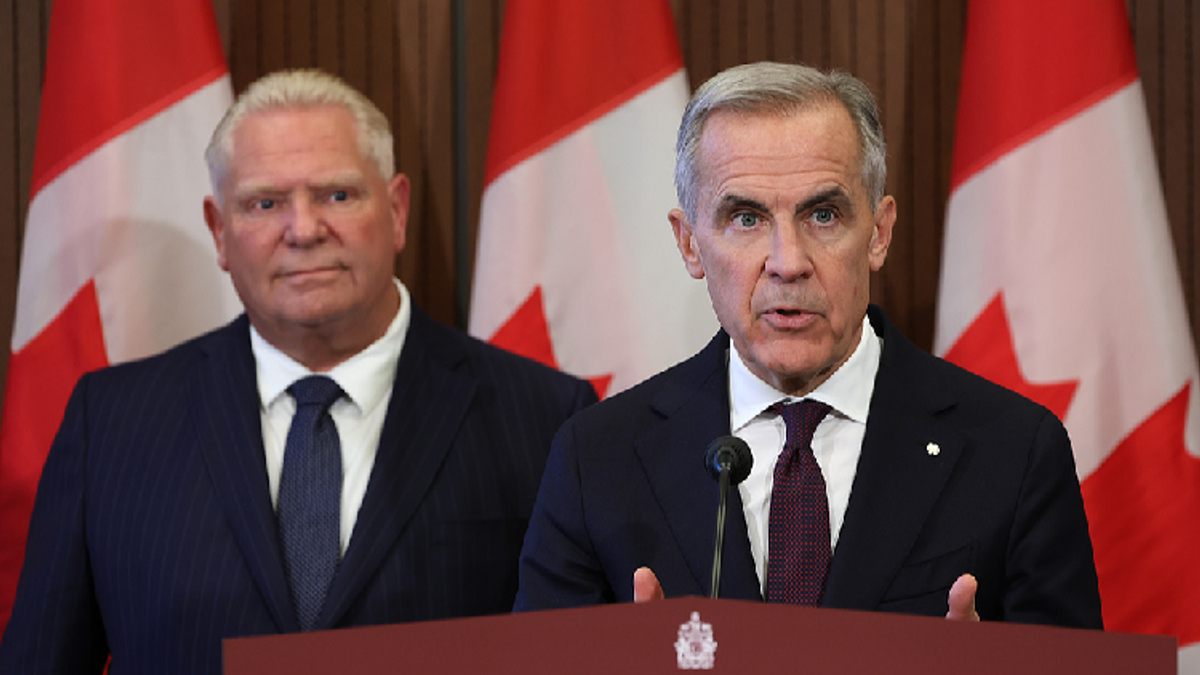
In a significant joint announcement from Ottawa, Canadian Prime Minister Mark Carney and Ontario Premier Doug Ford unveiled a C$8.7 billion (approximately US$6.18 billion) strategic industry support package. This substantial investment is explicitly designed to protect Ontario's vital steel, automotive, and critical mineral sectors from the ongoing economic pressure of US tariffs. The package aims to safeguard jobs and foster long-term economic growth, building on over C$25 billion in federal assistance already provided to Canadian businesses and workers navigating these cross-border trade barriers.
The initiative focuses on three key pillars: establishing a joint steel action fund, transforming the automotive sector by upgrading production lines for future connected and electric vehicles, and securing the critical mineral supply chain in Northern Ontario through new road infrastructure and streamlined approval processes. Prime Minister Carney emphasized the goal of building a "stronger, more resilient, more independent Canadian economy for tomorrow," signaling a clear intent to reduce vulnerability to external economic shocks.
This C$8.7 billion package is not merely an economic stimulus; it is a defensive maneuver in a complex dance of power between two deeply intertwined nations. The fundamental power dynamic at play is the United States' ability to leverage its immense market size and economic might to impose tariffs on its closest ally, Canada. These tariffs, often framed domestically within the US as measures to protect national security or ensure fair trade, effectively force Canada to react, diverting significant public funds to shield its own industries.
For Canada, the response is driven by several critical factors. Firstly, the political imperative to protect jobs in key manufacturing regions, particularly Ontario, which serves as the country's industrial heartland. The automotive and steel sectors are not just economic engines; they are cornerstones of Canadian identity and employment, making their protection a high-stakes political priority for both federal and provincial governments. Secondly, there is a clear strategic ambition to foster greater economic independence. Prime Minister Carney's rhetoric about a "more independent Canadian economy" underscores a growing discomfort with the vulnerability that comes from such deep integration with a powerful neighbor whose trade policies can shift abruptly.
The global context further illuminates these mechanics. We are witnessing a widespread resurgence of economic nationalism and protectionism, where nations are increasingly prioritizing domestic industrial bases and supply chain resilience. The United States, under various administrations, has actively pursued policies aimed at reshoring manufacturing and securing critical resources, often through protectionist measures. While much of this policy is directed at strategic rivals like China, its ripple effects extend to allies, demonstrating that even long-standing partnerships are secondary to perceived national economic interests.
Historically, the US-Canada trade relationship has been characterized by deep integration but also recurring friction. From softwood lumber disputes to dairy tariffs and the contentious renegotiation of NAFTA into USMCA, trade tensions are a constant undercurrent. This latest package, however, signifies a more pronounced, state-led industrial policy response from Canada, moving beyond traditional diplomatic appeals to direct government intervention. It reveals that the "alliance math" of shared security and values does not always translate into frictionless economic cooperation, especially when domestic political pressures for job creation and industrial strength are high in the larger partner.
While the C$8.7 billion package is designed to mitigate the human cost of US tariffs, the very necessity of such an intervention highlights the profound anxieties and disruptions faced by ordinary citizens. The primary burden falls on the workers in Ontario's steel, automotive, and critical mineral sectors.
For thousands of steelworkers and automotive assembly line employees, the threat of tariffs translates directly into job insecurity. Even with government support, the underlying market distortions create an unstable environment. Companies might delay investments, reduce shifts, or explore automation to cut costs, leading to layoffs or reduced hours. Workers face the stress of potential unemployment, the need for retraining, or even relocation if facilities are forced to scale back or close. The psychological toll of living under the constant threat of economic disruption, driven by decisions made in a foreign capital, is immense.
Beyond individual workers, entire communities built around these industries are affected. Towns reliant on a large steel mill or an automotive plant experience a ripple effect when these sectors face pressure. Local businesses, from restaurants to suppliers, see reduced demand. Property values can stagnate, and younger generations may choose to leave in search of more stable opportunities, leading to a decline in community vitality. The government package aims to inject stability, but it cannot erase the fundamental vulnerability that has been exposed.
Consumers, while not directly targeted by tariffs, often bear an indirect cost. If Canadian industries become less competitive or if supply chains are forced to reconfigure at higher costs, these expenses can eventually be passed on through higher prices for goods. Furthermore, government subsidies, while necessary for protection, can sometimes lead to market distortions, potentially shielding less efficient operations and delaying necessary innovation, which could impact long-term consumer choice and affordability.
The push to secure the critical mineral supply chain in Northern Ontario introduces another layer of human cost, particularly for Indigenous communities. While new road infrastructure and streamlined approval processes promise economic development and jobs in remote areas, such projects historically come with significant environmental and social impacts. Indigenous lands and traditional territories are often at the forefront of resource extraction. The rush to develop these resources, driven by geopolitical competition, risks accelerating projects without adequate consultation, environmental assessments, or benefit-sharing agreements, potentially disrupting traditional ways of life, sacred sites, and fragile ecosystems.
The official narrative from both Canada and the United States often frames these economic actions in terms of national interest and job protection. However, beneath the surface, several critical dimensions are either downplayed or entirely omitted, revealing a more complex and often contradictory reality.
What is often downplayed is the significant erosion of alliance solidarity. The United States is imposing tariffs on Canada, a country with which it shares the longest undefended border, deep cultural ties, and a robust military alliance. While the US justifies these tariffs with domestic concerns, the act itself signals that economic self-interest can easily override the traditional bonds of allied partnership. This transactional approach to international relations, where allies are treated as economic competitors, undermines the very spirit of agreements like USMCA and sends a chilling message to other partners globally: no one is truly immune from a powerful nation's protectionist impulses.
Prime Minister Carney's emphasis on building a "more independent Canadian economy" is a telling omission of the long-term costs and implications. While a noble goal, true economic independence from a neighbor as dominant as the United States is a monumental, perhaps even impossible, task given decades of deep integration. The C$8.7 billion package is a reactive measure, a defensive shield. It doesn't fundamentally alter the structural reality of Canada's economic reliance on the US market. The untold story here is the difficult, expensive, and potentially inefficient path Canada must now navigate to diversify its trade and supply chains, a path that could involve higher domestic costs and slower growth in the short to medium term, all while still being tethered to its largest trading partner.
The rush to secure critical mineral supply chains for the electric vehicle revolution is presented as a clean, forward-looking initiative. What is often downplayed is the environmental footprint of this extraction. Mining for minerals like lithium, cobalt, and nickel is resource-intensive, requiring vast amounts of water and energy, and generating significant waste. The "new road infrastructure and streamlined approval processes" in Northern Ontario could mean fast-tracking projects with less rigorous environmental oversight, potentially sacrificing long-term ecological health for short-term economic gains. The narrative focuses on the 'green' end product (EVs) while often omitting the 'dirty' origins of their components.
The US justification for tariffs often revolves around achieving "fair trade" or countering alleged dumping. However, the application of these tariffs, even on allies, suggests a broader strategy of industrial policy aimed at protecting and growing specific domestic industries, regardless of traditional free-trade principles. The untold story is that "fair trade" has become a flexible term, often invoked to legitimize protectionist measures that serve specific national economic and political agendas, rather than a universally applied standard of market behavior.
As Canada embarks on this significant industrial support initiative, several key developments will indicate its effectiveness and the broader trajectory of North American economic relations.
Firstly, observe the effectiveness and longevity of the C$8.7 billion package. Will this substantial investment truly shield Ontario's industries and workers, or will it prove to be a temporary balm against persistent US tariffs? The long-term success will hinge on whether it fosters genuine innovation and competitiveness, or merely creates a dependency on government subsidies. Look for metrics beyond job retention, such as increased R&D spending, export diversification, and the development of new, high-value manufacturing capabilities within Canada.
Secondly, pay close attention to the US response and the evolution of its trade policy. Will this Canadian package be seen as a defensive necessity, or will it provoke further protectionist measures from Washington? The broader global trend towards economic nationalism suggests that such pressures are unlikely to abate. Watch for any signals of de-escalation or, conversely, the targeting of new sectors by US tariffs, which would indicate a deepening of the economic friction between the two nations.
Thirdly, monitor Canada's efforts to diversify its trade relationships and supply chains. Prime Minister Carney's call for a "more independent Canadian economy" suggests a strategic shift. Look for concrete actions to strengthen trade ties with Europe, Asia, and other global partners, particularly in the critical mineral and advanced manufacturing sectors. This diversification will be crucial for reducing Canada's vulnerability to its southern neighbor's economic policies.
Finally, critically examine the environmental and social impacts of critical mineral development in Northern Ontario. As new road infrastructure is built and approval processes are streamlined, watch for the level of engagement with Indigenous communities and the thoroughness of environmental impact assessments. The pursuit of economic independence and green energy solutions must not come at the expense of local populations or the environment. Any significant protests, legal challenges, or reports of ecological damage will be crucial indicators of the true cost of this strategic pivot. The balance between economic necessity and responsible development will be a defining challenge.
Source referenced: CGTN
This brief was synthesized by our Editorial Engine and reviewed by The Ground Narrative team.


