TRENDING

Thursday, 22 October 2026
----------------------
11 Jumada Al-Awwal 1448 AH
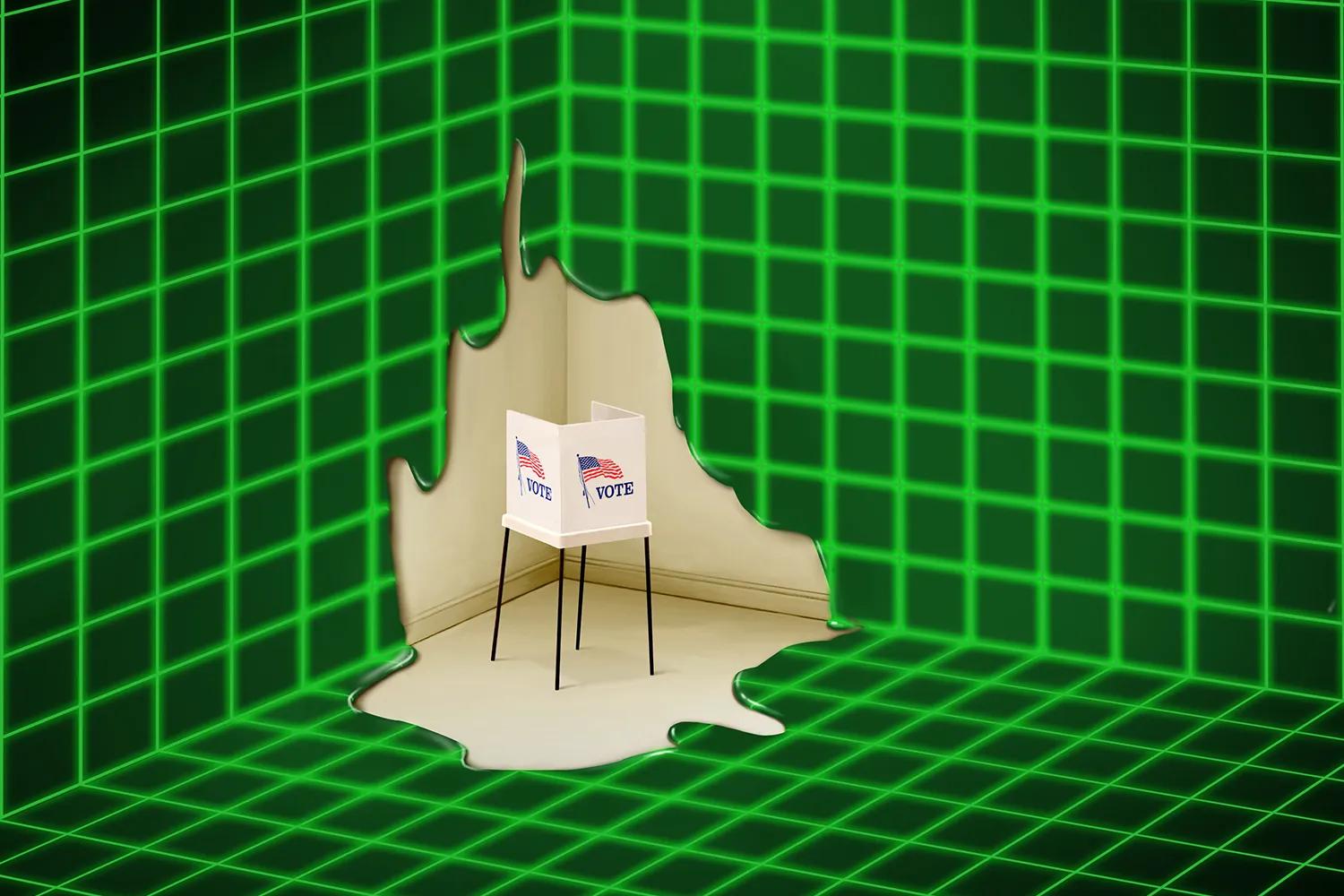
Experts say AI tools are being weaponized by foreign actors, yet the United States' election infrastructure shows new defensive measures. The real impact will be felt by everyday voters and poll workers.
#WHAT HAPPENED
The United States is gearing up for its 2026 midterm elections amid a wave of warnings about AI‑generated disinformation. Recent reporting highlights that Russia, Iran and China have begun testing large‑language models to craft tailored political content, while domestic tech firms are rolling out AI‑assisted fact‑checking tools for election officials. So far, no single campaign has broken through to dominate the public discourse, but the underlying technology has changed the speed and scale of misinformation production.
#THE POWER MECHANICS
#Foreign incentives and bandwidth limits
For Russia, China and Iran, influencing American politics is a low‑cost way to extract strategic advantage without committing troops. Disinformation campaigns can sow doubt, depress turnout in opposition strongholds, or amplify fringe issues that distract policymakers. However, all three states are currently engaged in costly wars or sanctions regimes that drain resources. As analysts note, their ability to sustain a prolonged, high‑volume AI campaign is constrained by competing military and economic priorities.
#Corporate self‑interest and risk management
Big tech firms such as OpenAI, Anthropic and Microsoft sit at the crossroads of this battle. Their models are the very engines that adversaries could misuse, yet the same companies also profit from licensing AI to governments and election‑related NGOs. By partnering with organizations like Democracy Works and the Associated Press, they aim to embed “authoritative” data streams into chatbots, creating a friction layer that makes it harder for bad actors to inject false narratives. This defensive posture protects brand reputation and pre‑empts regulatory crackdowns that could limit the commercial use of their models.
#Institutional resilience and the federal structure
The U.S. electoral system is deliberately decentralized: more than 400 House races and 35 Senate contests spread across 50 states. This diffusion makes it difficult for a single foreign actor to target a decisive swing district without expending disproportionate effort. At the same time, it forces state and local election officials to adopt their own AI‑based verification tools, creating a patchwork of standards that can be both a strength (localized adaptation) and a weakness (inconsistent protection).
#Political survival and narrative control
Incumbent politicians have a vested interest in portraying the election as secure. Acknowledging a serious AI‑driven threat could erode public confidence and, paradoxically, benefit challengers who claim the establishment is out of touch. Consequently, many officeholders downplay the risk, framing it as a “technical glitch” rather than a strategic weapon, while reserving the louder warnings for partisan media outlets that can mobilize their base.
#THE HUMAN COST
#Voter confusion and disenfranchisement
When AI‑crafted posts mimic local news outlets, they can mislead voters about polling locations, deadlines or ballot measures. In rural counties with limited broadband, a single misleading chatbot response can cascade into long lines, missed deadlines, and ultimately, uncounted votes. The cost is borne by ordinary citizens whose civic voice is diluted by algorithmic noise.
#Strain on poll workers and election staff
Election administrators now must allocate time and budget to train staff on AI detection tools, verify the provenance of voter‑submitted information, and counter fabricated narratives in real time. Many of these workers are part‑time retirees or community volunteers who receive little compensation. The added workload translates into burnout, errors, and, in worst‑case scenarios, compromised ballot handling.
#Economic ripple effects in swing districts
Close races attract campaign spending, media buys, and lobbying activity. If AI disinformation skews voter perception in a tight district, the downstream effect includes misallocated campaign resources, delayed policy implementation, and potential loss of federal funding for local projects. Small businesses that rely on predictable policy outcomes can see revenue swings tied directly to the integrity of the information ecosystem.
#THE UNTOLD STORY
#Tech firms’ optimism versus operational reality
Company spokespeople frequently highlight successful pilot programs where AI fact‑checkers flagged false claims within seconds. What they omit is the sheer volume of low‑signal content that still passes through moderation filters, especially on encrypted platforms where external oversight is limited. Moreover, the “training data” used to fine‑tune these models often excludes fringe communities, leaving a blind spot for targeted hate or extremist messaging.
#Government agencies’ public posture
Official statements from the Department of Homeland Security and the Cybersecurity and Infrastructure Security Agency (CISA) stress a “robust” defense against AI threats. Yet budget documents reveal that funding for AI‑specific election security has plateaued since 2024, while requests for expanded cyber‑espionage countermeasures have risen. The discrepancy suggests a strategic choice to prioritize offensive capabilities over defensive resilience.
#The geopolitical narrative gap
Western media coverage tends to focus on Russian and Chinese meddling, casting them as the primary villains. Less attention is given to Iran’s growing AI‑enabled propaganda network, which leverages Persian‑language models to influence diaspora communities in the United States. By sidelining Iran, analysts miss a vector that could affect swing states with sizable Iranian‑American populations.
#WHAT TO WATCH
- Legislative moves: Expect the Senate Judiciary Committee to debate a bipartisan bill that would require AI developers to embed provenance metadata in political content. The outcome will signal how aggressively Washington is willing to regulate the technology before the next election cycle.
- Platform policy shifts: Major social networks are piloting “AI‑origin labels” for political posts. Monitoring adoption rates and user comprehension will reveal whether these labels actually reduce the spread of false narratives or simply become another layer of noise.
- Foreign funding trails: New disclosures under the Foreign Agents Registration Act (FARA) may expose previously hidden AI‑as‑a‑service contracts between state‑backed entities and U.S. digital marketing firms. Tracking these links will help gauge the scale of the covert AI‑disinformation economy.
- Local election office readiness: Several counties in the Midwest have announced budget cuts that will limit AI‑tool procurement. Follow up on how these resource constraints affect on‑the‑ground misinformation response during the November vote.
- Public awareness campaigns: Non‑profits like the Brennan Center are launching media literacy drives focused on AI‑generated content. Their reach and effectiveness will be a key metric for civil society’s ability to fill the gap left by governmental under‑investment.
By keeping an eye on these fronts, ordinary citizens can better understand who benefits, who bears the cost, and where the real power struggles over the upcoming midterms are playing out.
State‑backed groups in Russia, China and Iran are employing large‑language models to produce localized political content, translate it quickly, and mimic local news tones. The goal is to sow confusion, depress turnout in opposition areas, or amplify polarizing issues.
Tech firms are embedding authoritative data streams into chatbots, adding provenance metadata, and partnering with election‑focused NGOs for fact‑checking. Election officials are also receiving training on AI detection tools, though resources vary widely across jurisdictions.