TRENDING

Thursday, 22 October 2026
----------------------
11 Jumada Al-Awwal 1448 AH
Just days before Israel's election, Prime Minister Netanyahu unveiled a doctrine that lowers the threshold for pre‑emptive strikes. The move intertwines domestic politics with regional danger, putting civilians on both sides of the border at risk.
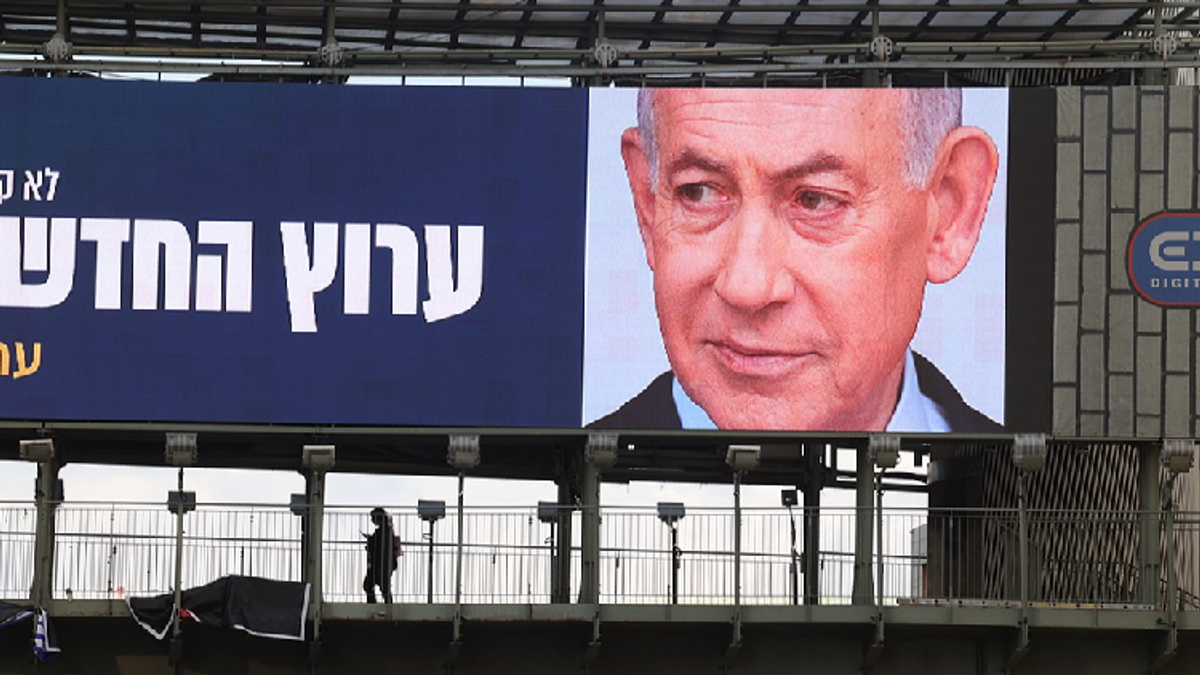
Israeli Prime Minister Netanyahu announced a three‑page national security doctrine on October 18, shifting Israel’s strategy from defensive containment to proactive prevention of threats. The doctrine, released only a week before the October 27 parliamentary election, calls for striking perceived dangers before they materialise and for creating military buffer zones along Israel’s borders. On the same day, former United States President Donald Trump posted an open letter backing Netanyahu’s re‑election, signalling renewed US‑Israel alignment amid heightened tensions with Iran.
The timing of the doctrine is no accident. Netanyahu faces a fragmented opposition and a voter base that rewards perceived security strength. By framing the doctrine as a continuation of past military successes, he aims to portray himself as the only leader capable of protecting the nation against an increasingly hostile Iran. The doctrine also reduces reliance on foreign arms supplies, a subtle nod to domestic defence‑industry lobbying that benefits Israeli manufacturers and their export markets.
Across the Atlantic, Trump’s endorsement serves a dual purpose. With the US midterm elections looming, a hard‑line pro‑Israel stance energises a core constituency that views Israel as a bulwark against Islamic extremism. Simultaneously, it allows the Trump administration to justify potential future strikes on Iranian facilities without appearing to act unilaterally; Israel becomes the proxy front‑line while the US retains political cover.
The doctrine’s pre‑emptive language lowers the legal and political threshold for launching attacks. Previously, Israel could claim self‑defence only after an imminent threat; now, a perceived build‑up is sufficient. This shift aligns with a broader regional trend where states use ambiguous threat assessments to justify force, complicating diplomatic de‑escalation. The United Nations and European Union, already wary of Israel’s settlement policies, now face a more aggressive posture that could strain any remaining diplomatic channels.
The doctrine’s emphasis on early neutralisation means more frequent air‑strike alerts, longer periods of siren‑driven anxiety, and an expanded reserve‑call system. Families in border towns such as Sderot and Kiryat Shmona already endure daily rocket drills; the new policy will intensify these routines, eroding mental health and economic stability.
Pre‑emptive strikes often lack the precise intelligence that a clear imminent threat would demand, increasing the risk of collateral damage. Past operations have shown that even limited air raids can devastate civilian infrastructure, exacerbate water shortages, and trigger mass displacement. The doctrine’s buffer‑zone concept could translate into ground incursions that further restrict movement, heightening humanitarian needs already strained by blockades.
If Israel feels authorised to act on ambiguous threats, Tehran may respond with missile or drone launches targeting civilian sites in Israel, the US, or even third‑party nations. Such escalation would likely trigger broader sanctions, disrupting Iran’s oil exports and deepening the economic crisis that already fuels public unrest. The ripple effect could hit neighboring economies—Lebanon, Syria, and Iraq—through refugee flows and trade disruptions.
Jewish and Iranian diaspora groups in Europe and North America watch these developments closely. Heightened conflict can spark hate crimes, affect tourism, and destabilise stock markets tied to defence contracts. Companies supplying precision‑guided munitions stand to profit, while ordinary workers in affected regions face job loss and price spikes for basic goods.
Western officials publicly stress that the doctrine is a defensive necessity, yet they downplay the domestic political calculus driving it. Netanyahu’s coalition depends on right‑wing parties that profit from defence contracts and settlement expansion; the doctrine offers them a tangible policy win before voters head to the polls. Meanwhile, the US administration frames its support as a shared fight against Iranian aggression, obscuring the fact that Trump’s political base gains electoral mileage from a strong‑Israel stance.
Iranian officials issue stern warnings, but state media rarely broadcast internal dissent. Economic hardship has sparked protests in Tehran and smaller cities, but the narrative presented abroad focuses on a monolithic, defiant regime ready to retaliate. This omission masks the potential for internal pressure that could force Tehran to seek a diplomatic outlet, a factor that could alter the escalation calculus.
The doctrine also sidesteps the role of arms‑sales lobbying in Washington. Major defence contractors stand to benefit from any increase in Israeli‑US joint operations, yet congressional debates rarely address how these financial incentives shape foreign‑policy decisions. By presenting the doctrine as a pure security measure, both governments avoid scrutiny over the profit‑driven undercurrents.
- Election outcome: A Netanyahu victory would likely cement the pre‑emptive doctrine, while a defeat could force a recalibration toward a more conventional defence posture.
- US midterm results: Gains by parties supportive of a hawkish Middle‑East policy could pave the way for congressional approval of additional aid or joint operations.
- Iranian response: Look for official statements, but also monitor underground protest activity and any back‑channel diplomatic overtures that might signal a desire to avoid full‑scale war.
- Regional diplomatic activity: Moves by the European Union, United Nations, or Gulf states to mediate could indicate whether the international community is willing to intervene before a broader conflagration erupts.
- Economic indicators: Fluctuations in oil prices, defence‑stock performance, and humanitarian aid flows will reveal how quickly the conflict’s costs are being internalised by global markets.
Staying alert to these signals will help ordinary citizens understand whether the rhetoric of pre‑emptive security translates into real‑world danger or remains a political lever for electioneering.
It shifts Israel’s strategy from reacting to imminent threats to striking perceived dangers before they materialise, and it authorises the creation of military buffer zones along its borders.
By portraying a hard‑line security stance as essential, Netanyahu hopes to rally voters who prioritize safety, potentially giving his coalition an advantage over opponents who favour diplomatic approaches.
Yes, lowering the threshold for action means Israel could launch strikes based on ambiguous intelligence, which may provoke Iranian retaliation and widen the conflict across the region.
Source referenced: CGTN
This brief was synthesized by our Editorial Engine and reviewed by The Ground Narrative team.