TRENDING

Thursday, 22 October 2026
----------------------
11 Jumada Al-Awwal 1448 AH
The Trump administration has asked the Supreme Court to lift an injunction on a $1.7 billion wall through Big Bend National Park. The move pits political ambition against environmental law and the people who call the desert home.
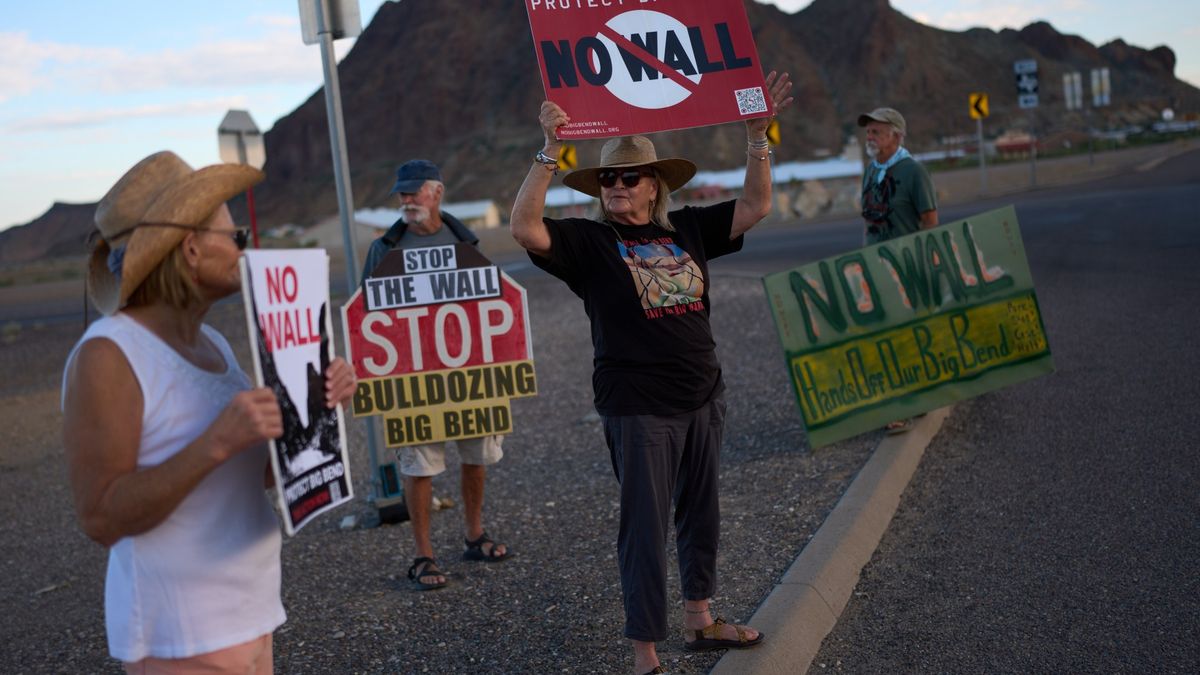
The Justice Department filed an emergency petition on October 22, 2026, urging the Supreme Court to overturn a district‑court injunction that halted construction of a border barrier in the Big Bend region of West Texas. The injunction, issued by Judge Kathleen Cardone, stemmed from a lawsuit brought by the Center for Biological Diversity, a river guide, and other plaintiffs who argue the project violates environmental and historic preservation statutes. The administration’s request seeks to resume a $1.7 billion effort that includes vehicle barriers, patrol roads, lighting, and detection technology around Big Bend National Park, a stretch of desert that accounts for roughly one percent of recent migrant arrests.
The appeal arrives as the Biden‑era immigration debate resurfaces ahead of the 2026 midterm elections. While construction was paused in August after bipartisan criticism, the Trump‑aligned officials in the Department of Homeland Security argue that the area is a “high illegal entry” zone that demands immediate reinforcement. The Supreme Court has not yet responded, leaving the fate of the wall—and the legal battles surrounding it—hanging in the balance.
At the core of the dispute is a clash between executive authority and congressional oversight. The Department of Homeland Security invoked waivers granted by former Secretary Kristi Noem and current Secretary Markwayne Mullin, asserting that Congress authorized the secretary to both build barriers and bypass certain legal requirements for expedited construction. This legal framing sidesteps the National Environmental Policy Act and the National Historic Preservation Act, both of which normally demand rigorous impact assessments.
Politically, the wall serves as a rallying point for a faction of the Republican Party that continues to market immigration control as a litmus test for national security. With midterms looming, lawmakers in swing districts see a hard‑line border stance as a way to energize their base and deflect scrutiny from domestic issues such as inflation and healthcare. The administration’s request to the Supreme Court also signals an attempt to bypass the judiciary’s check on executive overreach, leveraging the court’s historic deference to national security claims.
Economically, the project promises jobs for construction firms and contractors, many of which are tied to political action committees that fund Republican campaigns. Yet the projected cost—$1.7 billion—far exceeds the estimated security benefit, given that the region accounts for a tiny fraction of illegal crossings. This mismatch underscores how the wall functions more as a symbolic gesture than a cost‑effective security solution.
The most immediate victims are the residents and Indigenous peoples whose lands intersect the proposed barrier. Lipan Apache members, such as activist Joey Montoya, have gathered at federal courthouses to protest the wall’s encroachment on sacred sites and traditional hunting grounds. For these communities, the wall threatens not only cultural continuity but also access to water sources that are already scarce in the desert.
Local landowners, many of whom rely on tourism and eco‑recreation, face the prospect of losing property value and the ability to host visitors to the park’s iconic river canyons. The construction would also require the removal of a historic church that dates back to the 19th century, erasing a tangible link to the region’s settlement history.
Wildlife experts warn that the barrier could fragment habitats for species such as the Mexican long‑nosed bat, jaguarundi, and numerous migratory birds that use the Rio Grande corridor. Fragmentation would increase mortality rates and disrupt breeding patterns, with ripple effects on the broader ecosystem that supports both tourism and local livelihoods.
Economically, the wall threatens the $200 million annual tourism revenue generated by Big Bend National Park. Visitors drawn to the park’s untouched landscapes may choose alternative destinations if the desert’s visual integrity is compromised, leading to job losses in hospitality, guiding services, and small‑scale retail.
Official statements emphasize national security, yet they downplay the environmental and cultural costs. The administration’s reliance on waivers effectively sidesteps the public‑interest review process, allowing the project to proceed without the usual inter‑agency consultations. This maneuver obscures the fact that the wall’s strategic value is marginal; the region’s low arrest numbers suggest that resources could be redirected to more effective enforcement tools.
Corporate contractors stand to gain billions in contracts, but their lobbying efforts remain largely invisible to the public. These firms often funnel contributions to lawmakers who champion the wall, creating a feedback loop where policy decisions are influenced by private profit motives rather than empirical security assessments.
Furthermore, the narrative of “high illegal entry” ignores the complex drivers of migration, such as climate change, economic disparity, and violence in Central America. By framing the issue as a simple border breach, the administration sidesteps broader policy discussions that could address root causes, thereby maintaining a narrow, securitized discourse.
The next weeks will reveal whether the Supreme Court grants the administration’s request, a decision that could set a precedent for future executive waivers of environmental law. Watch for a possible emergency hearing in the coming month, as well as any dissenting opinions that might signal a judicial shift.
In parallel, monitor congressional activity: bills that would either reinforce or curtail the secretary’s waiver authority are expected to surface as part of the midterm legislative agenda. The outcome of those debates will indicate how much legislative support the wall retains amid growing public backlash.
Grassroots opposition is also intensifying. Expect coordinated protests at construction sites, legal filings from additional environmental groups, and increased media coverage highlighting the cultural heritage at stake. The convergence of legal, political, and community actions will shape whether the wall becomes a permanent scar on the desert or a fleeting political promise.
Finally, keep an eye on migration data from the Rio Grande corridor. If arrest numbers remain low, the justification for a $1.7 billion wall will weaken, potentially prompting a reevaluation of border‑security priorities in the post‑midterm landscape.
The administration argues that congressional authority allows the secretary of homeland security to waive environmental laws for expedited border construction, and it wants the court to lift a district‑court injunction that halted the project.
The wall threatens to fragment habitats for endangered species, destroy a historic 19th‑century church, and alter the natural landscape of Big Bend National Park, which could reduce tourism revenue and harm local ecosystems.
A ruling in favor of the administration could broaden executive waiver power, allowing similar fast‑track projects to bypass environmental reviews, while a rejection would reinforce judicial oversight of such waivers.
Source referenced: ALJAZEERA
This brief was synthesized by our Editorial Engine and reviewed by The Ground Narrative team.


