TRENDING

Thursday, 22 October 2026
----------------------
11 Jumada Al-Awwal 1448 AH
China’s exports jumped 36% in September, driven by AI and cheap credit, even as its domestic economy staggers under a property crash. The boom fuels global demand but deepens hardship for Chinese households and overseas competitors.
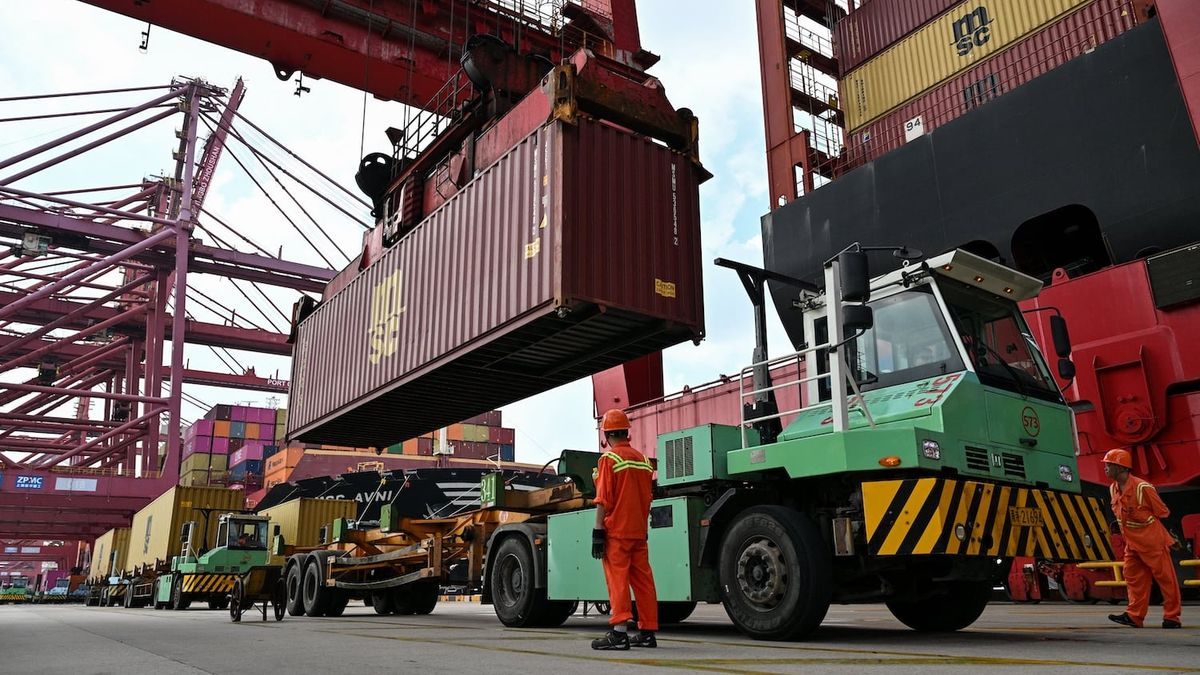
China’s exports surged 36.3% year‑over‑year in September, the strongest monthly jump since July 2010. The surge is concentrated in high‑tech categories—electric vehicles, smartphones, AI‑enabled power‑grid equipment—and is projected to push total export value past $4 trillion this year. At the same time, domestic growth remains modest, with quarterly GDP hovering around 4.6%, still below pre‑pandemic levels.
The export boom rests on three intersecting forces. First, the real‑estate crisis has collapsed land‑sale revenues, freeing bank credit that once fed property developers. Those loans now flow into factories, lowering financing costs for exporters and allowing them to undercut rivals abroad. Second, deflation at the factory gate—driven by weak domestic demand—has kept unit prices low, making Chinese goods exceptionally price‑competitive on world markets. Third, external policy shifts, especially the United States’ trade stance under President Trump, have softened tariffs and painted Beijing as a more reliable supplier, nudging countries like Canada toward Chinese products.
These dynamics sit inside a broader strategic calculus. Beijing seeks to rebalance an economy tilted toward debt‑laden construction, using export growth to generate hard‑currency earnings and preserve social stability. Yet the Party also worries about overcapacity and the political backlash from trading partners accusing China of dumping. The European Union is beginning to mobilize anti‑dumping investigations, leveraging its regulatory clout to extract concessions. Meanwhile, the Chinese leadership is preparing the Fifth Plenum, where the next five‑year plan will likely codify tighter discipline on credit allocation and reinforce AI‑driven industrial policy.
The collapse of the property market has erased wealth for millions of Chinese households. Land‑sale revenues fell 30% this year, and many retirees who relied on home equity for pension supplements now face a shortfall. With limited public safety nets, these families cut consumption, reinforcing the deflationary loop that fuels export competitiveness.
Factory floors are humming, but the human toll is hidden in long shifts, occupational hazards, and stagnant wages. Workers in ports like Ningbo‑Zhoushan load containers at breakneck speed, often without adequate protective gear. The surge in high‑tech production demands new skill sets, yet training programs lag, leaving many laborers in precarious, low‑skill positions.
Developing‑world manufacturers in Southeast Asia and Latin America see their domestic markets flooded with cheap Chinese goods. Local firms struggle to compete, leading to plant closures and job losses. While consumers enjoy lower prices, the broader effect is a deepening of economic dependency on Chinese supply chains.
Rapid production of batteries, EV components, and AI hardware intensifies resource extraction and waste. Air‑quality monitors around industrial hubs report higher particulate levels, and water bodies downstream from manufacturing zones show elevated heavy‑metal concentrations, affecting nearby farming communities.
Official Chinese statements emphasize the export surge as evidence of economic resilience, glossing over the underlying property collapse and the rising household debt burden. By framing the narrative around “high‑quality growth,” the Party sidesteps public debate about wealth inequality and the sustainability of credit‑driven expansion.
Washington’s trade officials celebrate the surge as a win for Trump’s “America‑first” policies, suggesting that tougher tariffs forced China to become a more reliable partner. This spin obscures the fact that lower tariffs have simply opened a larger market for Chinese firms, while American manufacturers continue to lose market share at home.
Many Chinese exporters operate under opaque supply‑chain structures that hide labor violations and state subsidies. International buyers often receive assurances of compliance, yet audits are infrequent, allowing factories to cut corners on safety and wages to maintain razor‑thin margins.
While the EU is gearing up for anti‑dumping probes, its own internal debates about green‑tech subsidies and strategic autonomy create a double standard. European policymakers criticize Chinese overcapacity but simultaneously rely on Chinese components for renewable‑energy projects, a contradiction that receives little public scrutiny.
The upcoming Fifth Plenum will reveal whether Beijing tightens credit controls or doubles down on export‑led growth. Watch for policy language on “high‑quality” manufacturing and any adjustments to the state‑owned bank lending framework. In the West, monitor the EU’s anti‑dumping investigations and any coordinated moves with the United States to impose export controls on AI‑related hardware. Finally, keep an eye on domestic unrest in Chinese cities where property‑loss protests could flare if the government fails to cushion household debt.
The export boom is a double‑edged sword: it fuels global supply chains while deepening internal vulnerabilities. Understanding who benefits, who bears the cost, and what is being left out of official narratives is essential for anyone watching the shifting balance of economic power.
Exports rose 36% YoY because cheap credit shifted from a collapsing property sector to manufacturing, AI‑related demand surged, and U.S. trade policies lowered tariffs, making Chinese goods more competitive.
The risks include domestic debt buildup, potential EU anti‑dumping actions, labor‑rights violations, and environmental damage, all of which could destabilize both China’s economy and global supply chains.
The Plenum will set the next five‑year plan; if it tightens credit or curbs subsidies, export growth could slow, whereas a reaffirmation of export‑led policy would likely sustain the current trajectory.
Source referenced: FOREIGNPOLICY
This brief was synthesized by our Editorial Engine and reviewed by The Ground Narrative team.