TRENDING

Thursday, 22 October 2026
----------------------
11 Jumada Al-Awwal 1448 AH
An Al Jazeera investigation has exposed a former UK Conservative Party candidate discussing the cost of hiring contract killers and offering services of a far-right activist with alleged paramilitary links. The revelations force a reckoning with the shadowy corners where political ambition and violent extremism intersect.
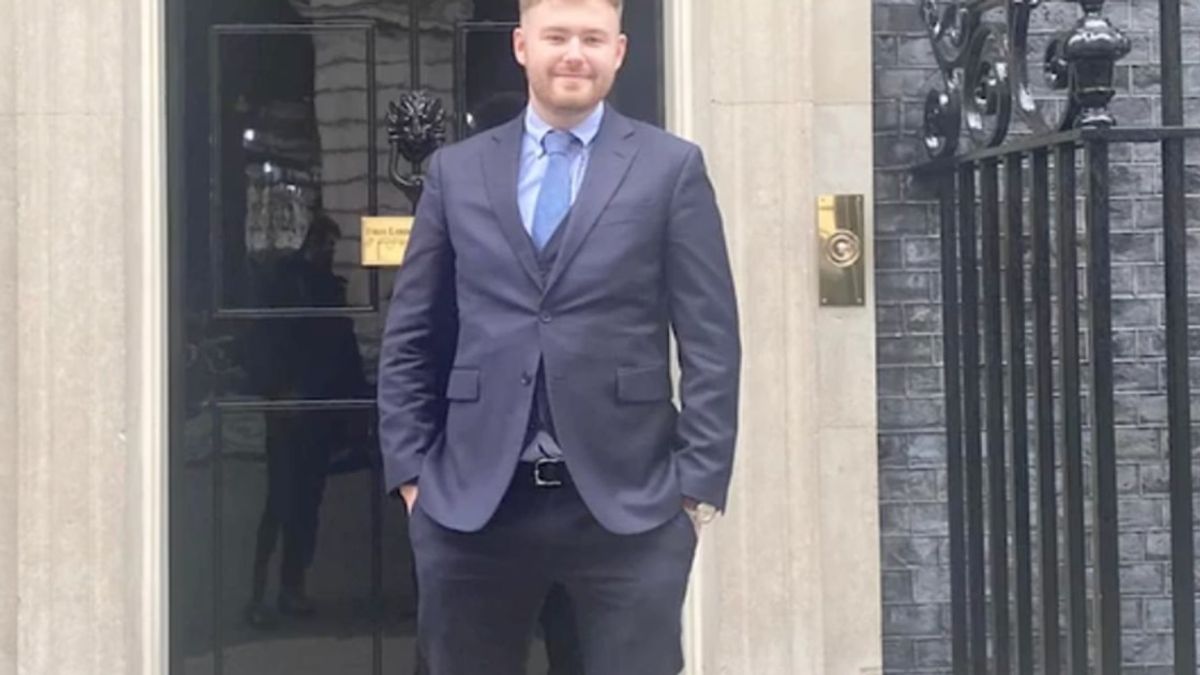
The UK's Conservative Party has suspended Jack Ross, a former election candidate and party member, following an Al Jazeera undercover investigation titled "Contract Killers and the Far Right." The documentary, which began in 2021, revealed Ross discussing the cost of hiring contract killers and offering to broker the services of a far-right activist, identified as Nesbitt, who allegedly has links to unionist paramilitary forces in Northern Ireland. Ross, who served as CEO of Turning Point UK (TPUK) and stood as a Conservative candidate in 2023, was filmed detailing the potential for physical attacks, including stabbings, shootings, and killings, that Nesbitt and his contacts could arrange for a fee. The Conservative Party announced Ross's immediate suspension pending an internal investigation.
The swift suspension of Jack Ross by the Conservative Party is a textbook exercise in political damage control. For any mainstream political party, direct association with discussions of contract killings and paramilitary violence is an existential threat to its public image and electoral viability. The party's immediate action aims to create distance, signaling to the electorate that such behavior is an anomaly, not an ingrained pathology. This move is less about a sudden moral awakening and more about the brutal calculus of political survival, especially in a climate where public trust in institutions is already fragile.
At the heart of this incident is the insidious power of far-right networks and their attempts to penetrate or influence mainstream politics. TPUK, described as an offshoot of the US right-wing activist group Turning Point USA, serves as a crucial bridge here. Its close ties to senior Conservative Party members, as well as leaders of Reform UK, illustrate how fringe ideologies can gain proximity to power. Individuals like Ross, operating within these semi-official channels, can leverage their connections and perceived legitimacy to facilitate activities that would otherwise remain in the shadows. This creates a dangerous grey area where political activism blurs into illicit dealings, offering a veneer of respectability to violent intentions.
The alleged links to Northern Ireland unionist paramilitary forces add a layer of historical and geographical complexity. These groups, born out of decades of conflict, represent a deeply entrenched culture of political violence. Their potential involvement, even indirectly, in mainland UK political machinations suggests a worrying expansion of their influence and a commodification of their violent capabilities. This highlights how historical grievances and organized violence can be repurposed and monetized in new political contexts, far removed from their original battlegrounds.
Finally, the power of undercover journalism, as demonstrated by Al Jazeera, stands in stark contrast to the opaque machinations of these networks. In an age of sophisticated political messaging and controlled narratives, investigative reporting remains a critical check on power. It forces transparency where none is offered, pulling back the curtain on hidden agendas and holding powerful actors accountable in ways that state institutions often fail to do. This particular investigation underscores the vital role of independent media in exposing the mechanics of power when they stray into dangerous territory, challenging the carefully constructed facades of political parties.
The revelations from the Al Jazeera investigation carry a profound human cost, extending far beyond the immediate political fallout. Foremost is the erosion of public trust in democratic institutions. When a former candidate for a major political party is exposed discussing contract killings, it shatters the public's faith in the integrity of the political process itself. Citizens begin to question who truly represents them and whether the system is fundamentally sound, leading to widespread disillusionment and cynicism. This distrust can depress civic engagement and create a vacuum that further empowers extremist elements.
The casual discussion of physical attacks, including
The investigation showed Jack Ross, a former Conservative candidate, discussing the cost of hiring contract killers and offering to broker services of a far-right activist with alleged paramilitary links for physical attacks.
TPUK is an independent offshoot of the US right-wing activist group Turning Point USA, with close ties to senior British Conservative Party and Reform UK members. Jack Ross was its CEO.
The Conservative Party immediately suspended Jack Ross's membership pending an investigation, stating they could not comment further while the process was ongoing.
Source referenced: ALJAZEERA
This brief was synthesized by our Editorial Engine and reviewed by The Ground Narrative team.


