TRENDING

Thursday, 22 October 2026
----------------------
11 Jumada Al-Awwal 1448 AH
The United States plans to shrink its conventional footprint in Europe while keeping the nuclear umbrella, a move that could strain the alliance. This analysis breaks down the power dynamics, the people who will feel the impact, and the gaps officials are trying to hide.
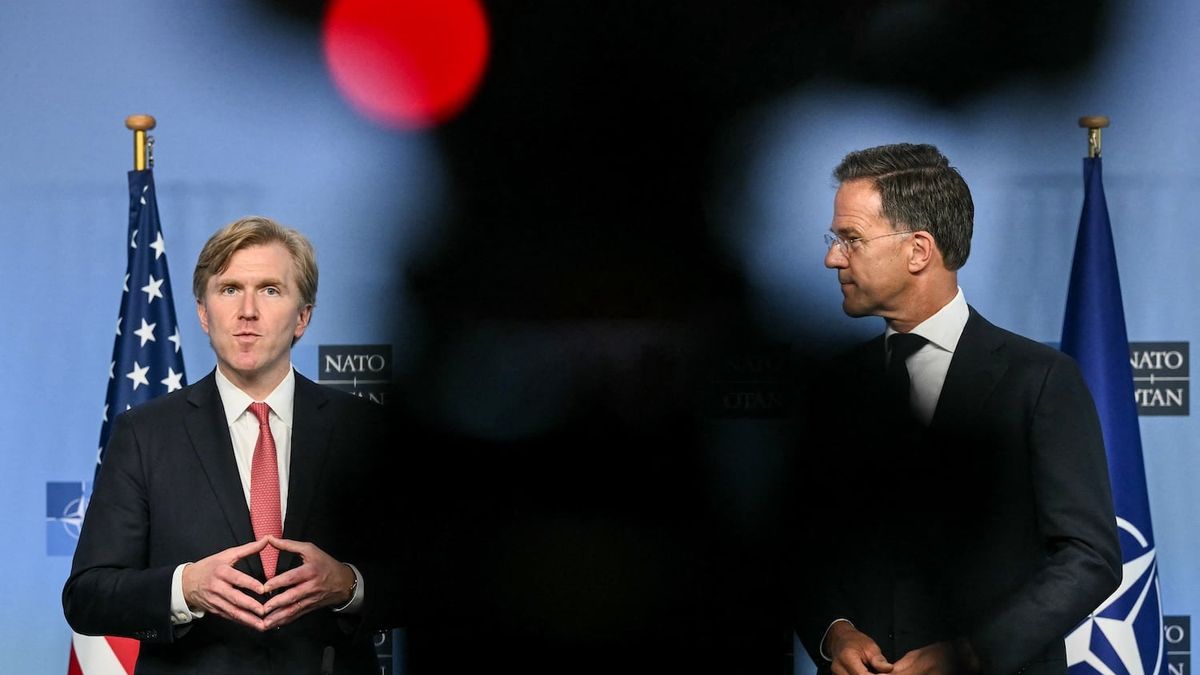
Last week NATO kicked off its annual Steadfast Noon exercise, a drill meant to showcase the alliance’s nuclear readiness. At the same time, Elbridge Colby, the U.S. undersecretary of defense for policy, unveiled “NATO 3.0,” a strategy that would pull roughly 5,000 troops out of Germany, cancel a long‑range strike battalion, and possibly withdraw up to 40,000 soldiers from the continent altogether. The plan promises that Europe will take on conventional defense while the United States continues to provide an extended nuclear deterrent, even as Washington shifts more of its attention to the Indo‑Pacific.
The drive behind NATO 3.0 is a mix of strategic, fiscal, and political incentives. Domestically, the United States faces pressure to curb defense spending on overseas bases while delivering on promises to prioritize the Indo‑Pacific theater against a rising China. By reducing conventional forces in Europe, Washington can reallocate aircraft, ships, and funding to forward‑deployed units in Japan, South Korea, and the Philippines, bolstering its credibility in a region where Beijing is expanding its maritime reach.
At the alliance level, the proposal leans on the long‑standing principle of burden‑sharing. European capitals have long been urged to increase defense budgets, yet many still rely on U.S. forward‑deployed troops for rapid response and deterrence. By framing the shift as a “rebalancing,” Colby offers a political win: Europe appears to shoulder more conventional responsibility while the United States retains the high‑political leverage of nuclear control.
Economically, the drawdown reduces the cost of stationing U.S. forces abroad—housing, logistics, and host‑nation subsidies. However, it also threatens to create a capability gap. Europe lacks indigenous long‑range strike platforms comparable to the Tomahawk or the hypersonic Dark Eagle missiles that the U.S. has postponed deploying. The Kiel Institute estimates that even an optimistic European build‑up would take three to five years, a timeline that leaves a strategic vacuum in the interim.
Militarily, the plan assumes a clean split between conventional and nuclear domains. In practice, escalation ladders are intertwined. Russian doctrine, for example, warns that NATO conventional strikes near its nuclear assets could trigger a nuclear response. By removing U.S. conventional troops that act as a “trip‑wire,” the credibility of the nuclear umbrella may erode, giving Moscow a new lever to test alliance cohesion.
The immediate impact falls on the roughly 70,000 U.S. service members currently stationed across Germany, Romania, and other NATO states. Their withdrawal means base closures, job losses for local civilians, and a sudden reduction in the security umbrella that has underpinned Central European stability since the Cold War. Communities that depend on the American presence for economic activity—restaurants, housing markets, and schools—face abrupt downturns.
European armed forces are expected to fill the conventional gap, but many lack the training, equipment, and integrated command structures to do so quickly. This shortfall could force national governments to increase conscription or divert social spending toward defense, squeezing public services such as health care and education.
For the departing troops, the drawdown brings uncertainty. Units are often reassigned to high‑tempo Indo‑Pacific posts, raising the risk of deployment to contested maritime zones where the probability of conflict with China is higher. Families face repeated relocations, and the psychological toll of being positioned on the front line of a new strategic competition cannot be ignored.
If the alliance’s conventional deterrence weakens, the risk of a miscalculated escalation rises. A conventional clash in the Baltic region could spiral toward nuclear use, endangering civilian populations on both sides of the border. Moreover, a perceived U.S. retreat may embolden Moscow to test NATO resolve, potentially leading to proxy conflicts that spill over into neighboring states.
Official statements emphasize “shared responsibility” and “continued nuclear protection,” but they downplay several critical realities. First, the political calculus in Washington includes a desire to limit the president’s exposure to a European war that could force a nuclear decision—essentially giving the executive a convenient excuse to withhold conventional support while keeping the nuclear option on the table.
Second, the plan glosses over the proliferation risk it creates. By expanding dual‑capable aircraft and nuclear warheads into Poland and the Baltic states, the U.S. signals a willingness to deepen nuclear integration, which could spur European states to consider independent nuclear capabilities despite public opposition.
Third, the narrative omits the internal dissent within NATO. Several member states, notably Germany and France, have voiced concern that a rapid U.S. pullback could destabilize the alliance’s deterrence posture. Their objections are rarely highlighted in U.S. briefings, creating a perception of unanimous support that does not exist.
Finally, the broader geopolitical context is muted. While the U.S. focuses on the Indo‑Pacific, China is simultaneously deepening its economic ties with Europe through the Belt and Road Initiative and the Digital Silk Road. A weakened conventional NATO presence may give Beijing diplomatic leverage to drive wedges between European capitals and the United States.
- Troop movement timelines: Watch for official orders confirming the scale and schedule of U.S. withdrawals from Germany, Romania, and other bases. Delays or accelerations will signal how seriously Washington is committing to the plan.
- Nuclear basing decisions: The potential placement of dual‑capable aircraft and warheads in Poland or the Baltic states will be a litmus test for how far the U.S. is willing to extend its nuclear umbrella.
- European defense spending: Track whether EU nations meet the 2 % of GDP target and allocate funds to develop long‑range strike capabilities. Gaps in procurement will reveal the alliance’s ability to fill the conventional void.
- Russian military posture: Increases in Russian forward deployments or exercises near NATO borders could indicate Moscow’s assessment of the alliance’s weakening conventional deterrent.
- Chinese diplomatic activity: Any surge in Chinese investment or security agreements with European states may be an indirect response to perceived U.S. disengagement.
By monitoring these indicators, observers can gauge whether NATO 3.0 remains a strategic recalibration or devolves into a gamble that leaves Europe—and the world—more vulnerable.
NATO 3.0 is a U.S.-led plan to pull back conventional forces from Europe while keeping the nuclear umbrella. Critics say it weakens conventional deterrence, raises proliferation risks, and shifts more burden onto European armies.
A reduced U.S. conventional presence may embolden Russia to test NATO resolve, especially in the Baltic region, increasing the chance of miscalculation that could lead to escalation toward nuclear use.
European nations lack comparable long‑range strike assets and would need three to five years of investment to close the gap, leaving a capability shortfall in the meantime.
Editor's Note: Analysis based on publicly available policy statements and expert commentary; some details of troop numbers remain classified.
Source referenced: FOREIGNPOLICY
This brief was synthesized by our Editorial Engine and reviewed by The Ground Narrative team.


