TRENDING

Thursday, 22 October 2026
----------------------
11 Jumada Al-Awwal 1448 AH
China’s leadership rests on a tightly knit trio that blends party control with state administration. Understanding their relationship reveals where decisions are made and who feels the impact.
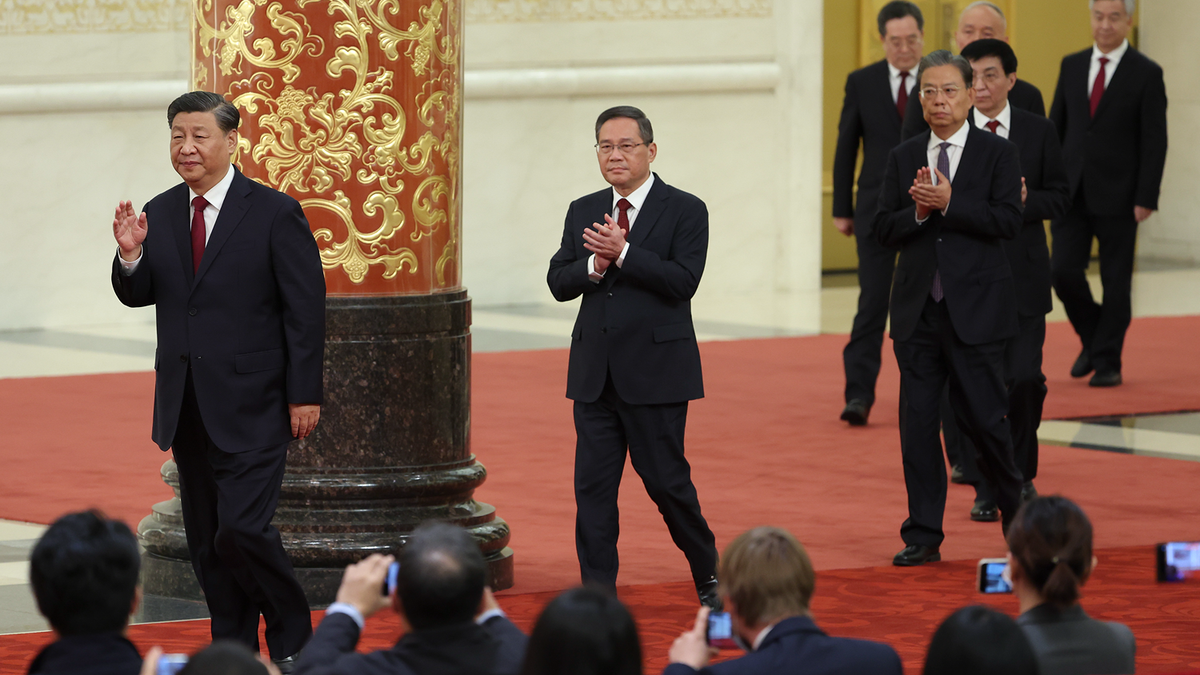
In October 2026 the Chinese Communist Party (CCP) convened the Fifth Plenum of its 20th Central Committee, prompting a wave of speculation about succession and personnel reshuffles. Rumors floated that Premier Li Qiang might replace Xi Jinping as party general secretary, while earlier chatter had named Cai Qi as a possible heir. Neither claim proved credible, but the frenzy highlighted a deeper reality: Xi’s rule depends on two trusted lieutenants who manage the party’s day‑to‑day engine and the state’s administrative apparatus.
The trio functions as a deliberately unbalanced triangle. Xi Jinping occupies the apex, retaining ultimate authority over both the party and the military. Below him, Li Qiang heads the State Council, the formal government body responsible for implementing policy, managing the economy, and conducting foreign affairs. Cai Qi, by contrast, runs the CCP Secretariat and the General Office, the nerve centre that translates Xi’s directives into party paperwork, personnel moves, and ideological campaigns.
- Division of labor: Li’s portfolio covers ministries, provincial coordination, and the massive bureaucracy that delivers services to citizens. Cai’s remit includes party discipline, propaganda, cadre evaluation, and the daily scheduling of Xi’s meetings. By splitting responsibilities, Xi prevents any single subordinate from amassing an independent power base.
- Mutual dependence: Both lieutenants need Xi’s patronage to survive. Li cannot enact major economic reforms without the party’s backing, while Cai’s control of the Secretariat is meaningless without Xi’s strategic vision. Their careers rose through provincial postings where they demonstrated loyalty to Xi, creating a network of personal trust rather than institutional rivalry.
- Checks within the triangle: Xi periodically rotates other senior officials—such as moving Shi Taifeng to the Organization Department—to limit Cai’s reach over personnel appointments. Likewise, Vice Premiers Ding Xuexiang and He Lifeng oversee key economic portfolios, diluting Li’s authority and ensuring that policy decisions remain subject to party oversight.
- Military exclusion: The People’s Liberation Army remains directly answerable to Xi through the Central Military Commission, a realm neither Li nor Cai can infiltrate. This separation reinforces Xi’s personal command over coercive power while delegating administrative and ideological work to his inner circle.
The arrangement mirrors historical power structures, such as Mao’s “central politics” trio of Mao, Lin Biao, and Jiang Qing, but differs in crucial ways. Unlike Lin, who commanded an independent military reputation, Li and Cai lack separate constituencies; their influence is derivative, not autonomous. This makes the triangle more stable but also more dependent on Xi’s health and political will.
The State Council, under Li’s nominal leadership, has overseen a series of macro‑economic adjustments aimed at stabilizing growth after years of slowing GDP. Policies such as tightening credit, curbing property development, and imposing stricter environmental standards have slowed investment and led to layoffs in construction, manufacturing, and related supply chains. Rural migrants returning to their hometowns face dwindling job prospects, while small‑scale entrepreneurs struggle with reduced access to financing.
Cai’s control of the Secretariat means that ideological campaigns—ranging from “common prosperity” narratives to intensified anti‑corruption drives—reach deep into everyday life. Local officials, fearing punitive reviews, often enforce quotas for political education sessions, surveillance of internet activity, and mandatory participation in community “study” meetings. Citizens in urban districts report increased monitoring of their social media, while rural cadres pressure villagers to meet production targets tied to party performance metrics.
The central‑local power dynamic, mediated by Li’s State Council, exacerbates regional inequality. Coastal provinces with export‑oriented economies receive preferential policy support, whereas interior regions face slower infrastructure investment. This uneven development fuels internal migration, strains public services in megacities, and fuels resentment among populations that perceive the central leadership as distant and unresponsive.
Official Chinese rhetoric emphasizes “collective leadership” and “democratic centralism,” suggesting that major decisions emerge from consensus among the Politburo. In practice, the Fifth Plenum agenda is tightly scripted by Xi’s office, with Li and Cai acting more as executors than co‑decision‑makers. The public narrative downplays the concentration of authority in Xi’s hands, masking the limited space for dissent within the top echelons.
While Cai manages party paperwork, the Ministry of State Security and the Central Political and Legal Affairs Commission operate with a degree of autonomy that the public rarely sees. These bodies enforce internal discipline, monitor potential rivals, and suppress dissent beyond the party’s formal structures. Their activities are rarely disclosed, allowing the leadership to claim stability while quietly eliminating alternative power centers.
The State Council’s economic reports are filtered through party‑controlled statistics bureaus, which often smooth out volatility to present a picture of steady growth. This opacity hides the true scale of debt accumulation in state‑owned enterprises and the fragility of local government financing vehicles. By presenting an optimistic macro view, the leadership avoids public scrutiny of the costly adjustments that fall on workers and small businesses.
- Succession signals: Any reshuffling of the Secretariat or State Council portfolios ahead of the next Party Congress could indicate Xi’s preparation for a smoother transition or a recalibration of the power triangle.
- Policy pivots in the Central Financial Commission: Shifts toward more market‑oriented reforms or, conversely, tighter state control will reveal whether Li’s economic team can regain autonomy or remain subordinate to party directives.
- Security crackdowns: An uptick in arrests of former officials or increased surveillance in key sectors may signal that the security apparatus is tightening its grip ahead of potential leadership change.
- Public unrest: Protests over wages, housing, or environmental degradation in major cities could test the limits of the party’s disciplinary reach and force the trio to adjust their governance calculus.
- International engagement: How the trio navigates trade negotiations, especially with the United States and the European Union, will expose the balance between party ideology and pragmatic state interests.
By watching these indicators, observers can gauge whether the “central gang of three” remains a stable engine of governance or whether internal friction will surface as Xi’s tenure draws to a close.
Li Qiang heads the State Council, managing the government's day‑to‑day administration and economic policy, while Cai Qi runs the CCP Secretariat and General Office, translating Xi's directives into party operations and overseeing discipline, propaganda, and personnel matters.
The division of power concentrates decision‑making at the top, leading to economic policies that can cause layoffs and credit tightening, while party campaigns increase surveillance and ideological pressure on everyday life, especially in vulnerable urban and rural communities.
Source referenced: FOREIGNPOLICY
This brief was synthesized by our Editorial Engine and reviewed by The Ground Narrative team.


