TRENDING

Friday, 23 October 2026
----------------------
12 Jumada Al-Awwal 1448 AH
China has publicly urged the United States to end its decades-long economic blockade and coercive measures against Cuba, following a controversial arrest warrant issued by Florida for Raul Castro. This intervention spotlights the enduring human cost of the US-Cuba standoff and its evolving role in the broader competition between global powers.
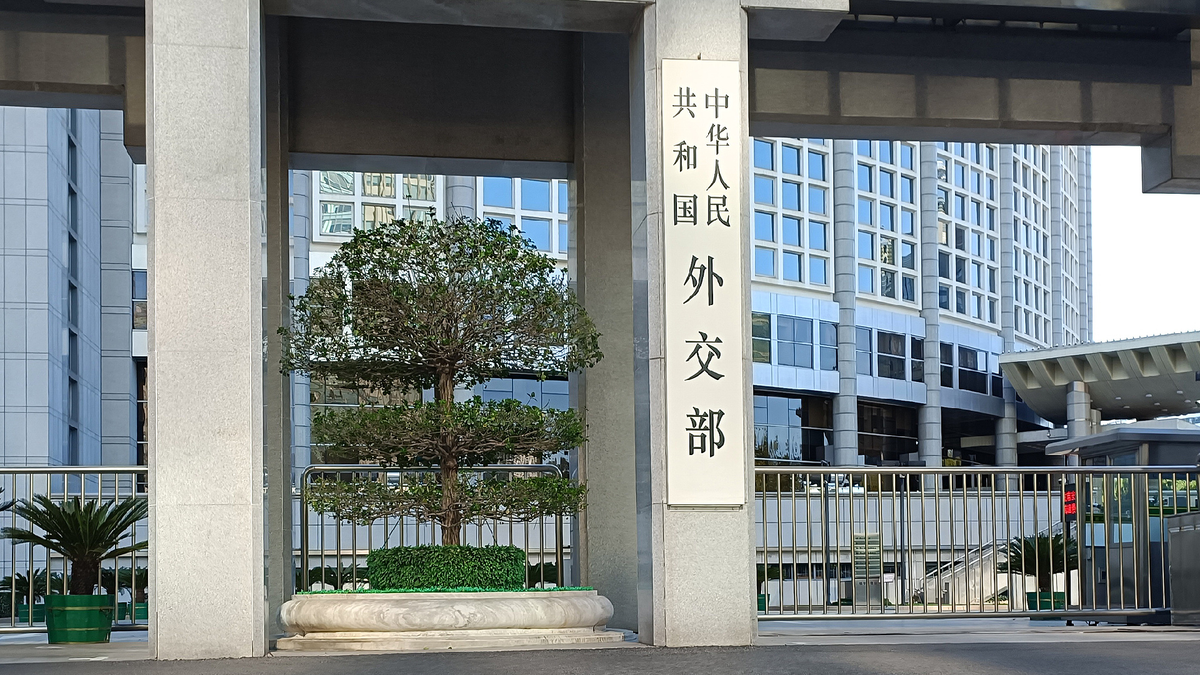
China recently issued a sharp diplomatic statement, calling on the United States to immediately cease its economic blockade and all forms of coercion against Cuba. This intervention by Beijing came in direct response to news that the attorney general of Florida had issued an arrest warrant for former Cuban revolutionary leader Raul Castro. A spokesperson for the Chinese Foreign Ministry, Mao Ning, stated that China consistently opposes the abuse of judicial means to pressure Cuba and firmly supports the island nation in safeguarding its national sovereignty against external interference. The statement underscores a deepening alignment between China and Cuba, bringing a decades-old bilateral dispute into the arena of great power competition.
The incident, seemingly a localized legal action from a US state, quickly escalated into a global diplomatic flashpoint, revealing layers of complex power dynamics. At its core is the United States' enduring economic embargo against Cuba, a policy rooted in Cold War-era animosity and designed to pressure the Cuban government towards political change. This embargo, codified and strengthened over decades by legislation like the Helms-Burton Act, extends its reach beyond US borders, penalizing foreign companies that do business with Cuba, thereby creating a chilling effect on international trade and investment with the island.
The Florida arrest warrant for Raul Castro, while largely symbolic in terms of international enforcement, serves multiple purposes for the US. Domestically, it caters to a powerful anti-Castro Cuban-American lobby, particularly influential in Florida, a key swing state. It signals to this electorate that the US government remains committed to a hardline stance against the Cuban regime. Internationally, it maintains a narrative of accountability, portraying Cuban leaders as human rights violators and justifying continued pressure. This judicial maneuver is a low-cost way for the US to exert political pressure without deploying military force or engaging in direct diplomatic confrontation, relying instead on the perceived legitimacy of its legal system.
China's swift and vocal condemnation of the US action is not merely an act of solidarity with a fellow socialist state. It is a calculated move within Beijing's broader geopolitical strategy. By publicly challenging the US embargo and its extraterritorial application, China positions itself as a champion of national sovereignty and a defender against unilateral coercion, a narrative that resonates strongly with many developing nations wary of US hegemony. This stance bolsters China's diplomatic credibility and influence in the Global South. Furthermore, it allows Beijing to subtly push back against US influence in Latin America—a region the US has historically considered its backyard. As China expands its economic and political footprint globally, supporting nations like Cuba that defy US pressure serves to dilute Washington's power and establish alternative poles of influence.
For Cuba, caught between these two giants, the dynamic is one of perpetual resilience and limited agency. Decades of US sanctions have forced the island to develop coping mechanisms and seek alternative partners. China has emerged as a critical economic lifeline, providing investment, trade, and diplomatic backing that helps Cuba weather the storm of the embargo. This support, however, also creates a new form of dependency, shifting Cuba's reliance from one superpower (the former Soviet Union) to another. The Cuban government leverages its position as a symbol of resistance against US imperialism to garner international support, but the fundamental power imbalance remains, with the welfare of its citizens often caught in the crossfire of great power struggles.
While the diplomatic exchanges and legal maneuvers play out in international forums and political capitals, the most profound and enduring impact of this protracted standoff is borne by the ordinary Cuban people. The US economic embargo, often referred to as a blockade by its critics, has systematically choked Cuba's economy for over six decades, leading to widespread hardship and severely limiting the population's access to basic necessities.
The daily reality for many Cubans is one of chronic shortages. Access to essential goods like food, medicine, and fuel is severely restricted, not due to a lack of global supply, but because the embargo makes it incredibly difficult and costly for Cuba to engage in international trade. Hospitals struggle to acquire crucial medical supplies and equipment, impacting the quality of healthcare. Pharmacies frequently lack common medications, forcing citizens to seek alternatives on the black market or go without. Food rationing is a persistent feature of life, and even basic foodstuffs can be scarce, leading to malnutrition and food insecurity for vulnerable populations. The lack of spare parts for aging infrastructure, from public transport to power grids, leads to frequent breakdowns and inefficiencies, further degrading the quality of life.
Beyond immediate necessities, the embargo stifles Cuba's economic development and innovation. Foreign investment is deterred by the threat of US sanctions, limiting access to capital, technology, and modern business practices. Industries that could otherwise thrive, such as tourism or biotechnology, operate under immense constraints. This lack of economic opportunity fuels a sense of stagnation and despair, particularly among younger generations who see limited prospects for a better future on the island. The brain drain, as educated and skilled Cubans seek opportunities abroad, further depletes the nation's human capital.
The pervasive economic hardship directly contributes to a significant migration crisis. Thousands of Cubans undertake perilous journeys, often across the Florida Straits or through Central America, in desperate attempts to reach the United States or other countries in search of economic stability and freedom. These journeys are fraught with danger, leading to loss of life and family separation. The human toll of these migrations, driven by the economic realities shaped by the embargo, is immense and often overlooked in the high-level diplomatic rhetoric.
In the grand narratives presented by powerful states, crucial aspects of the US-Cuba dynamic and China's role are often downplayed or omitted. Both Washington and Beijing frame their actions in terms of principles, but a closer look reveals underlying strategic interests and convenient omissions.
The United States government consistently frames its embargo as a tool to promote democracy and human rights in Cuba, arguing that the Cuban government is solely responsible for its people's suffering. What is often downplayed, however, is the direct, tangible impact of the sanctions on the daily lives of ordinary Cubans. The narrative rarely acknowledges how restrictions on food, medicine, and fuel imports directly contribute to shortages and economic hardship, instead attributing all woes to the inefficiencies of the Cuban socialist system. This framing conveniently deflects responsibility from the embargo's humanitarian consequences.
Furthermore, the US narrative largely ignores its international isolation on this issue. The United Nations General Assembly has, for decades, overwhelmingly voted to condemn the US embargo as a violation of international law and a hindrance to Cuba's development. The consistent near-unanimous votes against the embargo by the vast majority of the world's nations are rarely highlighted in US official statements, which prefer to emphasize bilateral grievances. The Florida arrest warrant, while presented as a legal action, also serves a powerful domestic political function, appealing to a specific, vocal segment of the US electorate. Its international legal standing is highly questionable, yet its symbolic value in domestic politics is significant, a point rarely articulated by US officials.
China's intervention, while framed as a principled defense of national sovereignty and opposition to
China's intervention is partly a response to a Florida arrest warrant for Raul Castro, but also aligns with its broader strategy to challenge US unilateralism and expand its diplomatic influence, particularly in Latin America, positioning itself as a defender of national sovereignty.
The embargo severely restricts Cuba's access to essential goods like food, medicine, and fuel, leading to widespread economic hardship, limited development, and frequent shortages for the Cuban population, contributing to a significant migration crisis.
This event highlights Cuba's role as a proxy in the broader geopolitical competition between the US and China. China uses its support for Cuba to challenge US influence in Latin America and promote a narrative of opposing unilateral coercion, while the US maintains its long-standing pressure.
Source referenced: CGTN
This brief was synthesized by our Editorial Engine and reviewed by The Ground Narrative team.