TRENDING

Monday, 2 November 2026
----------------------
22 Jumada Al-Awwal 1448 AH
A viral meme involving footballer Kylian Mbappe and China's former leader Mao Zedong has triggered a blackout of Real Madrid matches on Chinese state television. This incident highlights Beijing's formidable leverage over global cultural industries and the human cost borne by millions of football fans.
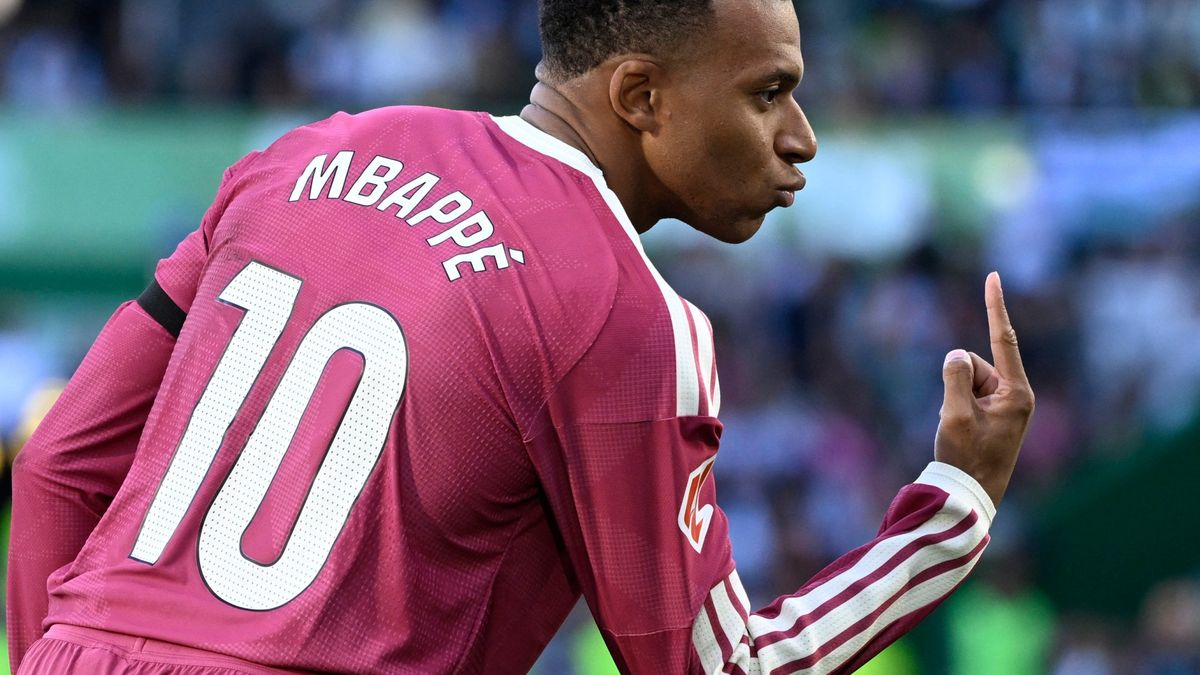
Chinese state television has continued its blackout of Real Madrid football matches, extending the fallout from a controversy involving star forward Kylian Mbappe. The dispute stems from an old video, recently gone viral, where Mbappe referred to Mao Zedong as a "dictator" in the context of a meme. Despite swift apologies issued by Mbappe himself, Real Madrid, and La Liga, China's state broadcaster, CCTV, has maintained its suspension of the club's games, leaving millions of dedicated fans without access to their team's content.
This incident is not merely a cultural misunderstanding; it is a stark demonstration of the Chinese Communist Party's (CCP) formidable power and its willingness to wield economic leverage to enforce ideological conformity. At its core, the blackout reveals several critical power mechanics:
First, economic dependency. China represents an enormous, lucrative market for global sports. European football leagues, including La Liga, and their constituent clubs like Real Madrid, derive substantial revenue from broadcast rights, sponsorships, and merchandise sales within China. This economic reliance grants Beijing immense bargaining power. The threat, or actual implementation, of a blackout can inflict significant financial pain, compelling global entities to adhere to China's political sensitivities.
Second, political survival and narrative control. The CCP's legitimacy is inextricably linked to its historical narrative, which venerates Mao Zedong as the nation's founding father. Any perceived disrespect or criticism of Mao is interpreted as an attack on the foundational principles of the state itself. This makes jokes or dismissive comments about Mao a profound political taboo, triggering a swift and severe response designed to protect the official historical narrative and the Party's authority.
Third, state control over information and media. CCTV and the broader China Media Group (CMG) are state-owned and state-controlled entities. Their programming decisions are not purely commercial; they are political instruments. The selective nature of the blackout—other La Liga matches, such as Barcelona's, are still available on state-owned streaming platforms like Migu, while Real Madrid's are not—underscores this precise, targeted application of state power. It's a clear signal about who is being punished and why, rather than a blanket ban on the sport itself.
Finally, the incident serves as a powerful deterrent. By making an example of Mbappe and Real Madrid, Beijing sends an unequivocal message to other global celebrities, sports leagues, and corporations: engagement with the Chinese market comes with an implicit understanding of China's political red lines. This creates a chilling effect, encouraging self-censorship among international figures who wish to maintain access to the lucrative Chinese consumer base. The precedent set by the NBA blackout in 2019, following comments by then-Houston Rockets General Manager Daryl Morey on Hong Kong, demonstrates a consistent pattern in Beijing's strategy to enforce its political will on the global stage.
While the headlines focus on the diplomatic row and the financial implications for a football club, the most direct and often overlooked casualties are the ordinary people caught in the crossfire of geopolitical power plays. In this instance, the human cost is primarily borne by millions of Chinese football fans.
For dedicated fans of Real Madrid in China, the blackout means being cut off from their passion. Football is more than just a game; it's a source of community, identity, and shared excitement. These fans, who have invested emotionally and often financially in following their favorite club, are now denied the ability to watch live matches on official channels, through no fault of their own. They are collateral damage in a dispute between a foreign athlete and their government's ideological sensitivities. This isn't merely an inconvenience; for many, it's a profound disruption to a significant part of their cultural and social lives.
The incident also casts a long shadow over global cultural exchange. When a joke, however ill-judged, can lead to such severe repercussions, it creates an environment where athletes, artists, and entertainers worldwide may feel compelled to self-censor. This chilling effect stifles genuine interaction and open dialogue, forcing individuals to weigh their freedom of expression against access to a massive market. The result is a less diverse and more politically constrained global cultural landscape, where the fear of offending a powerful state dictates what can and cannot be said.
Beyond the immediate impact on fans, there are broader economic ripples. While Real Madrid and La Liga face direct revenue losses from broadcast rights and sponsorships, the incident also affects local economies that benefit from the global football ecosystem. Furthermore, Chinese brands that cancelled sponsorship deals with Mbappe might face their own internal pressures, showcasing the risks of navigating a politically charged commercial environment. The long-term impact could be a re-evaluation of investment strategies by both foreign entities in China and Chinese entities engaging with the global market, always with an eye on potential political fallout.
What powerful actors are downplaying or omitting in their public statements often reveals more about the underlying power dynamics than what is explicitly stated. In the wake of the Mbappe-Mao meme controversy, several crucial aspects remain unspoken or are deliberately reframed.
The official line from China's Ministry of Foreign Affairs that it "took the apology seriously" implies a path to resolution. However, the continued blackout of Real Madrid matches on CCTV tells a different story. The apologies from Mbappe, the club, and the league were an absolute prerequisite, but clearly not sufficient for full reinstatement. The untold story here is that the goal isn't just an apology; it's a demonstration of absolute power and the complete subservience of foreign entities to China's political narrative. The terms of "redemption" are entirely dictated by Beijing, and they are likely far more extensive than a simple public statement.
The incident is framed as a response to a "joke" about Mao Zedong. However, the deeper truth is that this "joke" is seen by the CCP as an affront to national dignity and sovereignty. The untold story is that this is not about a single footballer's gaffe; it's about the CCP's unwavering commitment to controlling its historical narrative and projecting its authority globally. Any challenge to this narrative, however minor or unintentional, is treated as a direct attack on the state itself, requiring a forceful response to reassert control and send a clear message about China's non-negotiable red lines.
Another significant untold story is the collective silence from other major European football leagues, clubs, and even players regarding the broader implications of such blackouts. While individual apologies are issued, there is little to no unified pushback or even public discussion about the precedent this sets for freedom of expression or the ethical dilemmas of operating in markets with such stringent political controls. This silence suggests a prioritization of market access over defending principles, an implicit acceptance of the terms dictated by Beijing. The global sports industry, as a powerful collective, chooses to navigate these waters individually, fearing that any collective stance might jeopardize their own access to the lucrative Chinese market.
The fact that other La Liga matches are still available on state-owned digital platforms like Migu, while Real Madrid's are not, highlights a sophisticated, nuanced approach to control. This isn't a total cultural ban, but a surgical application of pressure. The untold story is that Beijing is not necessarily trying to cut off its population from all foreign sports content, but rather to precisely target and punish specific entities that cross its political lines. This allows the state to maintain a degree of popular satisfaction while simultaneously enforcing its political will, demonstrating a more refined form of censorship than a blanket ban.
As the Real Madrid blackout continues, several key indicators will reveal the evolving dynamics of China's influence on global sports and culture.
First, the duration and conditions of the blackout's resolution will be critical. Will Real Madrid matches eventually return to CCTV? If so, what further concessions or actions will be required from the club or La Liga? The terms of any reinstatement will provide insight into the precise cost of crossing China's political red lines and the extent of the demands Beijing is willing to make.
Second, observe the behavior of other global sports leagues, clubs, and public figures. Will this incident lead to increased self-censorship, with organizations proactively implementing stricter guidelines for their personnel regarding comments on China-sensitive topics? The chilling effect could prompt a broader shift towards political neutrality, or even alignment, to protect market access.
Third, monitor La Liga's long-term strategy. Beyond the immediate apology, will the league seek to diversify its revenue streams to reduce its reliance on the Chinese market? Or will it double down on efforts to appease Beijing, potentially setting a precedent for other leagues facing similar pressures?
Finally, pay attention to Chinese fan reactions. While official channels are controlled, the passion of millions of Real Madrid supporters remains. Will they find alternative, unofficial means to watch their team, and could this create any subtle internal pressure or shift in consumption patterns that the authorities might need to consider? The quiet discontent of a massive fan base, though not overtly political, can sometimes signal underlying tensions in a tightly controlled information environment.
Chinese state television initiated a blackout of Real Madrid matches after star player Kylian Mbappe referred to China's former leader Mao Zedong as a 'dictator' in a viral video. This comment was deemed a violation of political sensitivities and a challenge to China's official historical narrative.
Yes, both Kylian Mbappe, Real Madrid, and La Liga issued apologies for the comments. However, despite these apologies, Chinese state television has continued to suspend the broadcast of Real Madrid's games, indicating that the apologies were not immediately sufficient to resolve the issue.
This incident highlights China's significant economic leverage over global sports and businesses. It sends a clear message that access to the lucrative Chinese market comes with an expectation of adherence to China's political red lines and historical narratives, potentially leading to increased self-censorship among international entities.
Editor's Note: Analysis is based directly on the provided raw intelligence and standard geopolitical understanding of China's foreign policy and domestic control.
Source referenced: ALJAZEERA
This brief was synthesized by our Editorial Engine and reviewed by The Ground Narrative team.