TRENDING

Monday, 2 November 2026
----------------------
22 Jumada Al-Awwal 1448 AH
German and Chinese auto firms are deepening ties as the industry pivots to electric and digital cars. The partnership promises market gains but also reshapes labor and supply chains across continents.
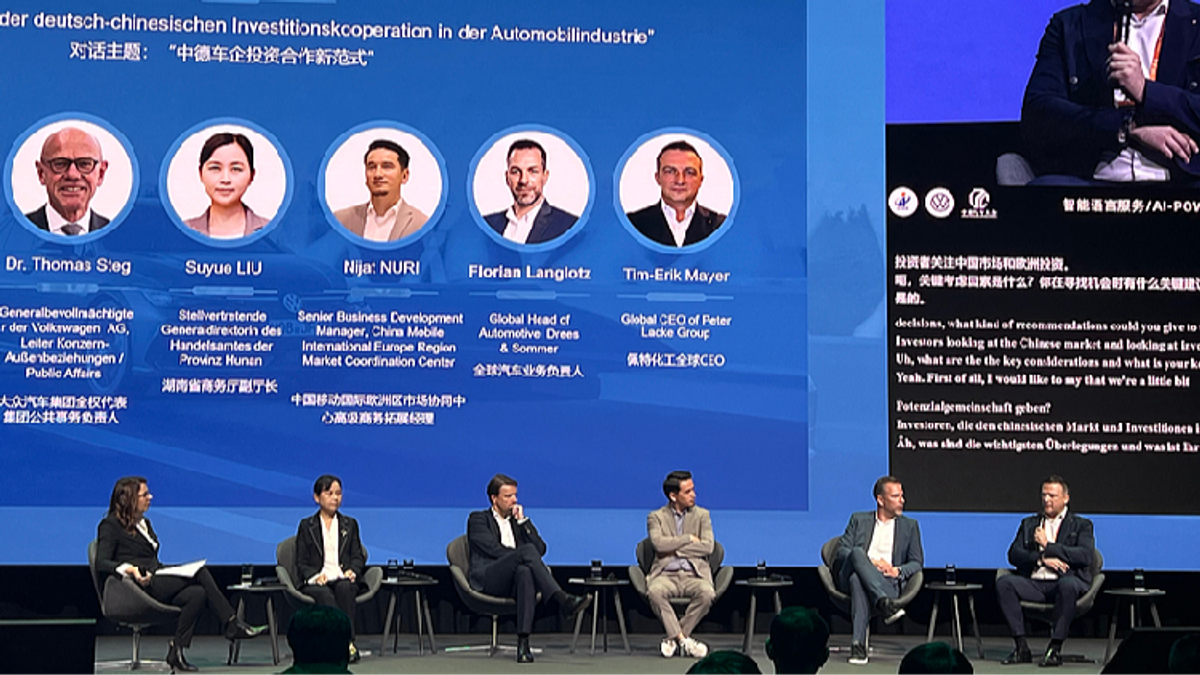
A joint session of the 10th German‑Chinese Automotive Congress in Wolfsburg brought together roughly 600 delegates from Germany and China to discuss deeper collaboration. Officials highlighted expanding cooperation beyond vehicle assembly into batteries, digital connectivity, and AI‑driven manufacturing. The event coincided with the International Suppliers Fair, where 45 Chinese parts makers showcased their capabilities, and a parallel Hunan‑Germany trade dialogue underscored regional investment opportunities.
The auto sector sits at the crossroads of climate policy, technology race, and geopolitical rivalry. Germany's legacy of engineering excellence faces a market squeeze: domestic demand for internal‑combustion cars is falling, while the EU’s emissions standards push manufacturers toward costly retooling. Partnering with China offers a shortcut to scale—Chinese firms provide cheap, high‑volume battery production and a massive consumer base that can absorb new electric models.
From the Chinese side, the incentive is twofold. First, access to German precision engineering and brand cachet helps Chinese automakers climb the value chain, moving from low‑margin copycats to premium EV makers. Second, the partnership aligns with Beijing’s Made‑in‑China 2025 agenda, which prioritises advanced manufacturing and reduces reliance on foreign technology.
Political survival also drives the agenda. In Europe, governments are under pressure to deliver green jobs and meet climate targets, so showcasing a high‑profile Sino‑German alliance serves as a tangible proof point. In Beijing, the narrative of “win‑win cooperation” counters Western narratives of strategic decoupling and reinforces the image of a responsible global power.
Economic trade‑offs are evident. German firms gain cheaper components, but they also risk ceding intellectual property to partners that could later become competitors. Chinese firms secure a foothold in the lucrative European market, yet they must navigate stricter safety and data‑privacy regulations that could increase compliance costs.
Military doctrine and alliance math, while not overt, linger in the background. The United States has warned allies about technology transfers that could bolster China’s strategic industries. As German firms deepen ties, they must balance commercial benefits against potential friction within NATO and the broader trans‑Atlantic security framework.
The promise of new factories and joint ventures masks a reshuffling of labor that hits workers on both sides of the Rhine and the Yangtze. In Germany, plant automation accelerated by AI and robotics threatens traditional assembly‑line jobs. While upskilling programs are announced, many older workers lack the digital literacy required for the new roles, leading to early retirements or forced career changes.
In China, the surge in battery and component production intensifies already harsh working conditions in factories located in Hunan and other industrial provinces. Workers often face long shifts, exposure to hazardous materials, and limited collective bargaining power. The push for rapid output to meet European demand can exacerbate these issues, especially if German partners prioritize cost over safety standards.
Supply‑chain ripples extend to smaller towns that host tier‑two and tier‑three suppliers. A single contract win for a German‑Chinese joint venture can mean the difference between a local plant staying open or shutting down, directly affecting families dependent on those jobs.
Environmental externalities also burden communities. Battery manufacturing generates toxic waste, and without stringent oversight, nearby rivers and soils can become polluted, impacting agriculture and public health.
Official statements celebrate “mutual benefit” and “technological innovation,” yet several critical dimensions remain under‑reported. First, the scale of state subsidies funnelled into joint R&D projects is substantial, effectively lowering the market price of Chinese‑made components and distorting competition.
Second, intellectual‑property safeguards are weak. While memoranda of understanding promise protection, enforcement mechanisms are vague, leaving German firms vulnerable to technology leakage that could later fuel Chinese competitors in both civilian and defense markets.
Third, the narrative downplays the geopolitical calculus. By deepening economic interdependence, both Germany and China hedge against a potential trade war, but they also create leverage points that could be exploited in future diplomatic negotiations—something that Western policymakers are keen to monitor.
Fourth, labor standards are largely omitted from the public discourse. German unions have raised concerns about a “race to the bottom” in wages and safety, but these warnings are rarely echoed in the joint press releases, which focus on market growth.
Finally, the environmental cost of scaling battery production is glossed over. Raw‑material extraction—lithium, cobalt, nickel—often occurs in regions with lax regulations, linking the European‑Chinese partnership to supply‑chain emissions that contradict the green narrative.
Observers should track three converging signals. One, the signing of concrete joint‑venture agreements, especially those involving battery gigafactories on European soil, will reveal how much technology transfer is actually occurring. Two, policy shifts within the EU—such as stricter rules on foreign subsidies and new data‑privacy standards for connected cars—could either constrain or accelerate the partnership.
Three, labor and environmental watchdog reports from both continents will test the durability of the cooperation. If unions in Germany organize strikes or if Chinese labor NGOs expose unsafe practices, the partnership could face reputational backlash that forces renegotiation of terms.
Finally, the reaction of the United States will be pivotal. Any move to restrict critical components or to label certain Sino‑German collaborations as security risks could reshape the investment landscape, prompting firms to reconsider the balance between commercial gain and geopolitical exposure.
Staying alert to these developments will help citizens understand whether the German‑Chinese auto alliance delivers on its promise of cleaner, smarter cars—or simply reshuffles profit and risk onto the backs of workers and the environment.
The partnership aims to combine German engineering expertise with Chinese manufacturing scale, accelerate electric‑vehicle rollout, and secure supply‑chain access to batteries and digital components for both markets.
German assembly workers face automation and job displacement, while Chinese factory staff may encounter longer hours and safety risks as production ramps up to meet European demand.
Editor's Note: Analysis based on publicly available statements and industry trends; specific contract details remain undisclosed.
Source referenced: CGTN
This brief was synthesized by our Editorial Engine and reviewed by The Ground Narrative team.