TRENDING

Monday, 2 November 2026
----------------------
22 Jumada Al-Awwal 1448 AH
Nigeria recently hosted its first Africa International Defence Exhibition, signaling a major push towards domestic arms manufacturing to combat pervasive insecurity. This strategic pivot aims to reduce reliance on foreign suppliers but raises critical questions about its true costs and effectiveness.
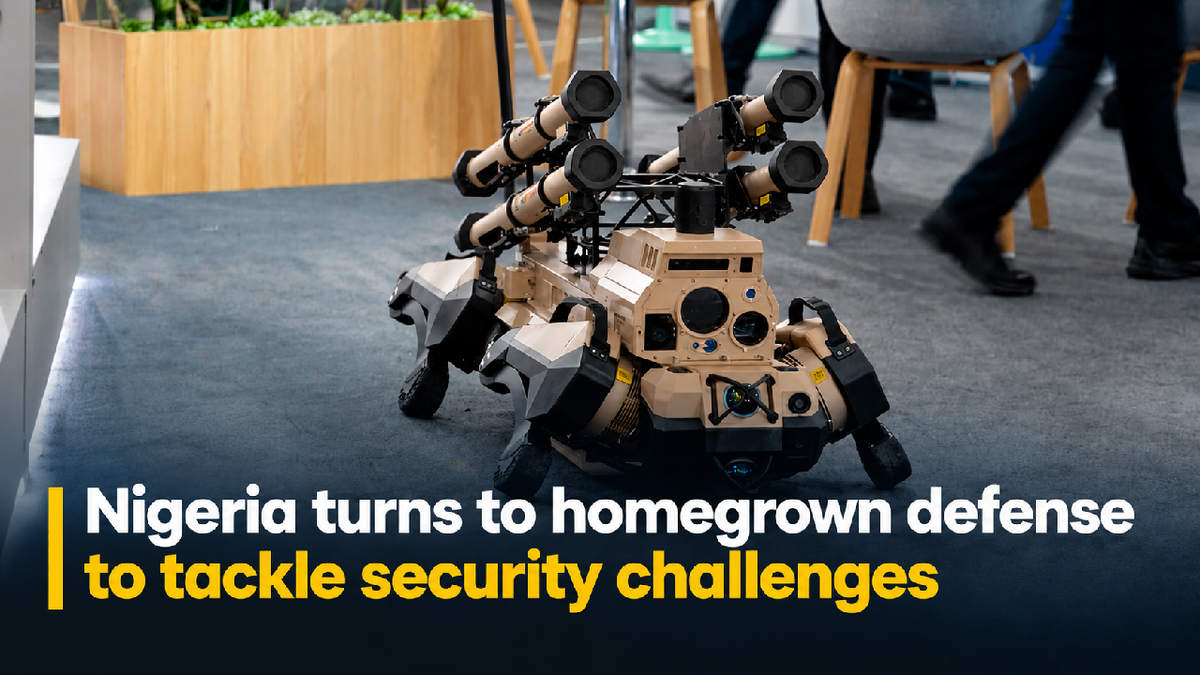
Nigeria, Africa's most populous nation, recently concluded its inaugural Africa International Defence Exhibition (AFRIDEX) in Lagos. Organized by the Defence Industries Corporation of Nigeria (DICON), the event showcased a range of locally produced military equipment, including combat drones, armored vehicles, and ammunition. The exhibition brought together local manufacturers and international firms, signaling Nigeria's intent to promote domestic defense production, attract investment, and forge partnerships aimed at reducing its long-standing reliance on imported military hardware. This pivot comes as the country grapples with persistent and multifaceted internal security challenges, from Islamist insurgencies to widespread banditry and kidnappings.
Nigeria's push for a homegrown defense industry is a direct response to a complex web of internal pressures and external realities. For years, the Nigerian state has been locked in a brutal struggle against groups like Boko Haram and the Islamic State West Africa Province (ISWAP) in the northeast, alongside escalating banditry, kidnappings-for-ransom, and farmer-herder clashes across vast swathes of the country. The sheer scale and persistence of these threats have exposed the limitations of relying solely on foreign arms suppliers.
Historically, Nigeria has sourced its military equipment from various international partners, including the United States, China, Russia, and Europe. However, these relationships have often come with strings attached, including strict export controls, lengthy procurement processes, and high costs. The desire for self-reliance stems from a recognition that external dependencies can be unreliable, particularly when facing urgent, existential threats. By developing its own defense manufacturing capabilities, Nigeria aims to gain greater control over its supply chain, ensuring quicker access to vital equipment and reducing its vulnerability to geopolitical shifts or embargoes imposed by foreign powers.
Beyond immediate security concerns, this initiative is also a strategic play for economic diversification. Nigeria's economy remains heavily dependent on oil exports, making it susceptible to global commodity price fluctuations. Developing a robust defense industry can stimulate industrial growth, create skilled jobs, and foster technological innovation, contributing to a more resilient and diversified economic base. This aligns with broader national aspirations to become a leading industrial power on the African continent.
Furthermore, a strong domestic defense industry bolsters Nigeria's image as a regional hegemon. As a major contributor to peacekeeping missions and a key player in West African security, the ability to produce its own advanced military hardware enhances its influence and capacity to project power. For the current Nigerian government, investing in national security and demonstrating a tangible commitment to protecting citizens can also be a powerful tool for shoring up political legitimacy and public confidence, especially in the face of widespread discontent over insecurity.
The relentless insecurity plaguing Nigeria has exacted a devastating human toll, and the pivot to homegrown defense, while framed as a solution, carries its own set of potential burdens for ordinary citizens.
Millions of Nigerians have been displaced by conflict, their homes destroyed, and their livelihoods shattered. Boko Haram and ISWAP have terrorized communities, leading to mass casualties and the abduction of thousands. In the northwest and central regions, banditry and kidnappings have become a pervasive threat, turning daily life into a gamble. Farmers cannot tend their fields, traders fear travel, and children are often too scared to attend school. The economic ripple effects are profound, contributing to food insecurity and deepening poverty across the nation. Any investment in defense, whether foreign or domestic, is ultimately measured by its ability to alleviate this pervasive fear and suffering.
Developing a sophisticated defense industry is an incredibly expensive undertaking. Nigeria, despite its vast resources, faces immense challenges in public health, education, and infrastructure. Every dollar allocated to manufacturing drones or armored vehicles is a dollar not spent on building schools, equipping hospitals, or improving access to clean water. For a country with high rates of poverty and a rapidly growing population, this opportunity cost is significant. Citizens living in underserved communities might question the prioritization of military hardware over essential social services, especially if the security situation does not visibly improve.
While the stated goal is to combat existing threats, the proliferation of domestically produced weapons, particularly advanced systems like combat drones, carries inherent risks. There is a potential for these weapons to be misused, either by state actors against civilian populations or by non-state actors if they fall into the wrong hands. An increase in the availability of arms could inadvertently escalate internal conflicts, leading to more intense and destructive engagements. Furthermore, the development of a powerful military-industrial complex could create vested interests that prioritize continued conflict over peaceful resolution, perpetuating the cycle of violence.
While Nigeria's ambition to build a homegrown defense industry is commendable, the narrative often downplays the immense practical challenges and deeper systemic issues that a military-industrial solution alone cannot address.
The term
Source referenced: CGTN
This brief was synthesized by our Editorial Engine and reviewed by The Ground Narrative team.