TRENDING

Monday, 2 November 2026
----------------------
22 Jumada Al-Awwal 1448 AH
The Yerevan Pathway aims to accelerate biodiversity action but faces a steep financing cliff. Ordinary people in the Global South stand to lose the most if promises remain unfulfilled.
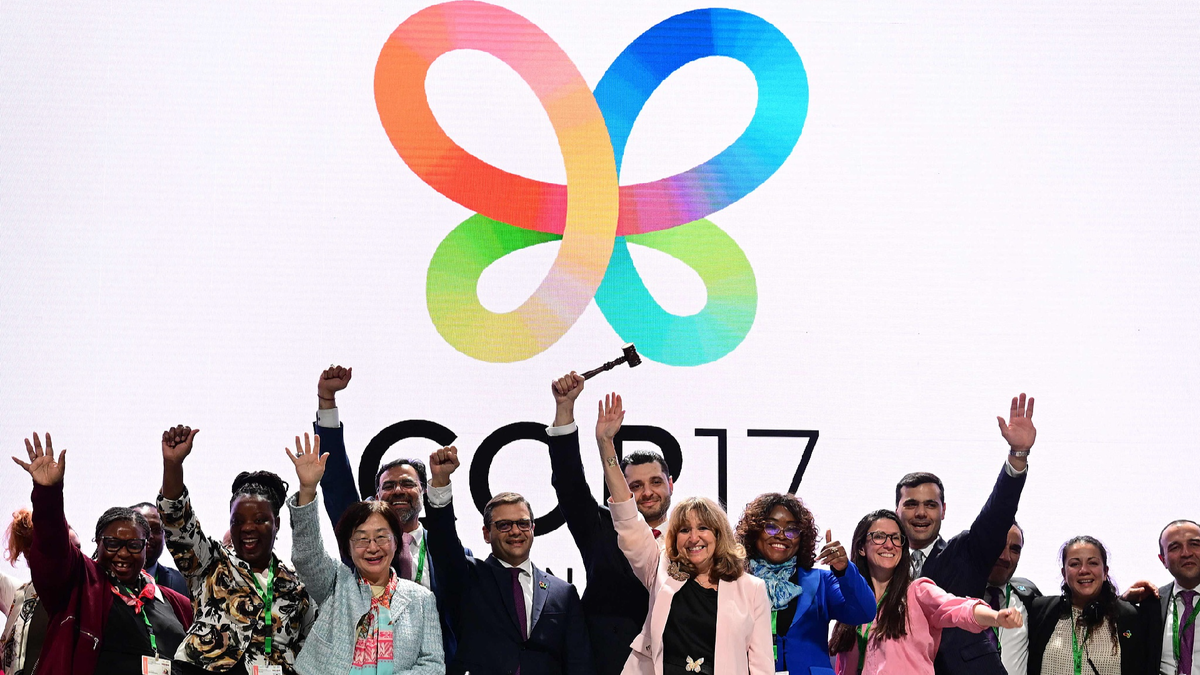
The 17th meeting of the Conference of the Parties to the Convention on Biological Diversity (COP17) wrapped up in Yerevan, Armenia, with negotiators adopting the Yerevan Pathway. The pathway does not set new targets; instead it outlines how countries can speed up delivery on the 23 goals of the Kunming‑Montreal Global Biodiversity Framework before the 2030 deadline. In parallel, the secretariat announced nearly $2 billion in new biodiversity funding, including contributions from the Global Environment Facility and the newly created Value Nature Fund.
The pathway’s design reflects a tug‑of‑war between two structural forces. First, China has leveraged its diplomatic capital, showcasing domestic red‑line policies and the Kunming Biodiversity Fund to position itself as a leader in the implementation narrative. Second, a persistent finance divide pits developed countries, which have missed the pledged $20 billion annual support to developing nations, against a growing chorus of low‑income states demanding predictable cash flows. The negotiations also revealed a strategic shift: rather than expanding the list of targets, the focus is on broadening national target coverage and tightening monitoring mechanisms, a move that eases the political risk for wealthier states while increasing reporting burdens on poorer governments. The involvement of multilateral funds such as the Global Environment Facility signals an attempt to institutionalize financing, yet the reliance on voluntary contributions keeps the system vulnerable to shifting domestic politics in donor countries.
While diplomats trade technical language, the real stakes fall on communities whose livelihoods depend on intact ecosystems. Smallholder farmers across Sub‑Saharan Africa risk losing pollination services that underpin staple crops if habitat restoration stalls. In the Amazon basin, indigenous communities confront accelerated deforestation, threatening cultural heritage and food security. Coastal fishers in Southeast Asia see dwindling catches as mangrove loss undermines nursery grounds, pushing families toward precarious urban migration. The financing shortfall translates directly into delayed restoration projects, insufficient capacity‑building, and a widening gap between promised biodiversity outcomes and on‑the‑ground realities.
Official statements celebrate the $2 billion pledge, but they downplay three critical gaps. First, the finance shortfall remains stark: the pledged amount covers only a fraction of the estimated $30 billion needed annually to meet the 2030 targets. Second, the private sector—which could mobilize the bulk of required capital—is largely absent from the discourse, with governments preferring public‑funded mechanisms that sidestep market‑based accountability. Third, policy loopholes allow donor nations to count indirect aid, such as climate finance, toward biodiversity commitments, obscuring the true level of dedicated resources. These omissions create a narrative of progress while masking the structural inadequacies that will likely stall implementation.
The next four years will be a litmus test for the pathway’s credibility. Watch for the 2028 global review, where the CBD will assess whether national reports reflect genuine scaling‑up or merely paperwork. Pay attention to national target revisions in key biodiversity hotspots; ambitious revisions could signal genuine political will, while modest updates may indicate financing fatigue. Finally, monitor the emerging climate‑biodiversity nexus in policy circles, as integration of climate funds into biodiversity projects could either plug the financing gap or dilute accountability. The trajectory of these signals will reveal whether the Yerevan Pathway remains a diplomatic milestone or a missed opportunity for the world’s most vulnerable peoples.
The Yerevan Pathway is a set of implementation guidelines adopted at COP17 that focus on accelerating delivery of existing targets from the Kunming‑Montreal Global Biodiversity Framework, rather than creating new goals. It emphasizes broader national coverage, stronger financing, and improved monitoring.
Developing nations rely heavily on external funds to restore ecosystems and enforce protection measures. The promised $20 billion annual contribution from developed countries has not materialized, leaving a large financing gap that stalls projects and capacity‑building needed to meet the 2030 targets.
Source referenced: CGTN
This brief was synthesized by our Editorial Engine and reviewed by The Ground Narrative team.