TRENDING

Thursday, 22 October 2026
----------------------
11 Jumada Al-Awwal 1448 AH
Chinese Premier Li Qiang has formally congratulated Andy Burnham on his assumption of office as British Prime Minister, emphasizing the importance of dialogue and cooperation between the two UN Security Council permanent members. This diplomatic gesture signals Beijing's readiness to engage with the new UK administration amidst a complex geopolitical landscape.
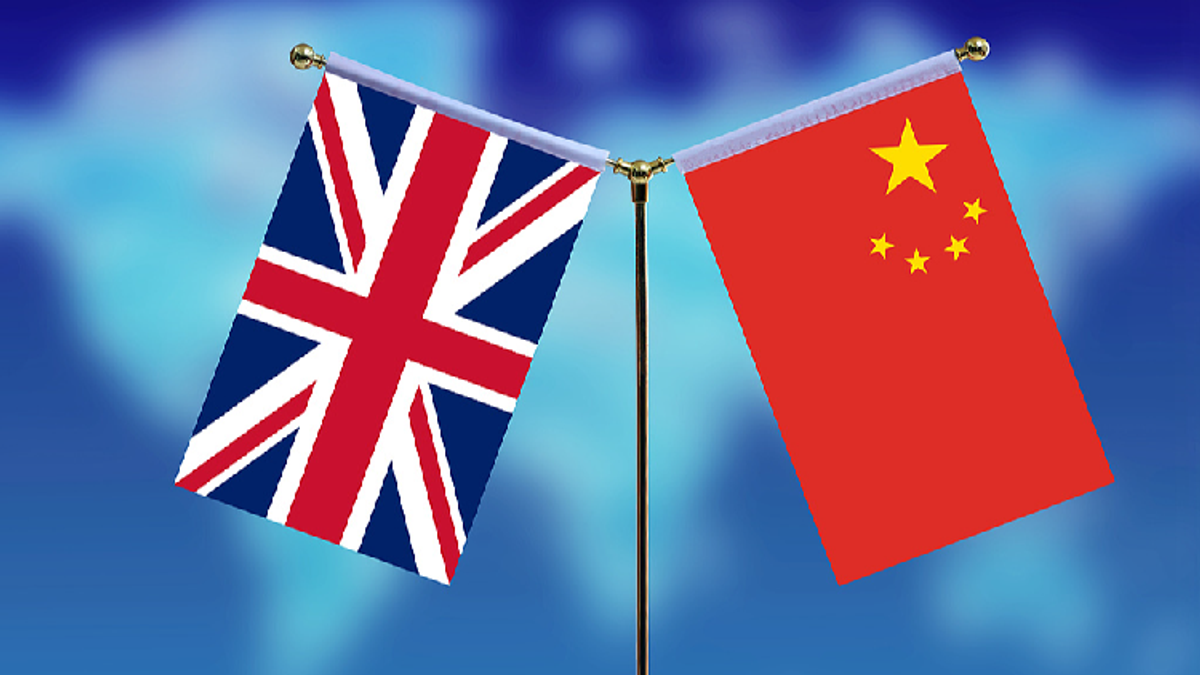
On July 20, 2026, Chinese Premier Li Qiang extended official congratulations to Andy Burnham following his appointment as the new Prime Minister of the United Kingdom. This diplomatic communication, reported by CGTN, marks an important initial engagement between Beijing and the fresh leadership in London, setting an early tone for future bilateral relations. Premier Li underscored the shared status of China and Britain as permanent members of the United Nations Security Council and major global economies, highlighting the potential for their strengthened dialogue and cooperation to not only benefit both nations but also inject stability into global peace.
The congratulatory message from Beijing is more than a mere formality; it represents a calculated diplomatic overture with significant geopolitical implications. From China's perspective, engaging with a new UK administration offers an opportunity to recalibrate a relationship that has seen increasing friction in recent years. Beijing likely seeks to foster a more pragmatic and less confrontational stance from London, especially given the UK's close alignment with the United States and its allies on issues such as human rights, security concerns, and regional stability in the Indo-Pacific.
China's emphasis on the two countries' roles as permanent UNSC members and major economies underscores its desire for a stable, predictable international environment, particularly with other global powers. Strengthening economic ties and promoting cooperation in various fields, as expressed by Premier Li, aligns with China's broader strategy of diversifying its international partnerships and mitigating the impact of potential decoupling efforts by Western nations. The mention of pushing forward a "long-term, stable and comprehensive strategic partnership" indicates China's aspiration for a deeper, more encompassing relationship, potentially harking back to the 'golden era' rhetoric of previous years, albeit in a vastly changed geopolitical context.
For the United Kingdom under Prime Minister Andy Burnham, this congratulatory message initiates the complex task of defining its foreign policy towards China. The new government will need to navigate a delicate balance between economic interests, which often favor engagement with China, and geopolitical concerns, including national security, human rights, and adherence to international law. The UK's post-Brexit global role necessitates forging strong trade relationships, and China remains a significant economic partner. However, previous UK governments have faced increasing domestic and international pressure to adopt a tougher stance on issues such as Hong Kong, Xinjiang, and China's growing assertiveness in the South China Sea.
Prime Minister Burnham's administration will likely be scrutinizing Beijing's intentions while formulating its own approach. The challenge will be to find a path that allows for constructive engagement on global issues like climate change and trade, without compromising on core values or security alliances, such as AUKUS and the Five Eyes intelligence-sharing network. The initial diplomatic exchange provides a baseline, but the true direction of UK-China relations will emerge as the new government articulates its specific policies and priorities.
This exchange holds broader implications for international relations. As two major global players and permanent members of the UN Security Council, the nature of the UK-China relationship can influence multilateral cooperation on critical global challenges. China's call for stability and cooperation resonates in a world grappling with multiple crises, from regional conflicts to economic uncertainties. Any perceived shift towards a more accommodating or, conversely, a more confrontational UK stance could ripple through the Western alliance's collective approach to China.
The diplomatic overture serves as a reminder that despite significant ideological and strategic divergences, major powers continue to seek channels for communication and potential cooperation. The future trajectory of the UK-China relationship will be a key indicator of how Western democracies balance their economic imperatives with their security concerns and values in an increasingly multipolar world. The coming months will reveal whether this initial diplomatic goodwill can translate into substantive progress or if underlying tensions will continue to define one of the world's most critical bilateral relationships.
Source referenced: CGTN
This brief was synthesized by our Editorial Engine and reviewed by The Ground Narrative team.


