TRENDING

Friday, 9 October 2026
----------------------
28 Rabi' Al-Thani 1448 AH
A botched lethal injection in Tennessee has reignited debate over the death penalty, exposing procedural flaws and human suffering. The case reveals how political, legal, and pharmaceutical forces intersect to keep a controversial practice alive.
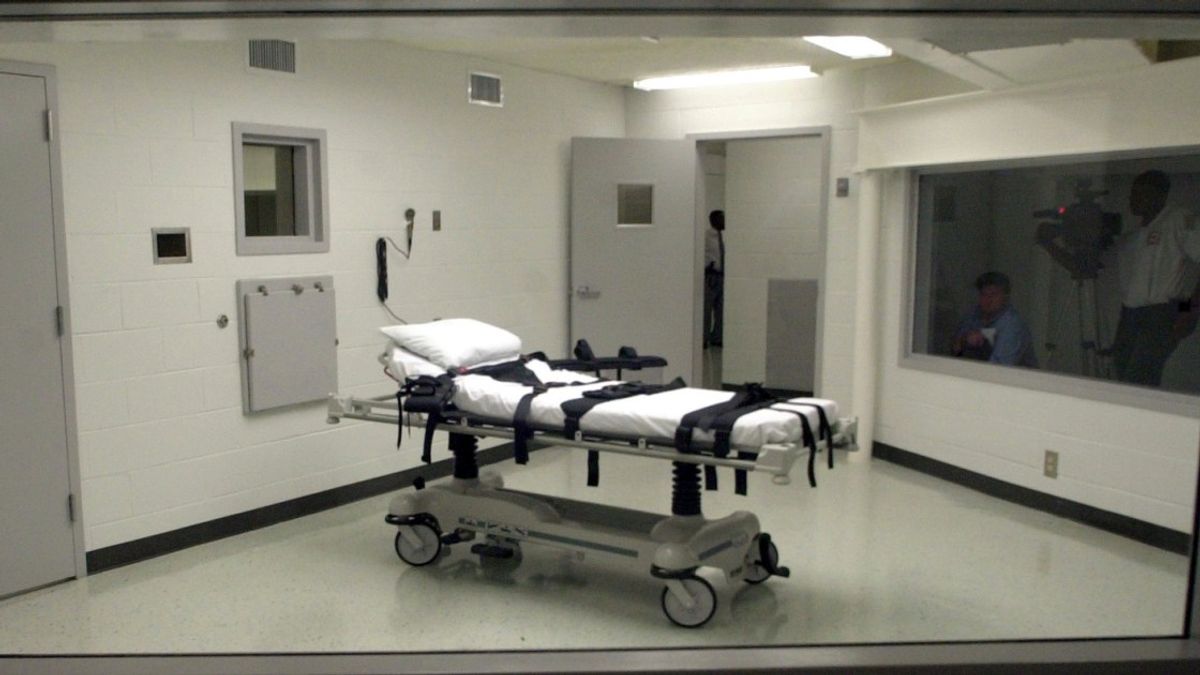
The state of Tennessee attempted to execute Christa Pike on September 30, 2026, using two doses of pentobarbital. The drugs failed to induce death, and witnesses reported Pike breathing, snoring, and even moving on the gurney. After a week of intensive medical care, she regained consciousness, prompting Governor Bill Lee to pause all executions in the state and order a third‑party review.
The death‑penalty system in the United States is sustained by a web of incentives that extend far beyond the courtroom. State legislators often champion capital punishment as a political badge of toughness, appealing to constituencies that equate harsh sentencing with public safety. Governors, meanwhile, use execution schedules to demonstrate decisive leadership, especially in states where elections hinge on law‑and‑order narratives.
Prisons rely on a fragile supply chain for execution drugs. After major pharmaceutical companies barred the use of their products for capital punishment, states turned to compounding pharmacies that operate with limited oversight. These smaller facilities produce drugs in batches that may be expired, improperly mixed, or contaminated, increasing the likelihood of a botched injection. The lack of transparent sourcing shields state officials from direct accountability while preserving the façade of a humane method.
Legal frameworks further entrench the practice. The Supreme Court has repeatedly ruled that the method, not the sentence, is the constitutional battleground, allowing states to sidestep broader challenges to capital punishment itself. This judicial focus creates a narrow arena where procedural tweaks—such as switching to a new drug cocktail—become the primary point of contest, diverting attention from the moral and racial dimensions of the death penalty.
Economic considerations also play a hidden role. Executions are expensive, but they generate revenue for private contractors who provide the drugs, the equipment, and even the specialized staff. These contracts are often awarded without competitive bidding, embedding a profit motive within a system that claims to serve public justice.
Finally, the medical profession’s ethical stance adds a layer of complexity. Major medical associations prohibit members from participating in executions, forcing states to staff procedures with personnel lacking proper training. This creates a perfect storm where a medical procedure is performed under prison conditions by unqualified hands, dramatically raising the risk of failure.
Christa Pike now faces a prolonged recovery that may include chronic pain, psychological trauma, and a heightened risk of infection from multiple needle punctures. Her case illustrates how a botched execution can extend suffering far beyond the intended moment of death, turning a legal punishment into a medical nightmare.
The families of the original murder victims also bear a hidden burden. While they may have sought closure through the death sentence, the public spectacle of a failed execution can reopen wounds, forcing them to relive the trauma and question the efficacy of the justice system that promised finality.
Correctional officers and the limited medical staff present during the procedure are exposed to psychological stress and potential legal liability. Witnesses to a prolonged, painful death may experience secondary trauma, yet they receive little institutional support or counseling.
Communities in states that retain the death penalty often allocate significant budgetary resources to maintain execution protocols. Those funds could otherwise support education, healthcare, or infrastructure, meaning taxpayers indirectly fund a system that repeatedly fails to deliver its promised outcome.
State officials routinely downplay the role of pharmaceutical supply issues in execution failures. By attributing botched injections to the condemned’s health or procedural error, they avoid confronting the reality that many of the drugs are sourced from unregulated compounding pharmacies, a fact that would expose legal vulnerabilities and potential liability.
Racial and socioeconomic disparities are also omitted from official narratives. Data consistently shows that defendants on death row are disproportionately Black and from low‑income backgrounds. Yet press releases and briefings focus on the technical aspects of the injection, sidestepping the systemic bias that fuels the entire capital‑punishment pipeline.
The medical community’s ethical opposition is often framed as a peripheral concern. While professional societies publicly condemn participation in executions, they rarely challenge the policy framework that forces prisons to rely on inadequately trained staff. This silence allows the status quo to persist without substantive reform.
Economic interests are hidden behind vague budgetary language. Contracts with private drug manufacturers and equipment suppliers are rarely disclosed, preventing public scrutiny of how taxpayer money fuels a market for lethal chemicals. The lack of transparency shields both state officials and corporate partners from accountability.
Finally, the political calculus of postponing executions is presented as a temporary safety measure. In reality, pauses are frequently used to defuse media backlash while the underlying structural problems remain unaddressed, allowing the state to resume executions once the immediate controversy subsides.
Watch for legal challenges that target the source of execution drugs rather than the method itself. If courts begin to scrutinize the legitimacy of compounding pharmacy contracts, states may be forced to halt executions altogether.
Monitor legislative activity in Tennessee and other death‑penalty states. Bills that propose alternative execution methods—such as nitrogen hypoxia or firing squads—often surface after high‑profile failures, signaling a shift in how officials attempt to preserve capital punishment while sidestepping lethal‑injection controversies.
Track the response of major pharmaceutical companies. Any renewed public stance against the diversion of their products for executions could tighten supply chains, making it harder for states to procure the necessary chemicals.
Observe the role of advocacy groups like the Death Penalty Information Center. Their research and media campaigns can influence public opinion, potentially prompting governors to reconsider execution schedules.
Finally, keep an eye on the health outcomes of prisoners who survive botched executions. Long‑term medical reports may reveal systemic negligence, providing concrete evidence that could fuel future policy reforms.
Failures stem from a mix of poor drug quality, untrained staff, and the difficulty of administering a precise medical procedure in a prison setting.
Defendants can sue over inadequate medical care, challenge the legality of drug sources, and argue that repeated failures constitute cruel and unusual punishment.
While some families seek closure, botched executions can reopen trauma and raise doubts about whether justice was truly served.
Editor's Note: Analysis based on publicly available reports and expert commentary up to October 2026.
Source referenced: ALJAZEERA
This brief was synthesized by our Editorial Engine and reviewed by The Ground Narrative team.


