TRENDING

Friday, 9 October 2026
----------------------
28 Rabi' Al-Thani 1448 AH
Three years after the 2023 conflict, Gaza is a landscape of shattered homes and stalled hopes. The article untangles the power dynamics, the human price, and the hidden agendas shaping the strip’s uncertain future.
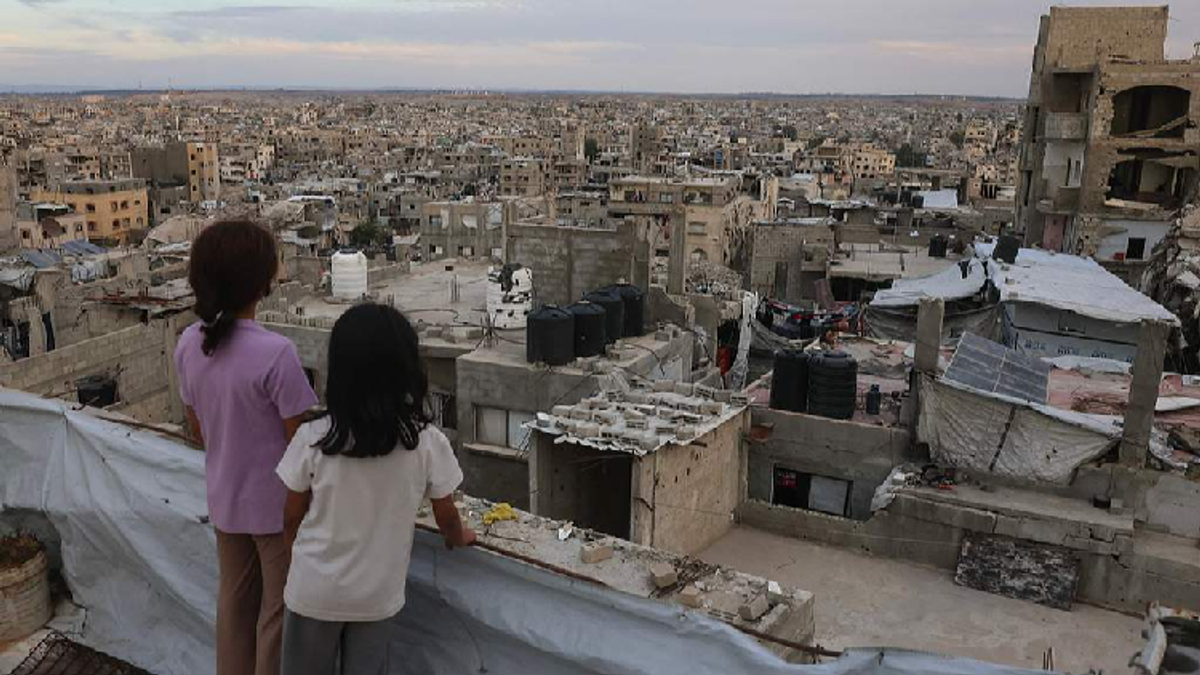
The ceasefire that was supposed to end the 2023 war never materialised, leaving Gaza under a de‑facto Israeli occupation of roughly 30% of its territory. In the three years since, the United Nations estimates 74,000 Palestinians killed, 174,000 injured, and 90% of civilian infrastructure reduced to rubble.
The post‑war landscape is a chessboard where Israel, the United States, regional mediators, and emerging private interests each move to protect their own stakes.
- Israel’s security doctrine insists on a buffer zone that can monitor and neutralise any militant resurgence. The permanent presence of troops and control over border crossings gives Jerusalem leverage over any future governance model.
- The United States leverages its diplomatic and military backing of Israel to shape reconstruction talks. By championing a U.S.–led international body to administer aid, Washington secures a foothold in a region where Chinese and Russian influence is expanding.
- Regional actors—Egypt, Qatar, and Türkiye—act as brokers to preserve their own border stability and to extract concessions, such as water rights or trade corridors, while avoiding direct confrontation with Israel.
- Private capital entered the scene when Jared Kushner unveiled a “blueprint” that frames Gaza’s rebuild as a real‑estate venture. The promise of tourist resorts and industrial parks appeals to investors seeking high‑return projects in a low‑cost environment, but it also ties reconstruction to market logic rather than humanitarian need.
- Economic incentives for the occupying power include control over Gaza’s limited natural gas reserves and the ability to dictate labor flows into Israel, effectively turning the strip into a source of cheap, regulated workforce.
- Alliance math matters: Israel’s reliance on U.S. military aid means any shift in American policy—whether toward harsher sanctions or a push for a civilian administration—directly reshapes the power balance on the ground.
These forces intersect in a way that keeps the status quo profitable for the powerful while leaving the local population in a limbo of dependency.
The Palestinian economy has shrunk dramatically. After a brief dip in 2024, GDP grew only 4.3% in 2025, still 20% below pre‑war levels. Unemployment soars to 78%, and labor‑income loss totals $2.8 billion. With 92% of local enterprises destroyed, families that once relied on small workshops or market stalls now face total income loss.
Only 1.5% of arable land remains accessible. Farmers who lost fields to rubble or to Israeli‑controlled zones cannot harvest, forcing Gaza to import over 90% of its food. The loss of agricultural output not only spikes prices but also erodes cultural ties to the land, deepening a sense of dispossession.
More than half of Gaza’s hospitals operate at reduced capacity; 93% of school buildings need full reconstruction. The chronic shortage of medicines, coupled with damaged water and electricity networks, has led to a resurgence of preventable diseases and a mental‑health epidemic among children who have witnessed repeated bombardments.
With 93% of school facilities unusable, a generation of students faces interrupted learning, limiting future employment prospects. Displacement remains high; many families live in makeshift shelters on rooftops, as seen in Jabalia refugee camp, where children sleep under tarps while the sky is littered with debris.
These human costs are not abstract statistics; they translate into daily survival struggles—queues for water, long waits for medical care, and the constant threat of renewed strikes.
The Davos‑signed “Peace Committee” frames Gaza’s future as a series of luxury resorts and industrial zones. This narrative downplays the immediate need for housing, water, and medical infrastructure, presenting a glossy vision that appeals to donors and investors but ignores the lived reality of a population still without basic services.
While the United Nations and NGOs report aid deliveries, the bulk of funding is tied to conditions that favour Israeli security checkpoints and limit the role of Hamas or the Palestinian Authority in distribution. This creates a parallel system where aid becomes a tool of political leverage rather than a neutral lifeline.
Most diplomatic statements refer to “humanitarian concerns” without addressing Israel’s ongoing control of 30% of Gaza’s territory. By omitting the legal status of the occupation, powerful states sidestep discussions about reparations, land restitution, or the right of return for displaced Palestinians.
Egypt, Qatar, and Türkiye have mediated multiple ceasefire talks, yet each round ends with vague language and no enforcement mechanism. The repeated failure erodes public trust in regional actors, while the United States continues to position itself as the ultimate arbiter, masking its own strategic interests.
- Israeli legislative moves: Any law that formalises annexation or expands settlement‑like outposts will cement long‑term control and further marginalise Palestinian self‑governance.
- U.S. aid allocations: Shifts toward reconstruction contracts awarded to Western firms could signal a pivot from humanitarian relief to profit‑driven development.
- Regional diplomatic activity: A renewed, enforceable ceasefire brokered by Egypt or Qatar would require clear monitoring mechanisms; the absence of such a framework suggests the status quo will persist.
- Grassroots resistance: Community‑led rebuilding projects, if they receive international backing, could challenge top‑down narratives and force donors to reconsider conditionalities.
- International legal actions: Cases brought before the International Court of Justice regarding occupation and war crimes may influence the political calculus of both Israel and its allies.
Monitoring these signals will reveal whether Gaza’s rubble will eventually be cleared for genuine reconstruction or simply repurposed for geopolitical gain.
Unemployment in Gaza stands at about 78%, reflecting the collapse of most private enterprises and the destruction of infrastructure.
Only roughly 1.5% of Gaza's agricultural land remains accessible and undamaged, severely limiting local food production.
The United States promotes a U.S.–led international body to manage reconstruction, tying aid to its strategic interests and often linking it to security conditions favorable to Israel.
Source referenced: CGTN
This brief was synthesized by our Editorial Engine and reviewed by The Ground Narrative team.