TRENDING

Friday, 9 October 2026
----------------------
28 Rabi' Al-Thani 1448 AH
The 2026 war in Iran, sparked by coordinated U.S.‑Israeli strikes, is less a sudden clash than the latest chapter of a decades‑long campaign to topple Tehran. While missiles roar, ordinary Iranians bear the brunt of inflation, loss, and forced patriotism.
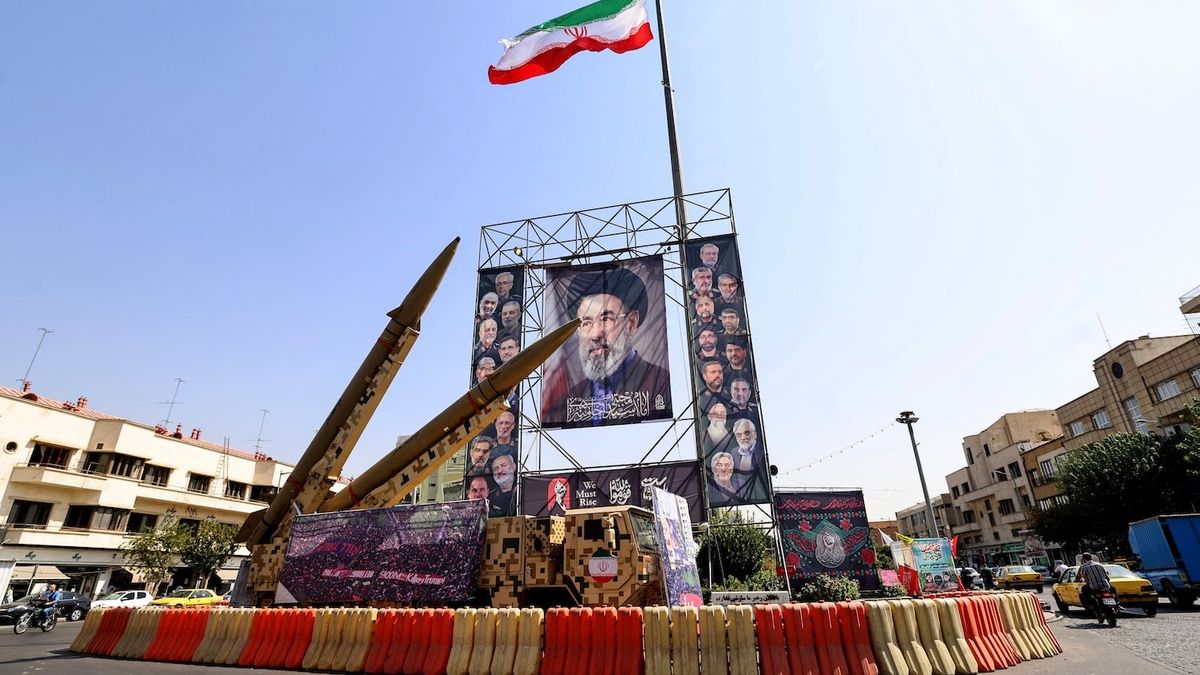
The conflict that erupted in February 2026 began with a joint United States‑Israel air campaign aimed at the top echelons of the Islamic Republic – the Supreme Leader, senior members of the Supreme National Security Council, and key military commanders. The strikes, comparable in scale to the 2025 attacks on Iran’s nuclear facilities, were intended as a decisive blow to dismantle the regime. Iran responded by targeting U.S. assets across the Gulf, closing the Strait of Hormuz, and launching deep‑inside air raids that killed over 3,000 civilians. After a brief cease‑fire brokered by Pakistan in April, fighting resumed in July, with both sides threatening escalatory strikes on bridges, power plants, and shipping lanes. By September, the war had expanded beyond a bilateral clash, pulling in regional economies and sparking massive public rallies that the state framed as patriotic defences of the nation.
The war’s underlying logic is not limited to the publicised issues of missile programs or nuclear ambitions. For Washington, the conflict is a continuation of a long‑standing strategy to replace Tehran with a more compliant government, using external pressure to trigger internal collapse. The Israeli leadership shares this goal, viewing a weakened Iran as essential to its own security calculus and regional influence. Both powers calculate that a swift, high‑profile strike could force the Iranian elite into a crisis of legitimacy, making room for a regime change that would open the country to Western economic interests.
Domestically, the Iranian leadership has turned the war into a rallying point to consolidate power. Supreme Leader Ayatollah Ali Khamenei issued six decrees reshaping the military hierarchy, most notably appointing Hossein Taeb – a veteran of the Revolutionary Guard’s intelligence service and the Basij militia – to head the domestic militia. Taeb’s mandate to expand grassroots intelligence and enforce “total defence” reflects a classic authoritarian response: tighten internal surveillance while projecting an image of unassailable strength.
Economically, the war feeds a paradox. Sanctions and hyper‑inflation – estimated at 84 % year‑on‑year in September – have devastated household purchasing power, creating fertile ground for dissent. Yet the external aggression has also been weaponised by the regime to stoke nationalist sentiment, framing the conflict as an assault on Shiite identity and Iranian sovereignty. This duality allows the leadership to justify further repression while postponing economic reforms that could threaten its patronage networks.
Regionally, the closure of the Strait of Hormuz – a chokepoint for roughly 20 % of global oil trade – gives Russia, China, and Gulf states a stake in the outcome. Each seeks to protect its energy exports and avoid market disruptions, prompting a tacit alignment that limits the willingness of any single power to push the war to a decisive end. The result is a protracted stalemate where the battlefield serves more as a bargaining chip than a path to victory.
Ordinary Iranians face soaring prices for food, medicine, and fuel. The central bank’s inflation figures translate into a loss of real wages that pushes families into poverty, forcing many to skip meals or sell assets just to stay afloat. Urban centers like Tehran and Isfahan have seen a surge in informal markets as state‑run shops struggle to restock.
Airstrikes on civilian infrastructure – bridges, power plants, and residential districts – have killed over 3,000 people and injured thousands more. Whole neighborhoods in Karaj and the outskirts of Tehran have been reduced to rubble, prompting internal displacement to less‑affected provinces. The humanitarian response is hampered by sanctions that restrict the flow of aid and medical supplies.
The regime’s crackdown intensified after the war began. Security forces, now under Taeb’s tightened Basij command, have arrested dozens of activists, journalists, and minority leaders suspected of exploiting the chaos to demand autonomy. Ethnic minorities in the southeast (Balochis) and northwest (Kurds) face heightened surveillance and curfews as the state pre‑emptively quells any separatist sentiment.
The constant threat of missile alerts, combined with state‑orchestrated rallies that demand public displays of loyalty, has created a climate of fear and forced patriotism. Mental health services, already under‑funded, are overwhelmed, and many citizens report anxiety, sleep disorders, and a sense of hopelessness about the future.
While official narratives focus on external aggression and the regime’s resilience, several critical dimensions remain under‑reported.
Western and Asian powers are quietly negotiating back‑channel deals to stabilise oil markets disrupted by the Hormuz closure. China and Russia have increased strategic petroleum reserves, while European nations are exploring alternative routes, effectively insulating themselves from the war’s economic fallout. These maneuvers are rarely mentioned in public statements, which instead portray the conflict as a binary struggle between good and evil.
Beyond the visible U.S.–Israel front, Iran continues to support militias in Iraq, Syria, and Yemen. Simultaneously, rival regional actors – Saudi Arabia and the United Arab Emirates – are bolstering their own proxy forces to counter Iranian influence. The war’s expansion into these shadow battles is downplayed in mainstream coverage, obscuring the full scale of human suffering across the Middle East.
The appointment of Hossein Taeb signals more than a defensive posture; it marks a shift in the balance of power within Iran’s elite. Hardliners, long wary of Khamenei’s perceived softness, are now empowered to marginalise reformist elements, consolidating a security‑centric governance model that will likely persist long after the war ends.
Internet shutdowns, media censorship, and the targeting of satellite communications have limited independent reporting from inside Iran. The state’s control over the narrative means that many atrocities, especially those committed by security forces against protesters, remain invisible to the global audience.
The next phase of the conflict will hinge on three observable trends. First, the durability of the U.S.‑Israel coalition: any political shift in Washington or Jerusalem – such as elections or public fatigue – could alter the intensity of the campaign. Second, the response of China and Russia: increased diplomatic pressure or economic incentives aimed at Tehran could push the regime toward a negotiated settlement that preserves its core structure. Third, domestic unrest: if inflation continues to erode living standards and ethnic minorities successfully mobilise, the regime may be forced to divert resources from external fighting to internal security, potentially opening a window for negotiated change. Observers should monitor oil price volatility, diplomatic statements from the BRICS summit, and reports of protests in Iranian border provinces for early signals of a shift in the war’s trajectory.
The conflict began with a coordinated airstrike in February 2026 targeting Iran’s Supreme Leader, senior security council members, and top military commanders, aiming to cripple the regime.
Iranians face soaring inflation, civilian casualties from airstrikes, displacement, heightened repression of dissent, and growing psychological trauma as daily life becomes increasingly precarious.
China and Russia seek to stabilise oil markets and limit Western influence, while Gulf states watch for shifts in regional power balances; all have a stake in preventing a complete collapse of the Iranian state.
Editor's Note: Analysis based on publicly available reports and expert commentary; some on‑the‑ground details remain unverified due to media restrictions.
Source referenced: FOREIGNPOLICY
This brief was synthesized by our Editorial Engine and reviewed by The Ground Narrative team.