TRENDING

Friday, 9 October 2026
----------------------
28 Rabi' Al-Thani 1448 AH
The United States is weighing a new approach that levers the cracks between Beijing and Moscow. The analysis uncovers the power calculus, the hidden human price, and the signals to watch as the rivalry deepens.
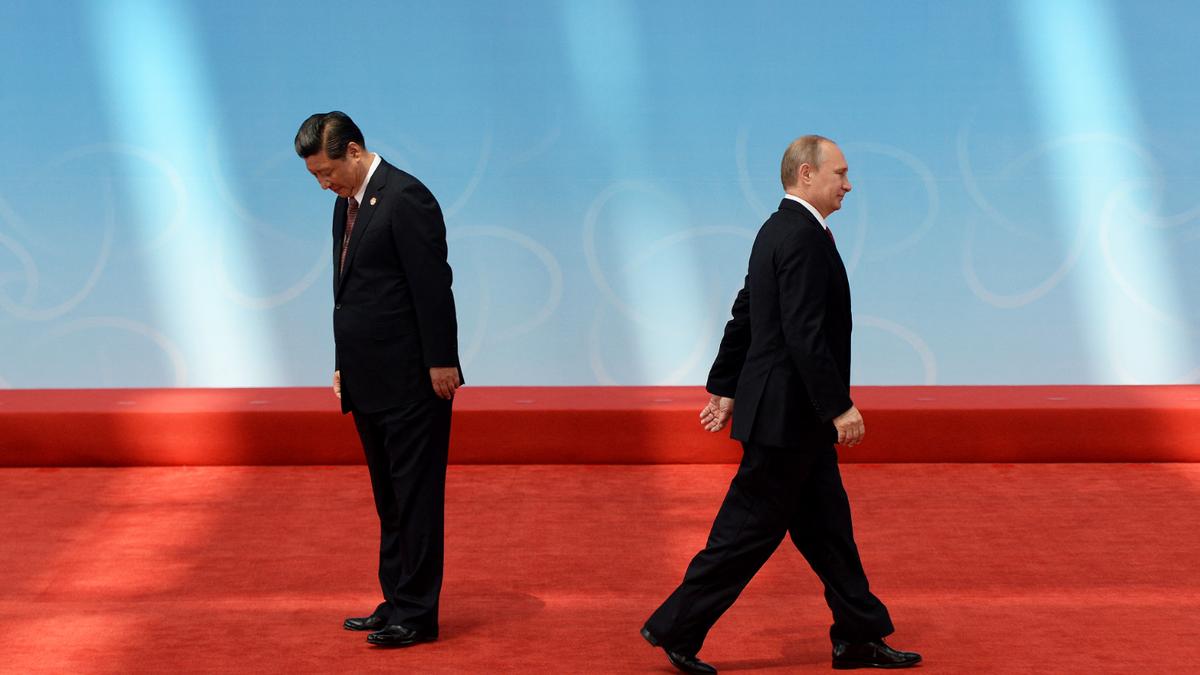
The United States has publicly shifted from a passive stance to a proactive playbook aimed at exploiting emerging friction between China and Russia. Recent commentary by senior scholars argues that Washington should make the partnership more costly rather than trying to split it outright, a pivot that follows years of failed "reverse Nixon" overtures under the previous administration.
Both Xi Jinping and Vladimir Putin share a common grievance: the desire to erode U.S. primacy. Their "no‑limits" partnership lets each side offset sanctions, share technology, and present a united front in multilateral forums like BRICS and the Shanghai Cooperation Organization. The alliance is transactional, not ideological, and hinges on economic interdependence—China supplies over 90% of the sanctioned tech that fuels Russia’s war machine, while Russia provides cheap hydrocarbons that feed China’s energy appetite.
Washington’s toolbox includes diplomatic pressure on third‑party states, targeted sanctions that hit the narrow supply chains linking Beijing and Moscow, and deepening ties with traditional allies in Europe, Japan, and the Indo‑Pacific. By amplifying points of tension—such as disputes over the Power of Siberia 2 pipeline, pricing of Russian gas, and differing views on territorial annexations—U.S. policymakers hope to force Beijing and Moscow to question the reliability of each other.
The U.S. must balance the risk of pushing the partners together against the payoff of creating exploitable cracks. Over‑aggressive moves could drive China to double‑down on Russian energy imports, while half‑measures may simply cement the status quo. The calculus therefore rests on calibrated pressure that raises the cost of cooperation without triggering a full‑scale backlash.
The most immediate victims remain the Ukrainian population, who continue to endure artillery bombardments, displacement, and a crippled economy. Chinese‑sourced components keep Russian weapons operational, indirectly prolonging the conflict and the humanitarian crisis.
Russian soldiers, many of whom are young conscripts from economically depressed regions, bear the brunt of a war that is increasingly sustained by foreign aid. Simultaneously, Chinese laborers employed in Siberian mining and infrastructure projects face harsh conditions, low wages, and limited legal protections.
Energy markets remain volatile as sanctions and supply‑chain disruptions ripple through oil and gas prices. Households in Europe and North America feel higher utility bills, while developing nations grapple with reduced access to affordable fertilizers derived from Russian nitrogen.
U.S. officials downplay the political calculus that binds decision‑making to upcoming mid‑term elections, where any perceived escalation with China or Russia can become a campaign flashpoint. This internal pressure often leads to public statements that emphasize restraint while covertly preparing more aggressive measures.
Beijing publicly maintains a veneer of neutrality on Russia’s annexations, yet it quietly leverages the partnership to extract favorable terms on energy and technology. Official narratives omit how Chinese intelligence agencies are simultaneously siphoning Russian military data, turning the alliance into a one‑sided extraction.
Russian leadership portrays the partnership as equal, but analysts note a growing asymmetry: Moscow increasingly relies on Chinese financing and market access. This dependency is downplayed in Kremlin messaging, which instead emphasizes Russian strategic autonomy.
- Energy Projects: The fate of the Power of Siberia 2 pipeline will signal how far China is willing to pressurize Russia on pricing and volume.
- BRICS Expansion: New member admissions and the bloc’s financial architecture, especially moves toward a yuan‑based reserve system, will reveal the depth of monetary coordination.
- Alliance Reinforcement: Track U.S. initiatives to deepen security ties with Japan, South Korea, and NATO’s eastern flank, as well as any new trilateral frameworks that include Australia or India.
- Cyber and Hybrid Threats: Increases in Russian cyber activity against European infrastructure, coupled with Chinese technology exports to Russian firms, will indicate whether friction is truly being amplified.
- Domestic Political Signals: Statements from U.S. congressional committees and upcoming election rhetoric will expose how much political mileage the rivalry is generating at home.
By monitoring these variables, ordinary citizens can gauge whether the great‑power tug‑of‑war is moving toward a more dangerous confrontation or a manageable balance of pressures.
Washington believes that amplifying existing disagreements—over energy pricing, technology sharing, and territorial ambitions—can make the partnership more costly for both, reducing their ability to challenge U.S. interests collectively.
The alliance sustains Russia’s war in Ukraine, keeping civilian casualties high, while also keeping global energy and food prices volatile, which hits households in Europe, the United States, and developing nations.
Key indicators include stalled joint projects between Beijing and Moscow, increased Chinese criticism of Russian military actions, and a measurable slowdown in Russia’s ability to procure sanctioned technology.
Source referenced: FOREIGNPOLICY
This brief was synthesized by our Editorial Engine and reviewed by The Ground Narrative team.