TRENDING

Friday, 9 October 2026
----------------------
28 Rabi' Al-Thani 1448 AH
Washington’s latest demand that Iraq’s Shiite militias lay down arms risks reopening the sectarian fault lines that have haunted the region for decades. The move pits U.S. strategic aims against deep‑rooted local grievances and a volatile patronage network.
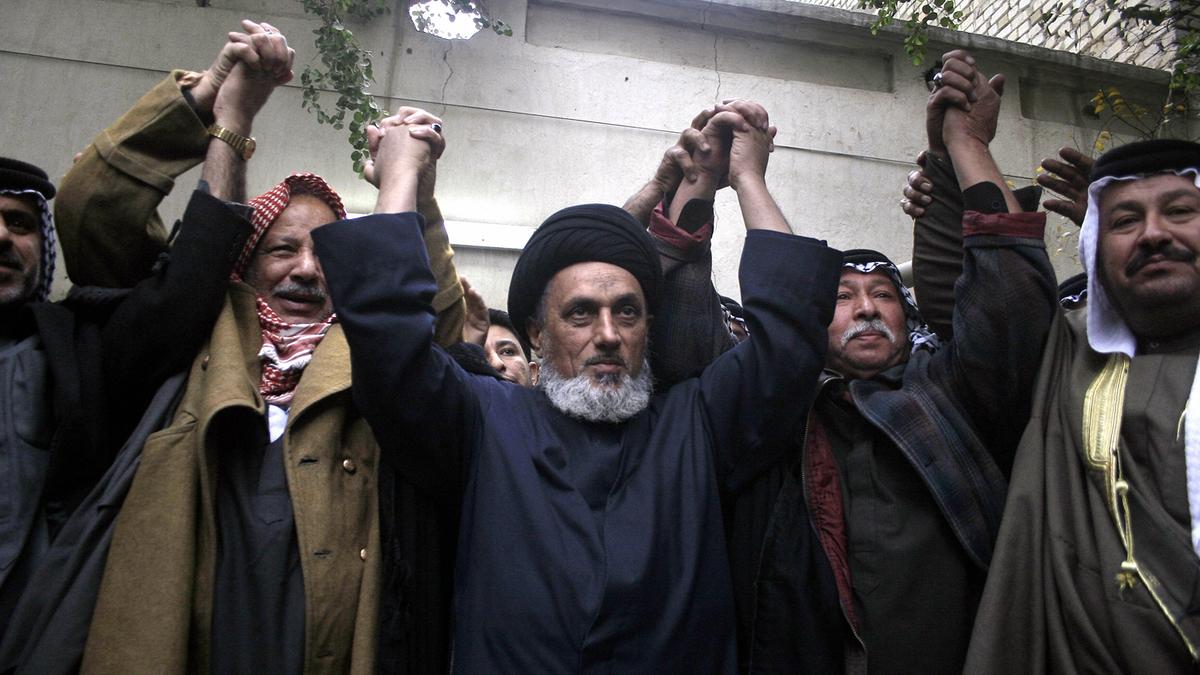
In the spring of 2026 Donald Trump announced a hard deadline for the disarmament of Iraq’s Popular Mobilization Forces (PMF), a coalition of Shiite militias that helped defeat the Islamic State. The deadline of September 30 passed without compliance, and Prime Minister Ali al‑Zaidi extended it to June 2027, insisting the process is non‑negotiable. Simultaneously, the White House suggested that Syrian President Ahmed al‑Sharaa could be tasked with curbing Hezbollah, signaling a broader shift toward using regional proxies to manage sectarian flashpoints.
Washington views the PMF as a conduit for Iranian influence in Baghdad. By forcing disarmament, the administration hopes to blunt Tehran’s leverage, reduce the risk of Iranian‑backed attacks on U.S. assets, and re‑assert American primacy in the post‑ISIS security architecture. The deadline also serves domestic political purposes, allowing Trump to claim a tough stance on Iran while appealing to his base’s anti‑Shiite sentiment.
Iraq’s internal landscape is split between Iran‑aligned factions—Badr Organization, Kataib Hezbollah, Harakat al‑Nujaba—and nationalist Shiite groups that see Tehran as a rival. Prime Minister Ali al‑Zaidi, though Shiite, aligns with the nationalist camp and seeks U.S. backing to consolidate state authority. However, the PMF’s embedded role in local security, patronage networks, and regional politics makes any abrupt demobilization a direct threat to the livelihoods of thousands of fighters and their constituencies.
Iran’s strategy relies on a layered network of militias that extend its reach from Tehran to Baghdad, Damascus, and Beirut. The PMF is a cornerstone of this architecture, providing Iran with a foothold in Iraq’s oil‑rich south and a buffer against Saudi‑U.S. encirclement. Disarming the PMF would force Iran to recalibrate its influence, potentially prompting covert retaliation or a shift toward more clandestine support mechanisms.
Saudi Arabia and its Gulf allies have long championed a Sunni‑led order, financing Sunni militias in Syria and Yemen to counter Shiite expansion. By supporting Trump’s disarmament push, they hope to weaken Iran’s proxy chain and protect their own oil infrastructure from militia‑launched drones, as seen in the July 2026 strikes on Saudi facilities.
In many Iraqi towns, the PMF fills security gaps left by a weak national police force. Villages in Anbar and the Nineveh Plains depend on militia checkpoints to deter remnants of the Islamic State and criminal gangs. Disarmament without a credible replacement could leave these areas vulnerable to renewed violence, forcing civilians to flee or endure lawlessness.
Militia salaries, contracts for construction projects, and control over local markets generate a parallel economy that sustains thousands of families. The sudden loss of income would push many into poverty, increasing unemployment and potentially feeding a new recruitment pool for extremist groups seeking disaffected youth.
Shiite communities carry a collective memory of persecution—mazlumiyah—that fuels a sense of existential vulnerability. The demand to disarm is perceived not merely as a security measure but as an affront to a narrative of survival forged during the Iran‑Iraq war, Saddam’s repression, and the ISIS genocide. Ignoring this sentiment risks inflaming protests, sectarian riots, and a resurgence of identity‑based violence.
Official statements emphasize the need to curb Iranian influence, but they rarely acknowledge that the Iraqi state lacks the capacity to replace the PMF’s extensive ground presence. The prospect of a security vacuum is framed as a temporary inconvenience rather than a catalyst for renewed insurgency.
While Tehran publicly condemns the disarmament push, it quietly invests in intelligence‑sharing, financial channels, and cyber‑operations to maintain influence. These activities are omitted from most U.S. briefings, which focus on kinetic threats and overlook the durability of Iran’s soft‑power networks.
The timing of the disarmament deadline coincides with a dip in global oil prices, prompting Gulf states to secure their export routes. By pressuring Iraq to curb militia‑controlled oil smuggling and drone attacks, the U.S. and Saudi Arabia aim to stabilize market flows, a motive seldom mentioned in public rhetoric.
- Iraqi legislative response – A parliamentary vote on the disarmament law could reveal whether nationalist Shiite factions can muster enough support to override militia opposition.
- Iranian proxy activity – Increases in drone launches, cyber‑attacks, or covert arms shipments to PMF affiliates would signal Tehran’s willingness to bypass diplomatic pressure.
- U.S. military posture – The deployment of “train‑and‑advise” contractors in former PMF zones will indicate whether Washington is prepared to fill the security gap or simply rebrand its presence.
- Oil market fluctuations – Sharp changes in crude prices may reflect the success or failure of the disarmament effort in curbing militia‑related disruptions.
- Civil unrest in Iraq’s mixed neighborhoods – Protests or sectarian clashes in cities like Baghdad’s Sadr City could act as early warning signs of a broader breakdown in communal coexistence.
Monitoring these variables will help observers gauge whether Trump’s policy will merely reshuffle existing power structures or trigger a new wave of sectarian conflict that the region has been trying to move beyond for over a decade.
Washington sees the militias as Iran’s main leverage in Baghdad and wants to reduce Tehran’s regional influence while projecting a tough stance ahead of upcoming elections.
A security vacuum could emerge, exposing towns to ISIS remnants, criminal gangs, and sectarian reprisals, potentially sparking new cycles of violence and displacement.
Iran is likely to shift to covert support—financial aid, intelligence sharing, and cyber operations—to keep its influence alive while publicly denouncing the U.S. policy.
Source referenced: FOREIGNPOLICY
This brief was synthesized by our Editorial Engine and reviewed by The Ground Narrative team.