TRENDING

Friday, 9 October 2026
----------------------
28 Rabi' Al-Thani 1448 AH
Since the ceasefire, a Palestinian in Gaza is killed or wounded roughly every 90 minutes. This brief unpacks the forces driving that grim tally and who bears the burden.
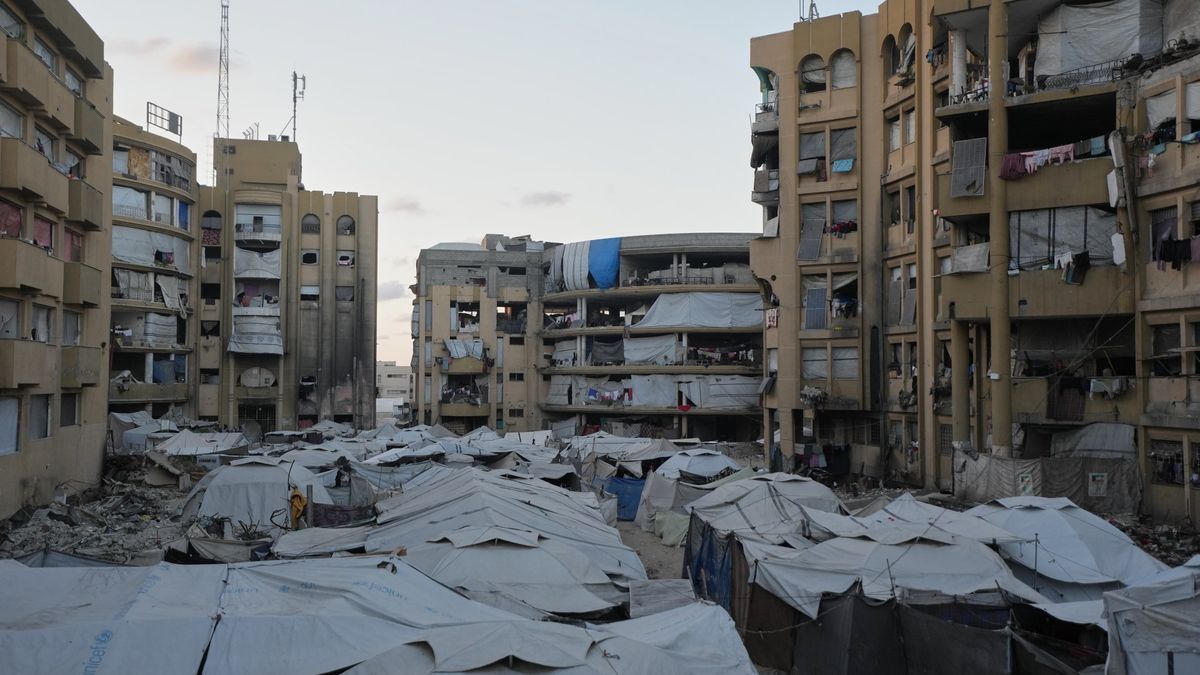
The United Nations‑backed ceasefire announced in October 2025 was meant to halt the bloodshed that followed Israel's 2023‑2024 offensive. Yet, according to the UK‑based charity Islamic Relief, the conflict has continued to claim lives at a relentless pace: an average of one Palestinian death or injury every 90 minutes over the past year. Official Gaza health figures put the toll at 1,471 dead and more than 5,000 wounded since the truce, with children accounting for roughly 320 of the fatalities. Recent incidents include an airstrike on a house in Khan Younis that wounded several civilians and a ground raid near Deir el‑Balah that killed a resident. The numbers are not just statistics; they represent a sustained pattern of violence that persists despite diplomatic language declaring a ceasefire.
Israel continues to enforce the so‑called Yellow Line, a demarcation that designates the 65 % of Gaza under direct military control. By restricting movement to the remaining 35 % of territory, the occupying force can shape the battlefield, dictate where aid convoys may travel, and isolate pockets of resistance. This spatial control also serves a political purpose: it signals to domestic audiences that the military retains leverage while outwardly claiming restraint.
Humanitarian organisations rely on donor nations for funding and access permits. Islamic Relief and similar NGOs must navigate a diplomatic tightrope, balancing the need to highlight civilian suffering with the risk of jeopardising the limited aid corridors that remain open. Donor governments, particularly in Europe and North America, face domestic pressure to demonstrate compassion without appearing to legitimize the occupation, leading to a calibrated flow of resources that never fully meets the scale of need.
Both Israel and the Palestinian Authority use casualty figures to reinforce internal narratives. In Israeli politics, portraying the conflict as a security imperative helps coalition partners justify continued military presence. Conversely, Palestinian leadership points to the relentless casualty rate to rally international sympathy and press for renewed negotiations, even as internal divisions weaken their bargaining power.
With 82 % of Gaza’s built environment damaged or destroyed, roughly 2.1 million residents are squeezed into a shrinking safe zone. Overcrowding fuels the spread of disease, hampers access to clean water, and turns schools into makeshift shelters. Families live in constant fear of airstrikes that target densely populated neighborhoods, a reality underscored by the aid worker’s claim that “there is no ceasefire in reality.”
More than half of Gaza’s health facilities have ceased operations, and over 20,000 severely ill patients are denied permits to leave for treatment. The lack of fuel, medicines, and medical equipment turns treatable injuries into fatal outcomes. Children with chronic conditions, pregnant women, and the elderly face the highest mortality risk, as the system cannot absorb the influx of trauma cases.
The destruction of commercial districts and agricultural land has erased livelihoods for countless households. Unemployment rates have surged past 70 %, pushing families into aid dependency. The psychological toll on children—who have known only conflict—manifests in heightened anxiety, disrupted schooling, and a growing cohort of youth who may be recruited into armed groups out of desperation.
Official statements from Israel and its allies repeatedly describe the truce as “operationally effective,” while humanitarian reports paint a picture of ongoing lethal engagements. This dissonance allows powerful states to claim compliance with international law, deflecting scrutiny from the continued civilian toll.
International construction firms and material suppliers stand to profit from the eventual rebuilding of Gaza. By keeping the narrative focused on security, they avoid accountability for the scale of reconstruction contracts that will follow the conflict, a factor rarely mentioned in public briefings.
Global news cycles have shifted attention to other crises, leading to a gradual desensitization among international audiences. The steady cadence of a casualty every 90 minutes becomes a statistical abstraction, diluting the urgency that might otherwise spur decisive political action.
The next 12 months will hinge on three observable developments. First, any shift in the enforcement of the Yellow Line—whether through a relaxation that allows broader humanitarian access or a tightening that further isolates civilians—will signal Israel's strategic intent. Second, the response of major donors, especially the United States and European Union, to mounting pressure from civil‑society groups will indicate whether aid flows will increase or remain constrained. Finally, the emergence of organized civilian resistance or new diplomatic overtures from regional actors such as Egypt or Qatar could reshape the power balance and alter the casualty trajectory. Monitoring these variables will reveal whether the grim 90‑minute rhythm persists or begins to falter.
The figure comes from Islamic Relief’s monitoring of health ministry data, averaging the total number of deaths and injuries reported since the ceasefire and dividing by the days elapsed.
It marks the area under direct Israeli military control, restricting movement to roughly 35 % of Gaza’s territory and concentrating civilians in overcrowded zones where aid delivery is limited.
Source referenced: ALJAZEERA
This brief was synthesized by our Editorial Engine and reviewed by The Ground Narrative team.


