TRENDING

Saturday, 10 October 2026
----------------------
29 Rabi' Al-Thani 1448 AH
The Saudi-led coalition has launched a massive air operation against Houthi targets in Yemen, marking a significant escalation in the protracted conflict. This renewed offensive deepens the humanitarian crisis and highlights the complex power dynamics at play.
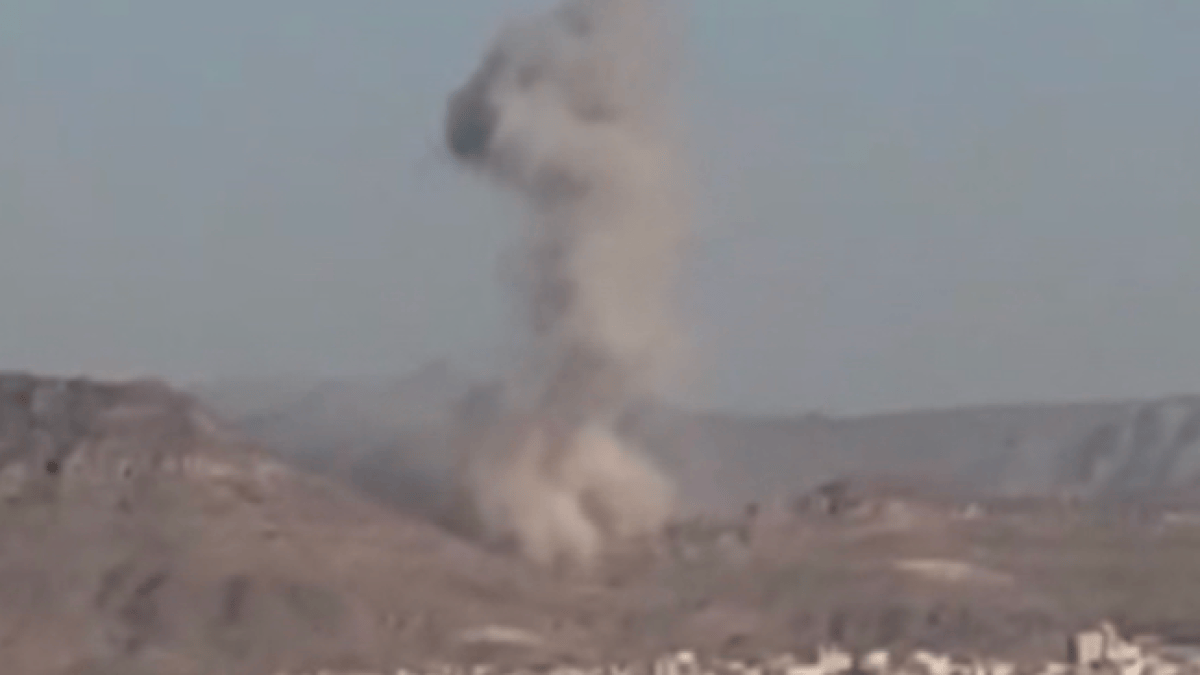
On October 10, 2026, the Saudi-led coalition announced a wide-ranging military operation targeting Yemen's Houthi movement. Official statements from the coalition indicated an unprecedented scale of bombardment, claiming more than 2,750 strikes conducted within a single 24-hour period. This massive aerial assault signals a severe escalation in the long-running conflict, which has pitted the internationally recognized Yemeni government, backed by the Saudi-led coalition, against the Houthi rebels who control the capital, Sana'a, and large swathes of northern Yemen.
The renewed intensity of the Yemen conflict, as evidenced by the recent surge in Saudi-led coalition airstrikes, is a stark reminder of the enduring and complex power dynamics at play in the Middle East. At its core, the conflict is a multi-layered struggle for regional influence, internal Yemeni control, and the survival of various political and ideological factions.
For Saudi Arabia, the intervention in Yemen is primarily framed as a defensive measure and an effort to restore stability to its southern border. The Houthis, who have launched missiles and drones into Saudi territory, are perceived as a direct security threat. Beyond immediate border security, Riyadh's deeper motivation lies in countering Iran's growing regional influence. The Houthis are widely seen as proxies for Tehran, and their control over Yemen would represent a significant strategic gain for Iran, potentially allowing it to threaten vital shipping lanes through the Bab al-Mandab strait and further encircle Saudi Arabia.
Conversely, the Houthi movement's power stems from a blend of religious ideology, tribal loyalties, and a deep-seated resentment against perceived external interference and internal corruption. Their sustained resistance against a technologically superior coalition demonstrates a formidable capacity for guerrilla warfare and an ability to leverage popular grievances. Iran's support, though often denied or downplayed by both sides, provides the Houthis with crucial military and logistical assistance, allowing them to sustain their fight and project power beyond their traditional strongholds. For Iran, Yemen offers a low-cost, high-impact arena to challenge Saudi hegemony and tie up Riyadh's military resources.
International actors, particularly the United States and the United Kingdom, play a critical, albeit often understated, role. Their continued arms sales, logistical support, and intelligence sharing with the Saudi-led coalition are essential for sustaining the air campaign. While these Western powers often articulate their involvement in terms of counter-terrorism and regional stability, their actions also serve to maintain strategic alliances, protect economic interests (including oil flows), and project influence in a volatile region. The conflict has become a grinding stalemate, where neither side possesses the capacity for a decisive military victory, yet neither is willing to concede, perpetuating a cycle of violence fueled by external backing and internal grievances.
The true measure of the Yemen conflict's brutality is not found in strike counts or territorial gains, but in the devastating toll it continues to exact on ordinary Yemeni citizens. This latest escalation, with thousands of strikes reported in a single day, promises to deepen what is already recognized as one of the world's worst humanitarian crises. For years, the people of Yemen have been caught between warring factions, enduring a relentless campaign of aerial bombardment, ground fighting, and blockades that have systematically dismantled their society.
The immediate impact of such widespread aerial operations is the loss of innocent lives. While military targets are often cited, the reality on the ground frequently involves civilian casualties, damage to homes, markets, and vital infrastructure. Beyond the direct violence, the prolonged conflict has pushed Yemen's already fragile economy to the brink of collapse. Hyperinflation has rendered basic necessities unaffordable for most, while unemployment is rampant. The destruction of agricultural land and fishing fleets, coupled with import restrictions, has decimated livelihoods and exacerbated food insecurity. Millions of Yemenis are now dependent on humanitarian aid, which itself is often hampered by blockades, bureaucratic hurdles, and active conflict zones.
Children are disproportionately affected, facing severe malnutrition, a lack of access to education, and the psychological trauma of constant war. Many are forced into child labor or, tragically, recruited into armed groups. The healthcare system has crumbled, with hospitals destroyed or non-functional, leading to widespread outbreaks of preventable diseases like cholera and diphtheria, which thrive in conditions of poor sanitation and limited access to clean water. The sheer scale of displacement is staggering, with millions forced to flee their homes, often multiple times, living in makeshift camps with inadequate shelter, food, and medical care. The human cost extends beyond immediate suffering; it represents the systematic dismantling of a nation's future, leaving behind a generation scarred by violence, poverty, and a profound sense of abandonment by the international community.
While official statements from the Saudi-led coalition emphasize legitimate self-defense and the targeting of Houthi military capabilities, the full narrative of the Yemen conflict is far more complex and often deliberately obscured. What is downplayed or omitted by powerful actors, both regional and international, is the systemic nature of the humanitarian catastrophe and the long-term futility of a purely military solution.
Governments involved in the conflict, and their international backers, rarely acknowledge the extent to which their military actions contribute to civilian suffering. The narrative focuses on
The coalition aims to restore the internationally recognized Yemeni government, counter Houthi expansion, and address perceived security threats from Houthi missile and drone attacks. It also seeks to diminish Iran's influence in the region.
The Houthis are an armed political movement from northern Yemen, who control significant territory including the capital Sana'a. They represent a complex mix of religious, tribal, and political grievances, and are supported by Iran, challenging Saudi Arabia's regional dominance.
The conflict has created one of the world's worst humanitarian crises, leading to widespread famine, disease outbreaks, mass displacement, and the destruction of essential infrastructure. Millions of civilians, especially children, face severe malnutrition and lack basic services.
Editor's Note: Analysis is based on the provided raw intelligence and extensive background knowledge of the Yemen conflict, contextualized for the specified future date.
Source referenced: ALJAZEERA
This brief was synthesized by our Editorial Engine and reviewed by The Ground Narrative team.


