TRENDING

Sunday, 20 September 2026
----------------------
9 Rabi' Al-Thani 1448 AH
Yemen's Houthi movement has dramatically expanded its control over strategic Red Sea territories, demonstrating advanced military capabilities and asserting itself as a potent force within Iran's 'axis of resistance.' This shift reconfigures regional power dynamics and carries significant human costs for the Yemeni population.
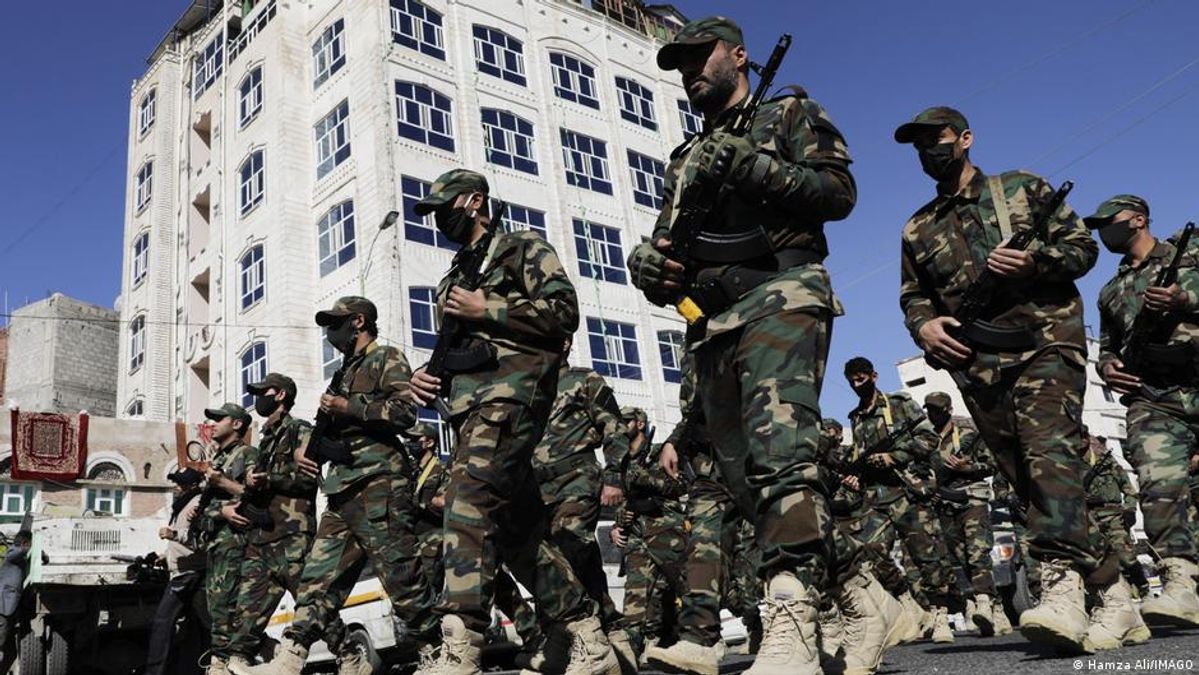
In a significant escalation, Yemen's Houthi movement has extended its control over crucial stretches of the Yemeni coast and several Red Sea islands. This territorial expansion has been accompanied by a demonstrated increase in military prowess, including the reported downing of a Saudi F-15 fighter jet using a modified missile. These actions position the Houthis as an increasingly formidable and active component of the Iranian-backed "axis of resistance," directly challenging US and Israeli interests in the region and impacting global maritime security.
The Houthis' ascent reveals a complex interplay of regional power mechanics. For Iran, the Houthis represent a geographically distinct and increasingly valuable asset, offering leverage against Saudi Arabia, Israel, and global shipping lanes, complementing Tehran's existing influence over the Strait of Hormuz. With Hezbollah's operational capacity reportedly degraded, the Houthis fill a critical void, providing a new front for projecting influence and disrupting adversaries.
Crucially, the Houthis operate with a high degree of autonomy, driven by their own distinct ideology rooted in martyrdom and sacrifice. This "zero-sum approach" allows them to prioritize military objectives over traditional state functions, making them remarkably resilient to conventional pressures like sanctions or targeted infrastructure strikes. They exist largely outside the international financial system, and their governance model channels resources almost exclusively towards conflict, rather than public services. This ideological underpinning, combined with an estimated 350,000 fighters, grants them a unique and formidable operational flexibility that defies traditional containment strategies.
While the Houthis gain strategic ground, the human cost for ordinary Yemenis is immense and often overlooked. The group's single-minded focus on military objectives means that essential public services are neglected, and the economy remains in tatters. The UN reports that fighting has displaced at least 125,000 people since September 2026 alone, adding to an already catastrophic humanitarian crisis. The Houthis' ideology, which frames hardship and sacrifice as divine tests, fosters an environment where civilian suffering is not merely tolerated but, in some ways, ideologically justified or even embraced as part of a larger struggle. This makes them, as some observers note, the "biggest threat ever to the idea of a republic and citizenship in Yemen's history," fundamentally undermining any prospect of a stable, civilian-led future for the country.
In the broader regional discourse, powerful actors—whether Iran celebrating its "axis of resistance" or the US and Saudi Arabia strategizing deterrence—tend to frame the Houthi phenomenon through a purely geopolitical or military lens. What is consistently downplayed or omitted is the devastating, long-term impact on Yemen's civilian population and the erosion of its societal fabric. The narrative of "resistance" or "strategic leverage" overshadows the daily struggle for survival, the collapse of public institutions, and the fundamental rights of millions of Yemenis trapped in a conflict where their welfare is secondary to military and ideological objectives. The international community's struggle to contain the Houthis is often presented as a failure of military or diplomatic strategy, rather than a profound failure to protect a vulnerable populace from an internal force that explicitly rejects conventional governance and humanitarian norms.
As the Houthis solidify their position, several critical dynamics bear watching. First, how will major maritime powers respond to sustained Houthi control over key Red Sea waterways and potential disruptions to global shipping? Second, the evolving relationship between Iran and the Houthis will be crucial: will the Houthis' growing power lead to greater independence from Tehran, or will Iran manage to exert tighter control over this increasingly valuable, yet unpredictable, asset? Finally, for Yemen itself, the question remains whether any internal or external force can challenge the Houthis' "zero-sum" governance model, or if the prospect of a unified, civilian-led state will continue to recede under the shadow of this ascendant, uncompromising power.
Source referenced: DW
This brief was synthesized by our Editorial Engine and reviewed by The Ground Narrative team.


