TRENDING

Tuesday, 3 November 2026
----------------------
23 Jumada Al-Awwal 1448 AH
The seemingly domestic contest for a US Senate seat in Georgia carries significant weight for international relations, trade, and global stability. Its outcome could reshape American foreign policy and affect communities far beyond its borders.
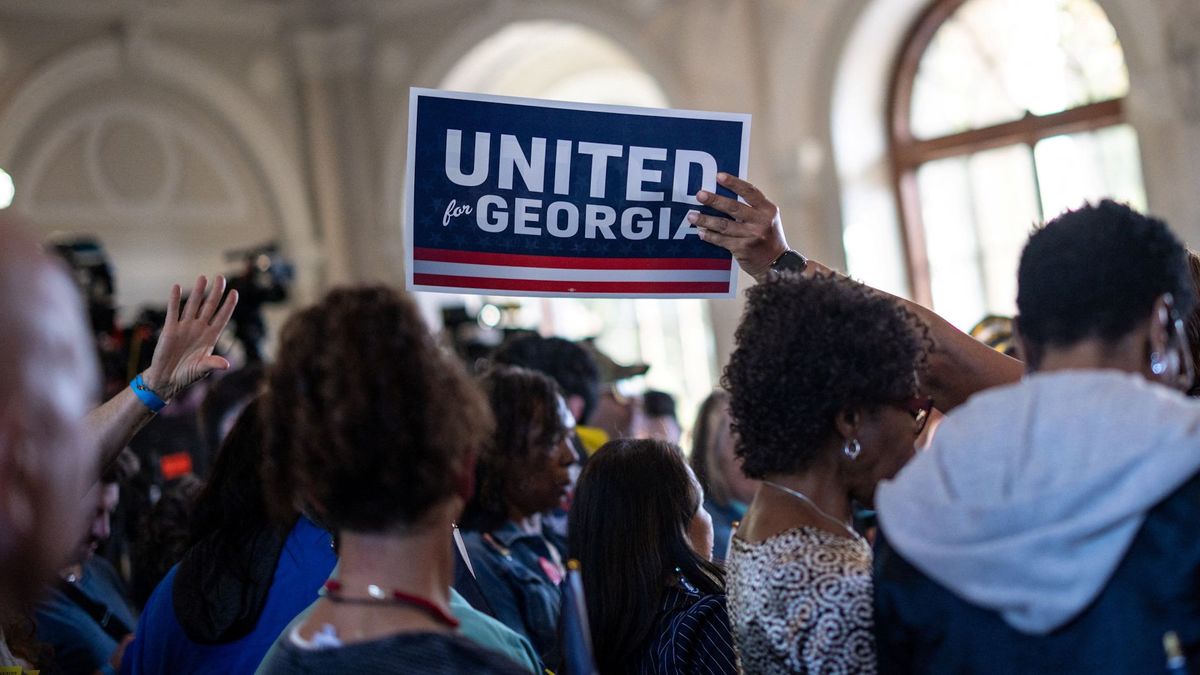
In the lead-up to the US midterm elections, the state of Georgia became a focal point for national political attention as its Senate candidates made their final appeals to voters. Incumbent Democratic Senator Jon Ossoff and his Republican opponent Mike Collins engaged in a tight race, the outcome of which was poised to significantly influence the balance of power within the US Senate. This particular contest, like several others across the nation, was not merely a local affair but a critical determinant of which political party would control the legislative agenda in Washington D.C., with profound implications extending far beyond American shores.
The US Senate, despite being a domestic legislative body, wields immense power over American foreign policy and, by extension, global affairs. Its constitutional prerogatives grant it direct influence over international relations in ways few other national legislatures can match. A shift in control, or even the outcome of a single pivotal race like Georgia's, can alter the trajectory of global events.
The Senate's role in foreign policy is multifaceted and deeply entrenched. It holds the sole power to ratify treaties, confirm ambassadors, and approve cabinet secretaries, including the Secretary of State and the Secretary of Defense. These confirmations are not mere formalities; they shape the leadership and direction of US diplomacy and military engagement worldwide. Furthermore, the Senate plays a critical role in allocating the federal budget, which includes vast sums for foreign aid, defense spending, and international development programs. Decisions made within its chambers can fund or defund humanitarian efforts, bolster or cut military alliances, and impose or lift sanctions on various nations, directly impacting populations and governments globally.
The ideological divide between the Democratic and Republican parties often translates into distinct approaches to foreign policy. A Democratic-controlled Senate might prioritize multilateralism, international cooperation on climate change, human rights initiatives, and development aid, often working through international institutions. This approach tends to favor alliances and a more integrated global framework. Conversely, a Republican-controlled Senate might lean towards an "America First" doctrine, focusing on bilateral agreements, projecting military strength, and adopting a more skeptical stance towards international bodies. Such a shift could lead to changes in trade policy, a re-evaluation of security commitments, and a different emphasis on global challenges, potentially unsettling existing alliances and creating new geopolitical dynamics.
Georgia's position as a swing state makes its Senate race particularly consequential. In recent election cycles, the state has emerged as a battleground, reflecting broader demographic and political shifts within the United States. The outcome in Georgia often serves as a bellwether for national sentiment and can be the decisive factor in determining which party holds the majority in the Senate. This pivotal role amplifies the global implications of what might otherwise seem like a localized political contest. The party that controls the Senate dictates legislative priorities, controls committee assignments, and significantly influences the President's ability to enact their foreign policy agenda, thereby shaping the US's global posture for years to come.
Beyond party platforms, the mechanics of power in the Senate are also influenced by powerful domestic lobbying groups. Industries such as defense contractors, agricultural giants, and technology firms invest heavily in influencing senators and their committees. Their interests, often tied to international trade, military sales, or access to foreign markets, can subtly or overtly shape legislation that has profound international consequences. This interplay between domestic economic power and foreign policy decision-making is a critical, often overlooked, aspect of how US global engagement is defined.
While the Georgia Senate race is framed as a domestic political contest, its outcome ripples across the globe, imposing tangible human costs far beyond American borders. The policies shaped by the US Senate directly affect the daily lives, security, and economic well-being of millions of people in other countries.
For nations that rely on US security guarantees or economic partnerships, a shift in the Senate's political composition can introduce significant uncertainty. NATO allies, for instance, might face questions about the US's commitment to collective defense if a more isolationist foreign policy gains traction. Countries in the Indo-Pacific region, navigating complex power dynamics with China, could experience shifts in US military presence or diplomatic support. This uncertainty can destabilize regional security architectures, forcing allies to reconsider their own defense strategies and economic alignments, potentially leading to increased military spending or new alliances that could escalate regional tensions.
Developing nations and populations in crisis zones are particularly vulnerable to changes in US foreign policy. The US Congress, heavily influenced by the Senate, determines the scale and scope of foreign aid, humanitarian assistance, and global health initiatives. A reduction in funding for these programs, driven by a shift in political priorities, can have immediate and devastating consequences. Essential medical supplies might not reach populations battling epidemics, food aid could be cut for communities facing famine, and development projects aimed at poverty reduction or infrastructure building could be abandoned. The human cost here is measured in lives lost, opportunities foregone, and prolonged suffering for the world's most vulnerable.
Changes in US trade policy, heavily influenced by the Senate's stance on tariffs, trade agreements, and international economic partnerships, can directly impact global supply chains and the livelihoods of workers worldwide. New tariffs on imported goods, for example, can devastate industries in exporting nations, leading to job losses and economic instability. Conversely, the negotiation of new trade deals can open up markets but also create winners and losers, often at the expense of local industries unable to compete with globalized production. Farmers in Southeast Asia, factory workers in Latin America, and tech professionals in Europe can all find their economic futures tied to the legislative priorities set in Washington D.C.
The US Senate's approach to climate change policy has global ramifications, particularly for communities already bearing the brunt of environmental degradation. Decisions on funding for renewable energy, participation in international climate agreements, or regulations on carbon emissions directly impact the global fight against climate change. A less engaged or even resistant Senate could slow down global efforts to curb emissions, leading to more extreme weather events, rising sea levels, and increased displacement, disproportionately affecting vulnerable populations in low-lying coastal areas or drought-prone regions. The human cost is borne by those forced from their homes, losing their livelihoods, and facing existential threats to their way of life.
In the intense focus on the domestic horse race of the Georgia Senate election, powerful actors—politicians, media outlets, and even some international observers—often downplay or outright omit the profound global implications. The narrative is frequently confined to national issues, electoral strategies, and partisan squabbles, obscuring the vast, interconnected web of consequences that extend far beyond American borders.
Governments and political campaigns, regardless of party, have a vested interest in framing elections as primarily domestic affairs. This approach simplifies complex issues for voters, allows candidates to focus on local concerns, and avoids the need to articulate a comprehensive global vision that might alienate certain segments of the electorate. By emphasizing issues like local job creation, healthcare costs, or infrastructure spending, the global ripple effects of US policy on trade partners, developing nations, or international security are subtly pushed to the periphery. This creates an illusion that the choices made in a single state's ballot boxes are insulated from the rest of the world, when in reality, they are deeply intertwined with it.
Both major US political parties often present their potential control of the Senate as a guarantor of stability, whether economic or geopolitical. However, this narrative rarely specifies *for whom* that stability is intended. A stable US economy might be prioritized over the stability of global supply chains if it means protecting domestic industries. A stable US-led alliance system might be touted, but the costs borne by smaller allies or the implications for non-aligned nations are often unexamined. The powerful actors define stability through their own lens, often omitting the perspectives of those who might experience the consequences as instability, disruption, or even increased vulnerability.
The role of corporate donations and lobbying in shaping US foreign policy is another critical aspect that is frequently downplayed. Major corporations, defense contractors, and financial institutions contribute heavily to political campaigns, including Senate races. Their interests, which often involve global market access, international trade agreements, or lucrative arms deals, can directly influence the policy positions of candidates and, subsequently, the legislative agenda. When a senator advocates for a particular trade policy or military expenditure, the underlying corporate interests that benefit from such decisions are rarely highlighted. This omission allows for the perception of purely national interest guiding policy, rather than a complex interplay of public good and private gain.
Finally, the untold story includes the global implications of voter apathy or disengagement. When citizens in a pivotal state like Georgia choose not to participate, or when they cast votes without considering the broader international context, they inadvertently contribute to a political outcome that can have profound effects on people they will never meet. The powerful downplay this connection, as it places a greater burden of responsibility on individual voters to understand the intricate links between their local ballot and the global ledger. The narrative often focuses on voter turnout percentages rather than the qualitative impact of an informed global citizenry participating in what are, in essence, global elections.
As the dust settles on the Georgia Senate election, observers worldwide should focus on several key indicators to understand the trajectory of US foreign policy and its global impact.
Pay close attention to the legislative agenda introduced in the new Senate. Look for changes in rhetoric or proposed bills concerning international trade, climate agreements, foreign aid budgets, and defense spending. Any significant deviation from previous policies or stated intentions will signal a shift in US global priorities. Specifically, monitor committee assignments and leadership roles, as these positions hold immense power in shaping legislation and oversight related to international affairs.
Observe how allied nations, rival powers, and international organizations react to the Georgia outcome and the subsequent shift in Senate control. Are there statements of reassurance or concern from European or Asian allies? Do rival nations, such as China or Russia, adjust their diplomatic or military postures in response to perceived changes in US resolve or priorities? The diplomatic dance that follows such a pivotal election will offer crucial insights into global perceptions of American power and commitment.
Scrutinize the details of the upcoming federal budget, particularly allocations for the Department of State, the Department of Defense, and agencies involved in international development and humanitarian aid. Significant increases or decreases in these areas will directly translate into changes in US global engagement, affecting everything from diplomatic missions and military deployments to public health initiatives and disaster relief efforts around the world.
The Georgia election's outcome will inevitably influence the strategies of both US political parties for future elections, including the next presidential race. Watch for how the winning party leverages its Senate majority to advance its foreign policy agenda, and how the losing party adapts its messaging and policy proposals. These evolving strategies will further shape the long-term direction of US global posture, cementing or challenging existing international norms and relationships. The ripples from Georgia's ballot boxes will continue to spread, defining the human experience across continents for years to come.
Source referenced: ALJAZEERA
This brief was synthesized by our Editorial Engine and reviewed by The Ground Narrative team.