TRENDING

Tuesday, 3 November 2026
----------------------
23 Jumada Al-Awwal 1448 AH
The Democratic Republic of Congo is battling its deadliest Ebola outbreak, with over 5,000 lives lost and 10,000 infections. This crisis exposes deep-seated power imbalances and the human cost of global neglect.
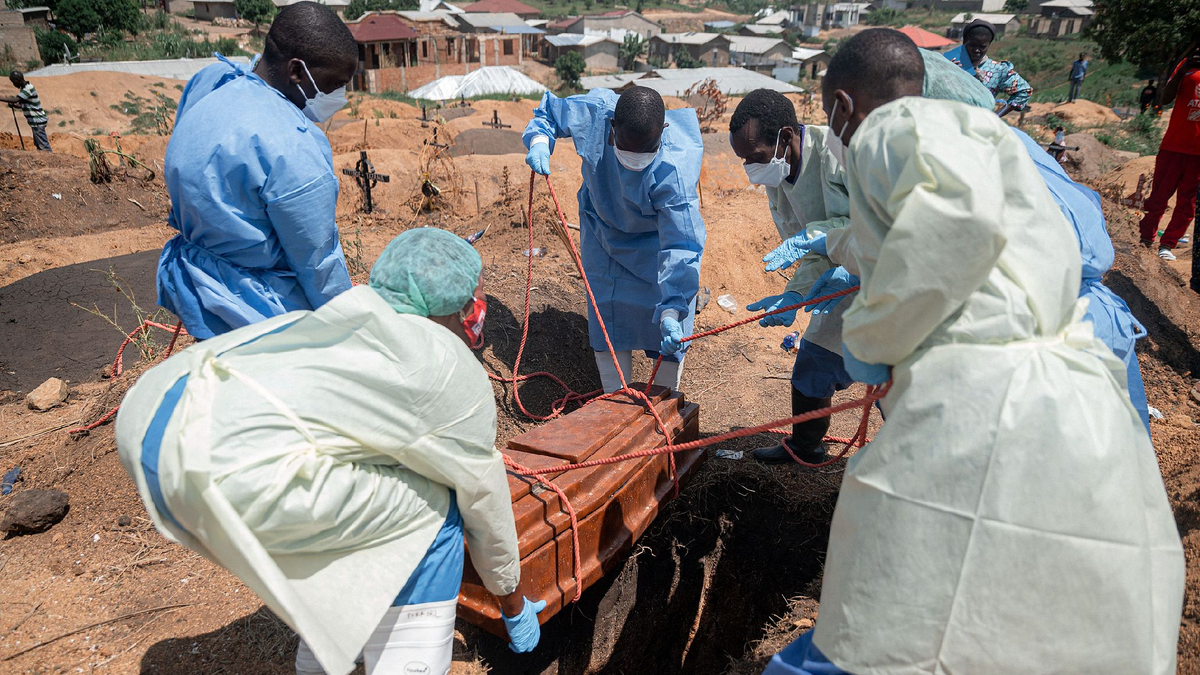
The Democratic Republic of Congo (DRC) is grappling with its deadliest Ebola outbreak to date, with official figures reporting over 5,000 deaths and more than 10,000 confirmed infections. Declared in May, this epidemic, caused by the Bundibugyo virus, has now spread across eight of the country's 26 provinces, marking it as the second-largest Ebola outbreak globally, surpassed only by the devastating 2014-2016 West African crisis. The response has been severely hampered by persistent insecurity, delays in identifying new infections, and a healthcare system already stretched beyond its limits. A significant number of fatalities are occurring within communities rather than specialized treatment centers, underscoring critical failures in early detection and timely patient care.
The current Ebola crisis in the Democratic Republic of Congo is not merely a public health emergency; it is a stark manifestation of deep-seated power imbalances and structural vulnerabilities. At its core, the DRC government faces an overwhelming challenge, operating with limited resources and authority in regions where state control is often nominal. Decades of internal conflict, fueled by a complex web of local militias, foreign-backed proxy groups, and the scramble for vast mineral wealth, have systematically eroded public trust and state capacity. This fragmentation of power directly impacts the Ebola response, as armed groups frequently obstruct aid efforts, attack healthcare workers, and displace populations, creating fertile ground for the virus to spread undetected.
International organizations, including the World Health Organization (WHO), Africa Centres for Disease Control and Prevention (Africa CDC), and the International Federation of Red Cross and Red Crescent Societies (IFRC), possess significant technical expertise and financial leverage. However, their power is often constrained by the volatile local security environment and the need to navigate complex political landscapes. Their ability to implement effective public health measures, such as contact tracing and safe burials, is contingent upon the cooperation of local communities and the security provided by the DRC army and UN peacekeeping forces, which themselves are often perceived with suspicion. The power dynamic here is one where global health actors, despite their resources, are forced to operate within the limitations imposed by a sovereign state's instability and the actions of non-state armed actors.
Crucially, the global community's attention and resource allocation also play a powerful role. While the DRC outbreak is the second-largest in history, it does not command the sustained, high-level international political and financial commitment seen in other global health emergencies. This disparity highlights a power dynamic where the perceived "threat" to wealthier nations dictates the urgency of the response. The lack of approved vaccines or specific treatments for the Bundibugyo virus strain, despite its deadly toll, underscores a broader systemic failure in global health research and development, where investment often follows market incentives rather than humanitarian need. The power to prioritize research and allocate resources rests largely with pharmaceutical companies and wealthy donor states, whose focus may not align with the immediate needs of a crisis-ridden African nation.
The ongoing conflict in eastern DRC is not random; it is deeply intertwined with the region's immense mineral wealth, including coltan, cassiterite, and gold. Various armed groups, both local and foreign, exert control over mining operations, using the proceeds to fund their activities. This shadow economy creates a powerful incentive for continued instability, as peace would disrupt these lucrative illicit networks. The presence of these groups directly undermines Ebola response efforts, not just through direct attacks, but by fostering an environment of fear and distrust that makes public health interventions impossible. The power of these economic interests often outweighs the immediate humanitarian imperative, trapping communities in a cycle of violence and disease.
The historical context of external intervention and internal political manipulation has bred deep skepticism among local populations towards both the DRC government and international actors. This distrust is a powerful force, often leading communities to resist vaccination campaigns, refuse treatment in official centers, and hide sick family members. Rumors and misinformation, sometimes deliberately spread by those who benefit from chaos, further fuel this resistance. For public health officials, overcoming this ingrained suspicion is as critical as developing medical interventions, requiring a nuanced approach that respects local customs and empowers community leaders, rather than imposing solutions from above. The power of community belief and collective memory can either facilitate or severely hinder any response.
The Ebola crisis in the Democratic Republic of Congo is exacting an unbearable toll, far beyond the staggering death count. For ordinary citizens, particularly in the affected provinces of North Kivu and Ituri, life has become a constant negotiation with fear, grief, and uncertainty.
The most immediate cost is the loss of life, with over 5,000 individuals succumbing to the Bundibugyo virus. Each death leaves behind a ripple of devastation: orphaned children, widowed spouses, and families shattered by the sudden, often isolating, nature of the disease. The strict protocols for safe and dignified burials, while medically necessary, often prevent families from performing traditional rites, adding psychological trauma to their grief. Children who lose parents to Ebola face profound emotional scars, social stigma, and an uncertain future in a country already struggling with poverty and instability.
Beyond individual families, entire communities are living under a cloud of fear and suspicion. The constant threat of infection, coupled with the disruption of daily life, has brought economic activity to a standstill in many areas. Farmers cannot tend their fields, markets are deserted, and small businesses collapse. This economic paralysis exacerbates existing poverty, pushing vulnerable populations further into destitution. The movement restrictions and quarantines, necessary for disease control, also sever vital social connections and disrupt access to essential services, including non-Ebola related healthcare, education, and food supply chains.
The dedicated healthcare workers, both local and international, bear an immense personal and professional burden. They operate in high-risk environments, often facing direct threats from armed groups and hostility from fearful communities. The psychological toll of witnessing so much suffering, combined with the constant fear of infection and the emotional strain of working in a crisis, leads to burnout and trauma. The loss of local healthcare professionals to the virus further weakens an already fragile health system, leaving communities even more vulnerable to future outbreaks and other preventable diseases.
The spread of Ebola beyond DRC's borders to Uganda, Kenya, and Nigeria, and even a reported case in France, highlights the global interconnectedness of health. However, the immediate human cost is felt most acutely in neighboring African nations, which face the dual challenge of preparing for potential outbreaks while dealing with the economic and social fallout of border restrictions and reduced trade. The stigmatization of people from DRC or those who have traveled through affected areas can lead to discrimination and further isolate communities already struggling.
While official reports detail infection rates and death tolls, they often omit or downplay the deeper, systemic issues that transform a viral outbreak into a catastrophic humanitarian crisis. The narrative often focuses on the immediate medical response, overlooking the historical and political context that makes the Democratic Republic of Congo uniquely vulnerable.
The "insecurity" cited as a primary hindrance to the Ebola response is not a natural phenomenon; it is a direct consequence of decades of colonial exploitation, post-independence political instability, and persistent external interference. The DRC's vast mineral wealth has been a curse, fueling internal conflicts and attracting foreign interests that prioritize resource extraction over human development. Governments, both internal and external, have historically downplayed their roles in perpetuating this instability, preferring to frame the DRC's challenges as inherent rather than externally influenced. The truth is, the current chaos is a feature, not a bug, of a system that has long benefited powerful actors at the expense of ordinary Congolese citizens.
The fact that the Bundibugyo virus strain, responsible for this devastating outbreak, still lacks approved vaccines or specific treatments, while other Ebola strains have seen rapid development of countermeasures, speaks volumes about global health priorities. This disparity is rarely highlighted in official statements, which tend to focus on the progress of the immediate response. The underlying truth is a form of global health apartheid, where research and development are overwhelmingly directed towards diseases and strains that pose a direct threat to wealthier nations, or those with larger, more profitable markets. The human cost of this neglect in the DRC is immense, yet it is framed as a scientific challenge rather than a systemic injustice. Powerful pharmaceutical companies and donor governments avoid public scrutiny on the allocation of R&D funds, often citing complex scientific hurdles rather than economic incentives.
For many in the global North, a major humanitarian crisis in the DRC has become a normalized event, failing to generate the sustained outrage or comprehensive response that similar events might in other parts of the world. This desensitization allows powerful international actors to offer piecemeal aid rather than addressing the root causes of vulnerability. The narrative often focuses on the "resilience" of African populations, subtly shifting the burden of responsibility away from those who have historically contributed to the continent's fragilities. What is downplayed is the profound fatigue and despair among the Congolese people, who are not merely resilient but perpetually enduring a cycle of crises that the world largely chooses to ignore. The global media, often driven by sensationalism, contributes to this by moving on quickly from stories once the immediate "peak" has passed, leaving the long-term suffering largely unexamined.
Governments and international bodies often emphasize the importance of community engagement. However, they frequently downplay the extent to which their own past actions, or the actions of their predecessors, have eroded trust. From colonial abuses to corrupt post-independence regimes supported by external powers, and even the missteps of past aid interventions, a deep well of suspicion exists. This historical context is often omitted from current public health messaging, which tends to blame "community resistance" rather than acknowledging the legitimate historical grievances that fuel it. The power dynamics here are subtle: by framing resistance as irrational, powerful actors avoid accountability for their own roles in creating the conditions for such distrust.
As the Ebola crisis in the Democratic Republic of Congo continues its deadly trajectory, several critical factors will shape its future and the broader implications for regional and global health.
First, observe the trajectory of the Bundibugyo virus strain. Will the lack of approved vaccines and treatments continue to hinder containment, or will accelerated research efforts yield breakthroughs? The speed and scale of global scientific collaboration, particularly in developing countermeasures for this specific strain, will be a crucial indicator of whether the world is truly learning from past pandemics or if global health equity remains an aspiration rather than a reality.
Second, monitor the interplay between the Ebola response and the ongoing security situation in eastern DRC. Any significant escalation or de-escalation of conflict, particularly involving armed groups in North Kivu and Ituri provinces, will directly impact the ability of health teams to reach affected populations and implement control measures. Pay close attention to any shifts in regional power dynamics, including the involvement of neighboring states and the effectiveness of UN peacekeeping missions, as these can either stabilize or further destabilize the environment for public health interventions.
Third, watch for the long-term consequences on the DRC's already fragile healthcare infrastructure and social fabric. Beyond the immediate crisis, will there be sustained investment in strengthening health systems, improving surveillance, and rebuilding trust within communities? Or will the international community withdraw once the immediate threat subsides, leaving the DRC vulnerable to future outbreaks? The capacity of local institutions to recover and rebuild will be a key measure of the true impact of this crisis.
Finally, observe how the international community responds to the potential for further international spread. With cases already reported in Uganda, Kenya, Nigeria, and France, the risk of wider transmission remains. Any significant spread to a country with a more robust healthcare system could trigger a more aggressive global response, highlighting the uneven application of resources and attention based on geographic proximity to wealthier nations. The coming months will reveal if lessons from this devastating outbreak translate into a more equitable and proactive global health strategy.
The current Ebola outbreak in the Democratic Republic of Congo has surpassed 5,000 deaths and recorded over 10,000 confirmed infections, making it the deadliest in the DRC's history and the second-largest globally.
The response is significantly hampered by persistent insecurity from armed groups, delayed detection of cases, and an already overstretched healthcare system. Deep-seated community distrust and a lack of specific treatments for the Bundibugyo virus strain also complicate efforts.
Yes, cases related to this outbreak have been reported in neighboring countries like Uganda, Kenya, and Nigeria, with one reported case even reaching France, highlighting the potential for wider international transmission.
Source referenced: CGTN
This brief was synthesized by our Editorial Engine and reviewed by The Ground Narrative team.