TRENDING

Tuesday, 3 November 2026
----------------------
23 Jumada Al-Awwal 1448 AH
The United States has announced it will suspend South Africa and Rwanda from duty-free trade benefits under the African Growth and Opportunity Act (AGOA). This decision, effective January 2027, has sparked concerns over its economic impact and the underlying political motivations.
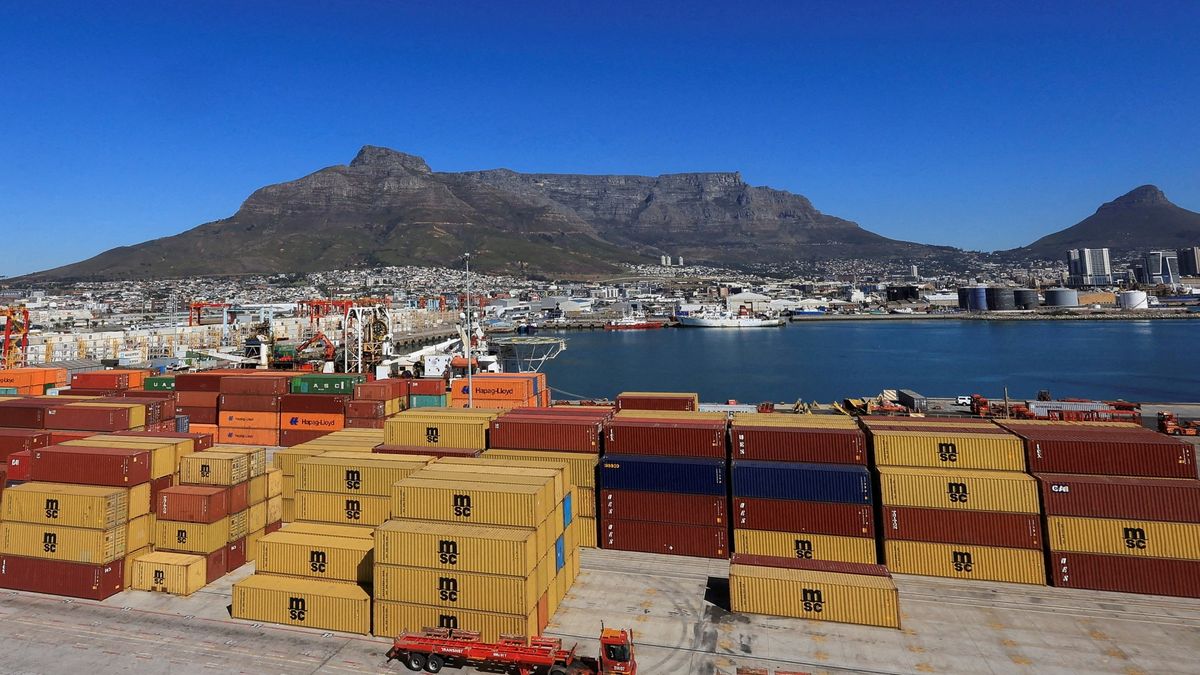
The United States has declared its intention to suspend South Africa and Rwanda from the preferential trade benefits offered under the African Growth and Opportunity Act (AGOA). This suspension, slated to take effect on January 1, 2027, follows an annual review by the US Trade Representative, which cited both nations' failure to meet AGOA's eligibility criteria. South Africa, historically the largest beneficiary of the program, exported approximately $1.7 billion worth of goods to the US under AGOA in 2025 alone.
The US decision to cut South Africa and Rwanda from AGOA is a clear demonstration of economic power being deployed as a foreign policy tool. AGOA, initially conceived as a mechanism to foster economic development and integrate African nations into the global market through duty-free access, has increasingly become a conditional instrument. Washington reviews eligibility annually, ostensibly based on criteria such as progress towards market-based economies, good governance, and the elimination of barriers to US trade and investment. However, the timing and specific concerns raised by the US suggest a deeper, more politically charged motivation.
For South Africa, the stated concerns include barriers to US trade and investment, corruption, and threats to US national security and foreign policy interests. While these are broad categories, the backdrop of South Africa's recent actions, particularly its decision to bring a genocide case against Israel at the International Court of Justice (ICJ), looms large. This move by Pretoria was a direct challenge to the US's diplomatic stance and its staunch support for Israel, signaling a growing independent foreign policy orientation from a key African power. The US leverage through AGOA serves as a punitive measure, designed to discourage such challenges and reaffirm its influence over global norms and alliances.
Rwanda's situation, while also framed by eligibility concerns regarding trade barriers, rule of law, and human rights, carries a history. The nation was previously suspended from AGOA in 2018, indicating a pattern of US pressure linked to governance issues. However, in the broader context, the dual suspension sends a powerful message across the African continent: alignment with US interests, both economic and geopolitical, remains a prerequisite for preferential access to the world's largest consumer market.
Crucially, this move unfolds against a backdrop of intensifying geopolitical competition for influence in Africa. As China continues to expand its economic footprint across the continent, offering alternative trade partnerships and development financing with fewer political conditionalities, the US's ability to dictate terms through programs like AGOA faces increasing scrutiny. South Africa's proactive search for new markets, explicitly mentioning China as a partner, underscores this shifting dynamic. The US action, therefore, is not merely about trade compliance; it is a strategic maneuver to assert its diminishing, but still formidable, economic power in a continent where its traditional influence is being steadily contested by rising global players.
While the suspension from AGOA is framed in terms of national policy and trade statistics, the real impact will be felt by ordinary citizens, workers, and small businesses in South Africa and Rwanda. The withdrawal of duty-free access will make their exports more expensive and less competitive in the crucial US market, directly threatening livelihoods.
In South Africa, the sectors most reliant on AGOA benefits include the automotive industry, agriculture, and wine. These industries are significant employers, often providing stable jobs in regions where economic opportunities are scarce.
- Automotive Industry Workers: The South African automotive sector, a major exporter of vehicles and components to the US, relies heavily on AGOA's preferential tariffs. Increased tariffs will likely lead to reduced demand from the US, potentially triggering production cuts, factory closures, and significant job losses. Thousands of workers, from assembly line operators to component manufacturers, could face unemployment, impacting entire communities dependent on these factories.
- Farmers and Vintners: Small and medium-sized agricultural producers, including fruit farmers and wine producers, have cultivated markets in the US thanks to AGOA. Without duty-free access, their products will become more expensive, making it harder to compete with producers from other countries. This could lead to reduced orders, lower incomes for farmers, and even the collapse of smaller agricultural enterprises, jeopardizing the livelihoods of farmworkers and their families.
- Iron and Steel: While perhaps less directly tied to AGOA for raw material exports, the overall economic downturn and reduced foreign investment resulting from the suspension could indirectly affect the iron and steel sectors, which are foundational to South Africa's industrial base.
In Rwanda, the primary exports to the US under AGOA are coffee, tea, and minerals. These are often produced by smallholder farmers and artisanal miners, whose incomes are directly linked to export markets.
- Coffee and Tea Growers: Thousands of Rwandan smallholder farmers depend on the cultivation and export of high-quality coffee and tea. Losing duty-free access means their products will face higher tariffs, reducing their competitiveness and potentially leading to a drop in prices paid to farmers. This could push already vulnerable rural communities deeper into poverty, undermining years of development efforts aimed at improving agricultural productivity and market access.
- Mineral Extractors: The nascent Rwandan mineral sector also benefits from AGOA. While less detailed information is available, any disruption to preferential trade could slow growth and investment in this sector, affecting local mining communities.
Beyond immediate job losses and income reductions, the suspension sends a chilling signal to potential investors. The perceived instability of trade relations can deter foreign direct investment, slowing economic growth and job creation in the long term. Ultimately, the burden of geopolitical maneuvering falls disproportionately on the most vulnerable segments of the population, who have little say in the foreign policy decisions that dictate their economic fate.
The official narrative from the US frames the AGOA suspension as a matter of South Africa and Rwanda failing to meet established eligibility criteria. However, this explanation downplays, or entirely omits, the deeper political motivations and strategic calculations at play.
For South Africa, the most significant unspoken factor is its decision to bring a genocide case against Israel at the International Court of Justice. While the US cited
Source referenced: ALJAZEERA
This brief was synthesized by our Editorial Engine and reviewed by The Ground Narrative team.