TRENDING

Monday, 2 November 2026
----------------------
22 Jumada Al-Awwal 1448 AH
Renewed violence between Tigrayan rebels and the Ethiopian government has shattered a fragile peace, pushing the region's health system to the brink of collapse and claiming civilian lives. As drone strikes intensify, ordinary citizens face a desperate struggle for survival amidst a deepening humanitarian crisis.
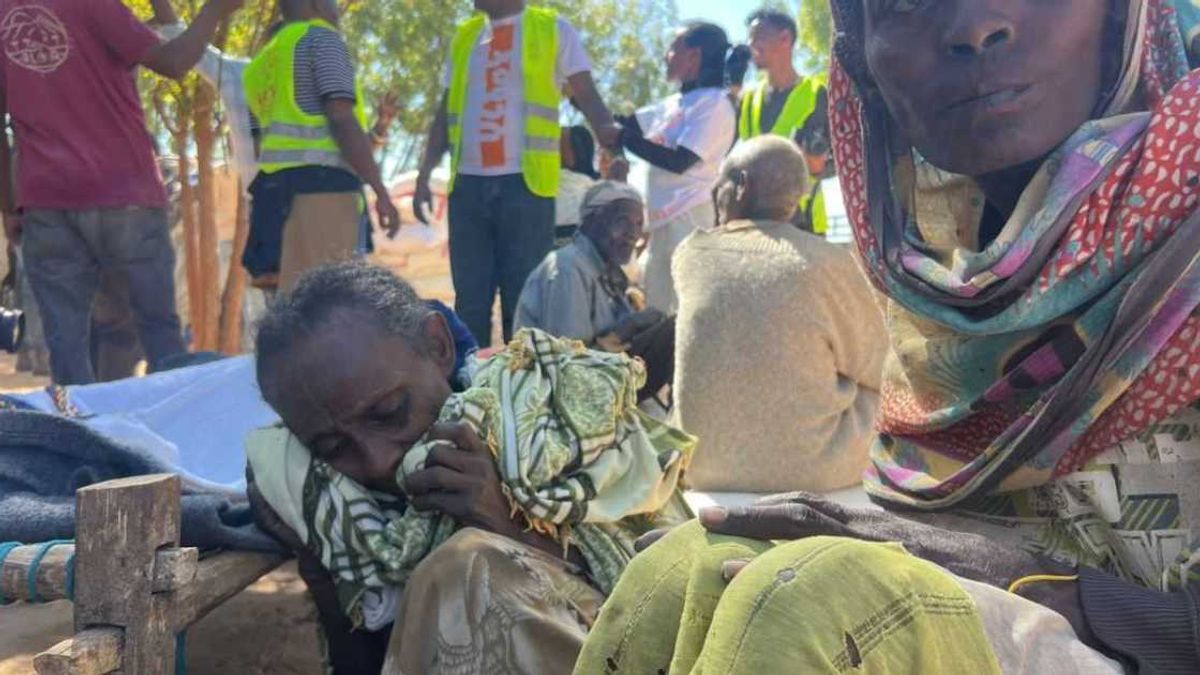
Renewed and escalating violence in northern Ethiopia, particularly across the Tigray and Amhara regions, has pushed the country's already fragile health system to the precipice of collapse. The head of the World Health Organization (WHO), Tedros Adhanom Ghebreyesus, issued a stark warning that continuous fighting and a surge in drone strikes are decimating medical services, obstructing aid, and claiming civilian lives. This resurgence of conflict effectively shatters the November 2022 peace agreement between the Ethiopian government in Addis Ababa and Tigrayan rebels, reigniting fears of a wider, more devastating war.
Recent days have seen a tragic toll, including at least 15 people, several of them children, killed in drone strikes on a camp for displaced civilians in Amhara. In Rama, within Tigray, more civilians lost their lives while desperately seeking food. With hospitals facing critical shortages of health workers, medicines, and equipment, and ambulance services severely limited, the violence is systematically dismantling the infrastructure necessary for basic survival, leaving millions vulnerable to preventable illness and death.
The renewed conflict in northern Ethiopia is a complex interplay of central government ambitions, regional autonomy demands, and the strategic interests of external actors. At its core, the Ethiopian government, led by Prime Minister Abiy Ahmed, seeks to consolidate central authority and prevent the fragmentation of the state. From Addis Ababa's perspective, the Tigray People's Liberation Front (TPLF), which dominated Ethiopian politics for decades before Abiy came to power, represents a secessionist threat that must be neutralized. The government's military doctrine increasingly relies on advanced aerial capabilities, including drones, to project power and target perceived rebel strongholds.
The Tigrayan rebels, conversely, view the struggle as one for self-determination and protection against what they perceive as federal overreach and persecution. Their refusal to fully disarm, as stipulated by the 2022 peace agreement, stems from deep-seated distrust and a belief that their security and political future can only be guaranteed through continued armed resistance. The agreement itself was a fragile compromise, addressing immediate cessation of hostilities but leaving many fundamental political and territorial disputes unresolved, creating fertile ground for its eventual breakdown.
Crucially, the conflict's dynamics are being reshaped by external military support. Ethiopia's recent acquisition of Russian Su-35 fighter jets and plans to acquire S-400 air defense systems represent a significant shift in military capabilities. This influx of advanced weaponry from Moscow provides Addis Ababa with a decisive aerial advantage, enabling the drone strikes that are now causing widespread civilian casualties. For Russia, this engagement offers a strategic foothold in the Horn of Africa, an opportunity to expand its influence, secure arms sales, and potentially divert international attention from its own conflicts. It also positions Russia as a reliable partner for nations seeking alternatives to Western military suppliers, challenging existing geopolitical alignments.
The failure of the 2022 peace agreement highlights a deeper structural issue: the inability of a mediated peace to hold when fundamental power imbalances and political grievances remain unaddressed. Both sides entered the agreement with reservations, and the lack of robust enforcement mechanisms or a clear pathway for political integration meant that the underlying tensions were merely suppressed, not resolved. The current escalation demonstrates a return to military solutions, driven by a belief from both sides that they can achieve their objectives through force, a belief bolstered by external support and a perceived weakening of international oversight.
In northern Ethiopia, the human cost of this renewed conflict is borne overwhelmingly by ordinary citizens, caught between warring factions and a collapsing support system. The WHO's warning is not abstract; it describes a daily reality of terror, deprivation, and death for millions.
The most immediate and devastating impact is on the health system. Hospitals, already strained by years of conflict and underinvestment, are now facing critical shortages of everything from medical staff to basic medicines and equipment. Essential services—emergency care, maternal and child health, and treatment for chronic diseases—are becoming inaccessible. For a pregnant woman in Tigray, a child with pneumonia in Amhara, or an elder with diabetes, the collapse of healthcare means a heightened risk of preventable death. The inability of aid agencies to deliver life-saving supplies due to insecurity further exacerbates this crisis, turning treatable conditions into fatal ones. This isn't just a shortage; it's a systemic failure that directly translates into increased mortality and morbidity across the region.
Drone strikes, particularly those targeting displacement camps like Jaari 2 in Amhara, force already vulnerable populations to flee again, often with nothing but the clothes on their backs. These displaced communities, having already lost their homes and livelihoods, are now subjected to repeated trauma and instability. The reports of people being killed while seeking food in Rama underscore the desperate conditions and the targeting of civilians even in their most basic acts of survival. The flow of Ethiopians into neighboring Kenya is a stark indicator of the scale of human displacement, placing immense pressure on host communities and regional stability. Each person fleeing represents a broken life, a lost future, and a profound failure of protection.
The psychological toll on children and adults living under constant threat of violence is immeasurable. Generations are growing up in a cycle of conflict, witnessing atrocities, and experiencing profound loss. Education is disrupted, economic activity grinds to a halt, and social fabric frays. The destruction of infrastructure, from roads to clinics, means that even if peace were to miraculously break out tomorrow, recovery would be a monumental, decades-long task. The conflict is not just claiming lives; it is systematically dismantling the foundations of society, creating a humanitarian catastrophe that will resonate for decades.
While official statements from Addis Ababa often frame the conflict as a necessary measure to maintain national unity and combat
The November 2022 peace agreement failed due to deep-seated distrust between the **Ethiopian** government and **Tigrayan** rebels, unresolved political and territorial disputes, and the **TPLF's** reluctance to fully disarm. These underlying issues, combined with renewed military actions and external support, led to its breakdown.
**Russia** is providing significant military support to **Ethiopia**, including **Su-35** fighter jets and planned **S-400** air defense systems. This strengthens **Addis Ababa's** military capabilities, particularly in aerial warfare, and expands **Russia's** influence in the **Horn of Africa**, potentially complicating future peace efforts.
The immediate human cost includes civilian deaths from drone strikes, particularly in displaced persons camps, and a severe collapse of the health system. Hospitals face critical shortages of staff, medicines, and equipment, leading to widespread lack of access to essential healthcare and increased mortality rates.
Editor's Note: Analysis connects the WHO warning, peace agreement breakdown, and reported Russian arms deals to explain power dynamics and untold stories. The focus on human cost and external influence is central to TGN doctrine.
Source referenced: ALJAZEERA
This brief was synthesized by our Editorial Engine and reviewed by The Ground Narrative team.


