TRENDING

Tuesday, 3 November 2026
----------------------
23 Jumada Al-Awwal 1448 AH
The UN Security Council has extended its mission in Libya for another year. This decision, welcomed by both major Libyan factions, prolongs a diplomatic holding pattern rather than signaling a breakthrough for the war-torn nation.
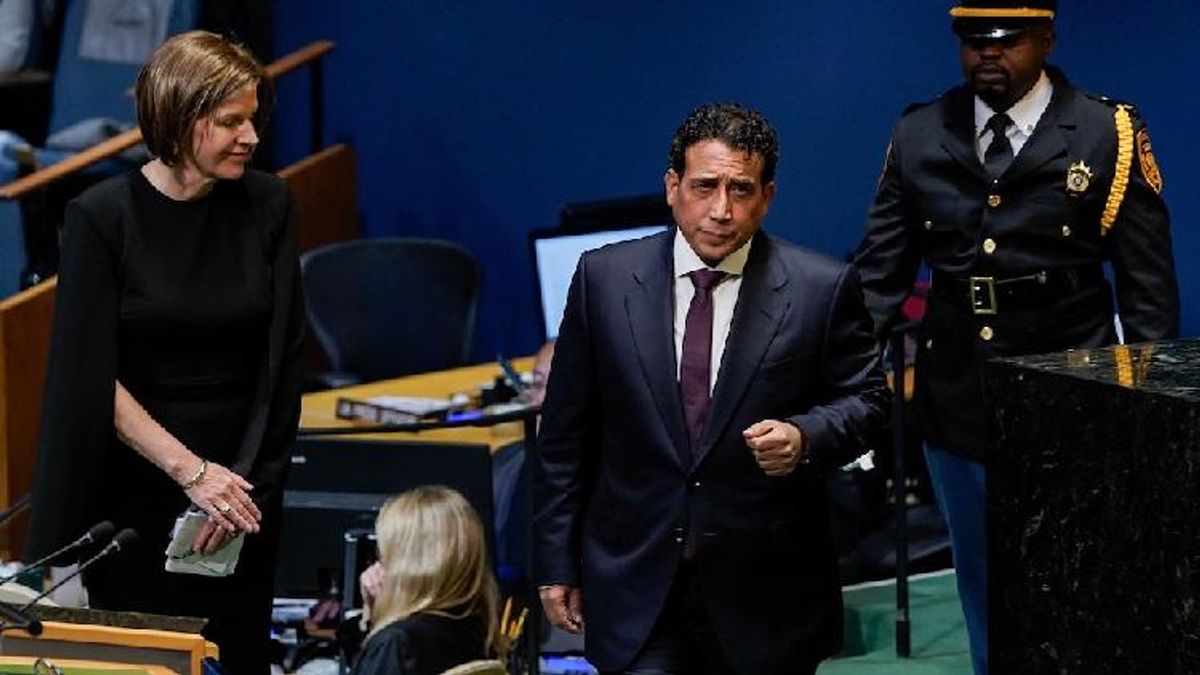
The United Nations Security Council recently extended the mandate of the UN Support Mission in Libya (UNSMIL) for another 12 months. Resolution 2835 was publicly welcomed by both Mohamed Menfi, head of the internationally recognized Presidential Council in Tripoli, and authorities in eastern Libya aligned with the House of Representatives in Benghazi. The resolution passed with 13 votes in favor, while Russia and Greece abstained, just hours before the previous mandate expired. This decision prolongs the UN's role in a nation fractured by over a decade of conflict, extending a diplomatic holding pattern rather than signaling a breakthrough.
The apparent consensus on UNSMIL’s mandate extension masks the complex power dynamics that have kept Libya in protracted division since Muammar Gaddafi's fall in 2011. For both the Government of National Unity (GNU) in Tripoli and the parallel administration in Benghazi, the UN mission is a critical, if often frustrating, conduit for international legitimacy and engagement.
For the GNU, struggling with internal legitimacy and constant challenges from eastern authorities, UNSMIL’s continued presence offers vital international endorsement. It positions Tripoli as a primary interlocutor, providing a diplomatic shield against military challenges. The mission's
UNSMIL is the UN Support Mission in Libya, tasked with mediating a political settlement and supporting the peace process. Its mandate extension is important as it signifies continued international engagement, but also reflects the ongoing challenges in achieving a unified, stable Libyan government.
Libya is primarily divided between the Government of National Unity (GNU) in Tripoli, recognized internationally, and a parallel administration in eastern Libya, backed by Khalifa Haftar's forces. Both factions seek international legitimacy and control over Libya's resources, often interpreting calls for 'unity' in ways that consolidate their own power.
External powers like Turkey, Egypt, UAE, Russia, France, and Italy significantly influence the conflict by backing different Libyan factions with military, financial, and political support. These interventions, driven by strategic and economic interests, perpetuate the conflict and complicate efforts towards a genuine Libyan-led solution.
Editor's Note: The raw intelligence is from a state-affiliated source (CGTN) reporting a factual UN vote. The analysis provides independent geopolitical context, scrutinizing all actors and focusing on underlying power dynamics and human impact, consistent with TGN doctrine. The future date (2026) is noted and treated as current for the analysis.
Source referenced: CGTN
This brief was synthesized by our Editorial Engine and reviewed by The Ground Narrative team.


