TRENDING

Monday, 2 November 2026
----------------------
22 Jumada Al-Awwal 1448 AH
A new offensive has ignited in Yemen's Al-Jawf governorate, pushing government forces against Houthi strongholds and displacing hundreds of thousands of civilians. This latest escalation highlights the enduring strategic importance of the northern region and the devastating human toll of a protracted war.
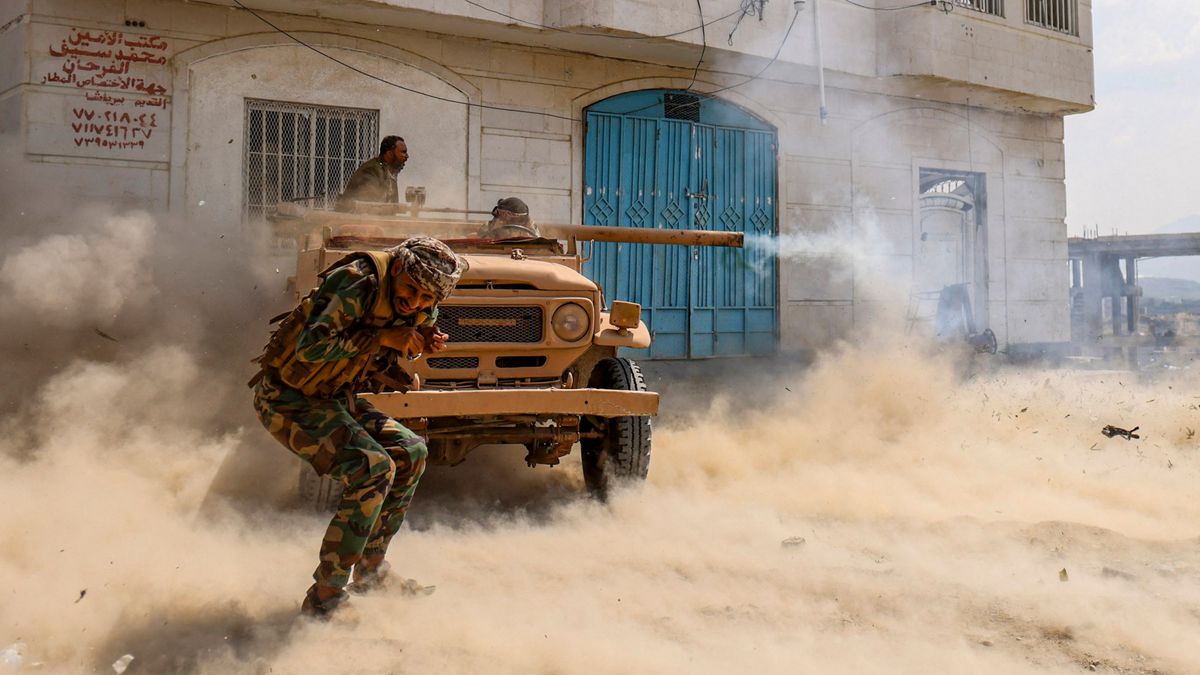
Yemen's northern Al-Jawf governorate has become the latest flashpoint in the country's protracted conflict, as forces aligned with the internationally recognized Yemeni government launched a major counteroffensive against Houthi control. Dubbed "Operation Dawn of Yemen," the government's push aims to reclaim strategic heights east of the provincial capital, al-Hazm, which has been under Houthi control since March 2020. This renewed fighting has led to the displacement of nearly 300,000 people in western Yemen, exacerbating an already dire humanitarian crisis.
The renewed offensive in Al-Jawf is not a sudden eruption but a calculated move within the long-standing power struggle for control over Yemen's fragmented landscape. For the Yemeni government forces, backed by the Saudi-led coalition, the objective is clear: reverse Houthi territorial gains and re-establish state authority, particularly in the northern regions. Al-Jawf is not merely a piece of land; it is a critical strategic corridor.
Its expansive border with Saudi Arabia makes it vital for Riyadh's security interests, serving as a buffer against potential cross-border attacks. Furthermore, Al-Jawf acts as a crucial defensive shield for the oil-rich Marib governorate, which remains under government control and represents a significant economic prize. Recapturing Al-Jawf would also provide a potential launchpad for future operations against Sanaa, the capital, which has been under Houthi control since 2014.
The government's strategy in this offensive includes exploiting perceived Houthi vulnerabilities in desert and open-area warfare, where they have historically suffered defeats. The appointment of Major General Amin Ali Al-Akimi as governor and military commander of Al-Jawf underscores an attempt to unify command and control, mobilize tribal support, and consolidate gains. Al-Akimi, hailing from a prominent local tribe, brings both military and tribal influence, a critical factor in Yemen's complex socio-political landscape.
For the Houthis, maintaining their hold on Al-Jawf, especially al-Hazm, is essential for defending their northern strongholds and preserving their strategic depth. Control of key mountain ranges like Huwaishan allows them to disrupt government supply routes and project power. Their resistance, despite reported losses, indicates a determination to hold ground that links their core territories to the strategic eastern regions.
The broader conflict is a proxy battleground, with Saudi Arabia and its allies seeking to contain what they view as Iranian influence through the Houthis. This external dimension provides both sides with varying degrees of military, logistical, and financial support, perpetuating a cycle of violence where tactical gains are often temporary, and strategic stalemates are common. The 12-year duration of the war itself is a testament to these entrenched power dynamics, where no single actor has been able to achieve decisive victory, leading to a continuous ebb and flow of control over key territories.
While military commanders and political strategists analyze maps and supply lines, the immediate and devastating consequences of the Al-Jawf offensive fall squarely on the shoulders of ordinary Yemenis. The United Nations reports that new fighting has displaced 290,000 people, adding to the more than 300,000 already uprooted in western Yemen. These figures represent families forced to abandon their homes, livelihoods, and communities, often with little more than the clothes on their backs.
The situation in Taiz governorate, where intense fighting continues and the city remains under siege, offers a stark illustration of the human cost. For years, the people of Taiz have endured severe restrictions on food, fuel, and essential supplies. Hospitals in the city are operating at a mere 20 percent capacity, with 120 health centers entirely shut down. This collapse of medical infrastructure means that treatable illnesses become fatal, and basic healthcare, especially for vulnerable populations like pregnant women and children, is virtually nonexistent.
Civilians in Taiz live under the constant threat of sniper fire from surrounding hillsides, turning everyday activities into life-threatening risks. Governor Nabil Shamsan's desperate appeal for a safe route between Taiz and Aden for humanitarian aid and citizen movement underscores the extreme isolation and suffering. This is not just a logistical challenge; it is a plea for basic human dignity and survival in a city suffocated by conflict.
Beyond the immediate dangers of combat and siege, displacement inflicts a silent, long-term toll. Families lose access to education, clean water, sanitation, and stable food sources. Children miss years of schooling, impacting their future prospects and perpetuating cycles of poverty and instability. The psychological trauma of war, displacement, and loss leaves deep scars, affecting mental health and community cohesion for generations. The sheer scale of human suffering in Yemen is immense, with millions facing famine conditions and relying on humanitarian aid that is often insufficient or obstructed.
In the official statements and military communiqués, several critical dimensions of the Yemen conflict, particularly the latest Al-Jawf offensive, are often downplayed or omitted. These silences reveal the true priorities of powerful actors, which frequently diverge from the stated goals of peace and stability.
The "international community" often expresses concern and calls for de-escalation, yet its actions have consistently fallen short of addressing the root causes or enforcing accountability. While the UN reports on displacement, there is a noticeable lack of sustained, forceful diplomatic pressure on all parties to genuinely end the conflict. The focus on humanitarian aid, while crucial, often serves as a band-aid, allowing the underlying political and military dynamics to persist without fundamental challenge. The absence of a robust, unified international front capable of mediating a lasting peace or imposing consequences for violations of international law is a glaring omission.
The narrative frequently frames the conflict as purely ideological or a proxy struggle. However, the mention of oil-rich Marib and the strategic importance of Al-Jawf's links to it highlights a deeper, often unstated, motivation: control over Yemen's dwindling natural resources and trade routes. The conflict is not just about territory; it is about economic leverage and future reconstruction opportunities. The strike on an oil company facility in Hodeidah further underscores the economic dimension of the war, where critical infrastructure and resources become targets, disrupting the nation's ability to sustain itself and enriching certain factions.
The desperate appeal from Taiz for a safe route for food and medicine points to a grim reality: humanitarian aid and access are often weaponized. All parties to the conflict have, at various times, been accused of obstructing aid, using it as leverage, or diverting it for their own purposes. This tactic transforms essential goods into bargaining chips, deepening the suffering of civilians and undermining the very principles of humanitarian assistance. The powerful actors involved, directly or indirectly, benefit from this control over aid flows, as it allows them to exert pressure and maintain influence.
The Saudi-led coalition's involvement, often framed as supporting the legitimate government, is a significant driver of the conflict's intensity and duration. Their strategic interests in containing Iranian influence and securing their borders have translated into extensive military campaigns, blockades, and support for various factions. While Saudi Arabia has faced international criticism for civilian casualties, the long-term geopolitical calculus often outweighs the immediate humanitarian concerns in their decision-making. The intercepted missile mentioned in the raw intelligence serves as a stark reminder of the ongoing cross-border dimension and the persistent, destructive nature of this proxy engagement.
As the fighting in Al-Jawf continues, several critical indicators will reveal the immediate trajectory of the Yemen conflict and its human toll.
First, observe the ability of Yemeni government forces to consolidate their gains in Al-Jawf. The effectiveness of Major General Amin Ali Al-Akimi's tribal mobilization efforts will be key. If the government can secure and hold the strategic heights and supply routes, it could shift the balance of power in the northern governorates, potentially opening new avenues towards Sanaa or further strengthening Marib's defenses. Conversely, a prolonged stalemate or Houthi counter-offensives would signal the continuation of the grinding, attritional warfare that has defined the conflict for over a decade.
Second, pay close attention to the humanitarian situation, particularly in besieged areas like Taiz. The international community's response to appeals for safe corridors and increased aid access will be a crucial test of its commitment. Any significant deterioration in medical capacity or food security in Taiz could trigger an even more catastrophic loss of life, pushing the city further into an abyss. The number of newly displaced people will also serve as a grim barometer of the conflict's intensity and reach.
Finally, monitor any shifts in the broader regional dynamics. Changes in Saudi Arabia's direct involvement or Iran's support for the Houthis could significantly alter the conflict's trajectory. External pressures, or a renewed push for genuine peace negotiations, could offer a glimmer of hope, but without fundamental shifts in the power mechanics, Al-Jawf may simply be another chapter in Yemen's enduring tragedy. The human cost will continue to mount, regardless of who claims tactical victories on the desert battleground. The world should watch for whether the powerful will finally prioritize the lives of ordinary Yemenis over strategic advantage.
Source referenced: ALJAZEERA
This brief was synthesized by our Editorial Engine and reviewed by The Ground Narrative team.


