TRENDING

Monday, 2 November 2026
----------------------
22 Jumada Al-Awwal 1448 AH
Oman and China have inked significant trade and investment deals, signaling a deepening economic partnership that could reshape power dynamics in the critical Gulf region. This move reflects Oman's strategy to diversify its economy and China's ambition to expand its global reach.
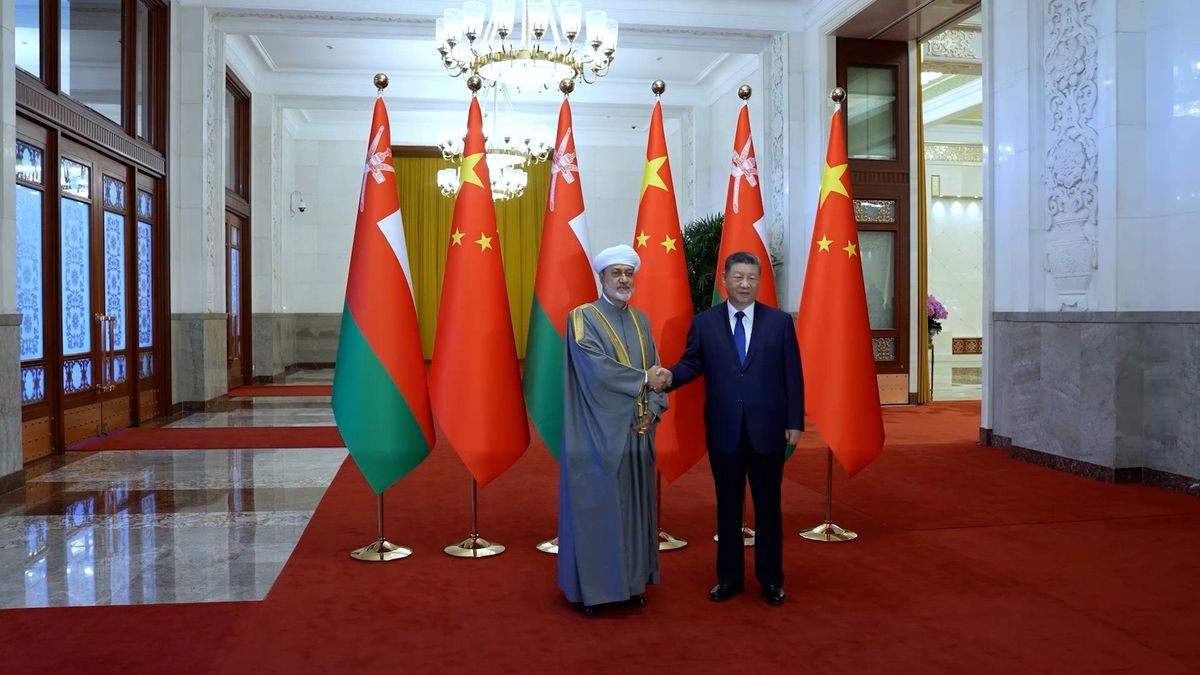
In early November 2026, Omani Sultan Haitham bin Tariq met with Chinese President Xi Jinping in Beijing, culminating in the signing of several agreements aimed at bolstering trade and investment between the two nations. The talks focused on strengthening bilateral ties and expanding economic cooperation, with a particular emphasis on infrastructure, energy, and logistics. This high-level engagement underscores a deliberate pivot by Oman towards new economic partners, notably China, as it seeks to diversify its economy beyond traditional oil revenues.
This deepening relationship between Oman and China is a clear illustration of shifting global power dynamics, driven by distinct, yet converging, interests. For China, the Gulf region is indispensable for its energy security. As the world's largest energy consumer, securing reliable access to oil and gas from the Middle East is a strategic imperative. Oman's location, particularly its proximity to the Strait of Hormuz—a chokepoint through which a significant portion of the world's seaborne oil passes—makes it a crucial logistical node in Beijing's broader Belt and Road Initiative (BRI). Investing in Omani ports, such as the deep-water port of Duqm, offers China not just market access for its goods and services, but also potential logistical hubs that could enhance its global maritime reach and influence.
For Oman, the calculus is primarily economic survival and strategic autonomy. Faced with the long-term decline of oil prices and the global push towards renewable energy, Muscat has embarked on an ambitious Vision 2040 plan to diversify its economy. This involves attracting foreign direct investment (FDI) into non-oil sectors like tourism, logistics, manufacturing, and technology. China, with its vast capital, technological expertise, and appetite for large-scale infrastructure projects, presents an attractive partner. Furthermore, Oman has historically pursued a policy of neutrality and non-alignment, maintaining good relations with all major powers. Deepening ties with China allows Oman to balance its traditional relationships with Western nations, particularly the United States, and avoid over-reliance on any single external power. This strategic hedging enhances Oman's diplomatic flexibility and reduces its vulnerability to geopolitical pressures from any single bloc.
The agreements also reflect China's broader strategy to expand its influence in regions traditionally dominated by Western powers. By offering substantial investment without the political conditionalities often associated with Western aid or loans, Beijing positions itself as a reliable partner for developing nations. This approach resonates with countries like Oman that prioritize economic growth and infrastructure development while seeking to maintain sovereignty over their internal affairs. The power dynamic here is one of mutual benefit, but with an inherent asymmetry: China's economic might and global reach far outweigh Oman's, potentially creating a long-term dependency that could subtly shift Oman's geopolitical alignment.
While official statements emphasize mutual benefit and economic growth, the human cost of large-scale, foreign-funded development projects often goes unacknowledged. For the ordinary Omani citizen, these deals carry both promise and potential peril.
Major infrastructure projects, such as port expansions, industrial zones, and new transport networks, frequently require significant land acquisition. This can lead to the displacement of local communities, particularly those engaged in traditional livelihoods like fishing or farming, who may find their ancestral lands repurposed for industrial development. Compensation, even if offered, rarely fully accounts for the loss of community ties, cultural heritage, or long-term economic stability. Furthermore, rapid industrialization and increased shipping traffic can lead to severe environmental degradation, impacting marine ecosystems, air quality, and access to natural resources that are vital for local populations.
Another significant concern revolves around labor. Chinese-backed projects often bring in a substantial workforce from China, raising questions about local employment opportunities. While some skilled jobs may be created for Omanis, the bulk of construction and manual labor might be filled by foreign workers, limiting the trickle-down economic benefits for the broader Omani population. Moreover, local businesses, particularly small and medium enterprises, may struggle to compete with large, state-backed Chinese corporations that operate with economies of scale and often receive preferential treatment, potentially stifling local entrepreneurship and market growth.
The financial mechanisms of these deals, often involving large loans from Chinese state banks, introduce the risk of debt accumulation. While Oman is a relatively wealthy nation, opaque loan terms or unfavorable repayment schedules could place a significant long-term burden on the national treasury, ultimately impacting public services and future generations of Omanis. A lack of transparency in contracting and project implementation can also create opportunities for corruption, diverting resources and undermining public trust in governance.
Behind the diplomatic smiles and official communiqués, several critical aspects of this deepening Oman-China relationship are often downplayed or entirely omitted from public discourse by both governments.
While presented purely as economic ventures, China's investments in Omani ports and logistical hubs, particularly Duqm, carry significant strategic implications. Deep-water ports capable of handling large cargo vessels can also accommodate naval ships. These facilities, ostensibly for commercial trade, could potentially serve as dual-use infrastructure, providing logistical support, maintenance, and resupply capabilities for the Chinese People's Liberation Army Navy (PLAN). This expansion of China's naval reach, even if indirect, would be a quiet but profound shift in the military balance of power in a region traditionally dominated by the United States and its allies. Neither Beijing nor Muscat publicly discusses this potential, preferring to focus solely on economic benefits.
The official narrative frames these agreements as purely economic and bilateral. However, they represent a significant recalibration of Oman's foreign policy and a broader trend among Gulf states to diversify away from exclusive reliance on Western security guarantees and economic partnerships. This is not merely about trade; it's about Oman asserting greater strategic autonomy in a multipolar world. The United States, a long-standing security partner for Oman, is likely watching these developments with quiet apprehension, even if official statements remain muted. The deeper China's economic roots grow in the Gulf, the more complex it becomes for Washington to maintain its singular influence.
Official statements celebrating new projects rarely delve into the specifics of environmental impact assessments or social safeguards. Chinese state-backed enterprises, while efficient, have sometimes faced criticism in other BRI host countries for less stringent environmental standards and labor practices compared to Western counterparts. The long-term ecological consequences of industrial development in sensitive coastal areas, and the social impact on local communities, are often relegated to footnotes or entirely absent from the public narrative, leaving citizens with little insight into the true sustainability of these ventures.
The immediate allure of large-scale investment often overshadows the long-term financial implications. While Oman is not currently in a precarious debt position, the sheer scale of Chinese lending in other BRI nations has led to concerns about
Oman's strategic location near the Strait of Hormuz is crucial for global energy transit, making it a key logistical node for China's Belt and Road Initiative and ensuring energy security. Its ports offer China access to vital shipping lanes.
The deals aim to boost Oman's economic diversification efforts, attracting foreign investment and developing non-oil sectors. However, they also introduce potential risks related to debt sustainability and competition for local businesses.
These agreements signify a growing trend of Gulf states diversifying their international partnerships beyond traditional Western alliances. This shift could reshape regional power dynamics and lead to increased competition among global powers for influence.
Editor's Note: Analysis is based on established patterns of China's economic diplomacy and Gulf state diversification strategies, interpreted through The Ground Narrative's editorial doctrine.
Source referenced: ALJAZEERA
This brief was synthesized by our Editorial Engine and reviewed by The Ground Narrative team.


