TRENDING

Monday, 2 November 2026
----------------------
22 Jumada Al-Awwal 1448 AH
A new metro line in Lahore symbolizes modern progress, but it's also a visible marker of Pakistan's increasing reliance on Chinese financing and strategic objectives. This analysis delves into the hidden costs and power dynamics behind the gleaming infrastructure.
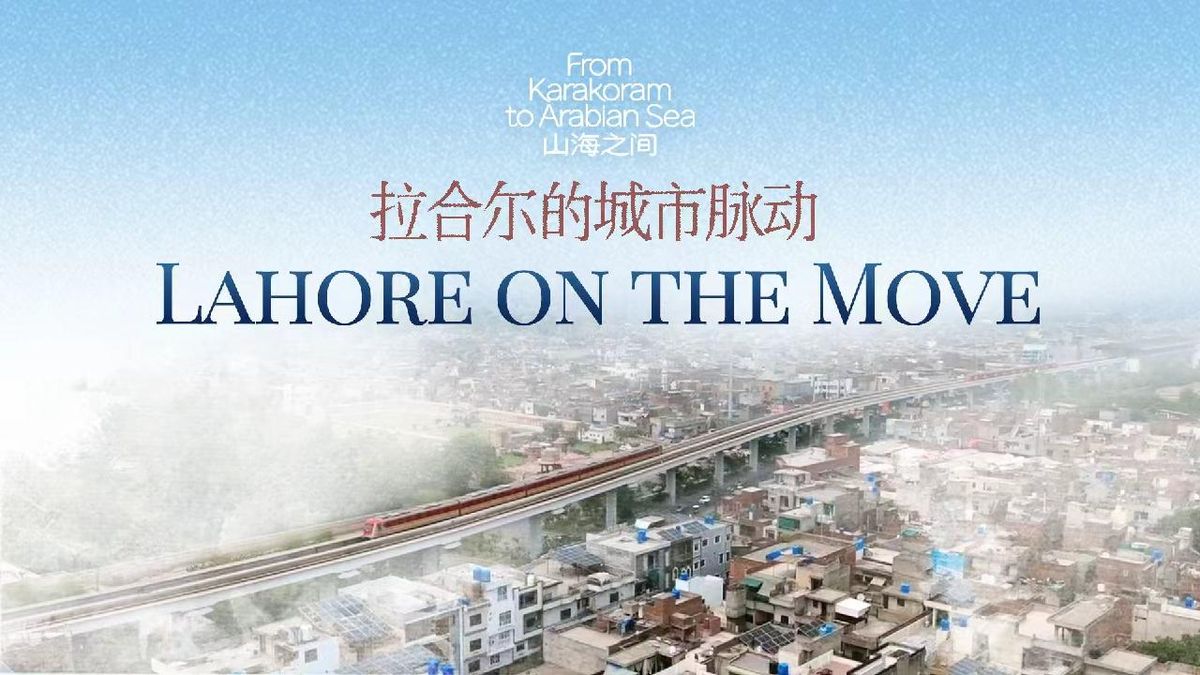
China Global Television Network (CGTN) recently showcased the Orange Line metro in Lahore, Pakistan, as a prime example of the China-Pakistan Economic Corridor (CPEC) in action. The report highlighted how this new urban transit system is making daily travel “easier, safer and more comfortable” for residents of Lahore, framing it as a success story of Pakistan's development and growing cooperation with China. The Orange Line is presented as a tangible benefit of the broader CPEC initiative, which spans from the Karakoram mountains to the Arabian Sea, connecting strategic infrastructure projects across the country.
At its core, the Orange Line metro in Lahore is a microcosm of the larger power dynamics at play within the China-Pakistan Economic Corridor. For China, CPEC is a cornerstone of its ambitious Belt and Road Initiative (BRI), designed to expand its economic and strategic influence across Asia, Africa, and beyond. Pakistan offers China a critical land bridge to the Arabian Sea, providing an alternative trade route that bypasses the congested and geopolitically sensitive Malacca Strait. This access, particularly through the deep-sea port of Gwadar, is vital for China's energy security and its broader maritime strategy, allowing for faster and more secure transport of goods and resources, especially oil from the Middle East. The financing and construction of projects like the Orange Line are often undertaken by Chinese state-owned enterprises, which not only provides them with lucrative contracts but also allows China to export its industrial capacity and establish long-term operational influence.
For Pakistan, the allure of CPEC is multifaceted. Faced with persistent infrastructure deficits, energy shortages, and a desire for economic growth, Pakistani governments have embraced Chinese investment as a fast track to modernization. The Orange Line is a visible symbol of progress, offering a tangible benefit to urban populations and serving as a powerful political talking point for ruling parties. Such projects promise job creation, albeit often temporary and primarily during the construction phase, and a perceived boost to the national economy. However, this partnership is characterized by a significant power asymmetry. China, with its vast economic might and strategic vision, acts as the primary financier and often the technical lead, while Pakistan largely assumes the role of recipient and borrower. The terms of these loans, often opaque, grant China considerable leverage, tying Pakistan's economic future closely to Beijing's strategic priorities. This dynamic ensures that while Pakistan gains much-needed infrastructure, it also incurs substantial debt, deepening its economic reliance on its northern neighbor.
While the Orange Line metro promises easier commutes for Lahore's millions, the human cost of such large-scale infrastructure projects, particularly those under the CPEC umbrella, often falls disproportionately on ordinary Pakistani citizens and communities.
The most significant and pervasive human cost is the long-term debt burden. The Orange Line alone cost approximately $1.6 billion, largely financed by Chinese loans. While Pakistan gains modern infrastructure, its national debt continues to climb, placing immense pressure on public finances. This debt translates into fewer resources available for essential social services like healthcare, education, and poverty alleviation programs. Ultimately, it is the Pakistani taxpayer who will bear the brunt of these repayments, potentially for generations. This economic strain can lead to austerity measures, higher taxes, and a reduced capacity for the government to invest in other critical sectors, directly impacting the quality of life for millions of ordinary Pakistanis.
Large infrastructure projects inevitably require significant land acquisition. In the construction of the Orange Line, thousands of families and businesses along the proposed route were displaced. While compensation packages are typically offered, they are often perceived as inadequate or arrive too late, leaving many struggling to rebuild their lives and livelihoods. Historic buildings and cultural sites were also affected, leading to concerns about the preservation of Lahore's rich heritage. The disruption caused by years of construction also severely impacted local businesses, with many small shops and vendors experiencing significant losses or forced to close down entirely due to reduced foot traffic and accessibility issues.
The rapid pace of development and construction associated with CPEC projects, including urban metro lines, often comes with environmental consequences. Increased pollution from construction activities, changes to urban landscapes, and the long-term energy demands of operating such systems contribute to environmental degradation. While modern infrastructure can reduce individual vehicle emissions, the overall environmental footprint of its creation and maintenance is substantial, impacting air quality and natural resources in densely populated areas like Lahore.
The narrative presented by official sources, such as the CGTN report, focuses almost exclusively on the immediate benefits and convenience offered by projects like the Orange Line. What remains largely unsaid, downplayed, or omitted are the deeper strategic implications, the true economic vulnerabilities, and the broader geopolitical chessboard on which CPEC is being played.
While China frames CPEC as a purely economic endeavor, its strategic dimensions are profound. The corridor provides Beijing with a critical foothold in South Asia and direct access to the Arabian Sea via Gwadar Port. This port is not merely a commercial hub; its potential for dual-use (civilian and military) is a significant, if unspoken, aspect of China's long-term naval strategy. By securing a warm-water port and a logistics network through Pakistan, China enhances its power projection capabilities in the Indian Ocean Region, a move that has clear strategic implications for regional rivals and global powers. The infrastructure built for CPEC, from roads to fiber optic cables, can serve both economic and security interests, creating a robust network that strengthens China's influence far beyond trade.
The glowing reports of development often gloss over the precarious state of Pakistan's national finances. CPEC projects are largely financed by concessional loans from China, but these still add significantly to Pakistan's already substantial foreign debt. The country has repeatedly sought bailouts from the International Monetary Fund (IMF), often with conditions that require greater transparency regarding CPEC debt. The lack of public disclosure on the terms and conditions of many CPEC agreements fuels concerns about Pakistan's long-term debt sustainability and potential vulnerability to China's economic leverage. Critics argue that this growing financial dependence could subtly erode Pakistan's sovereignty, as economic decisions become increasingly influenced by the need to service Chinese debt and maintain Beijing's favor.
The official narrative also omits the significant geopolitical friction generated by CPEC, particularly with India. A substantial portion of the corridor passes through Gilgit-Baltistan, a region that India claims as part of its territory. This directly challenges India's territorial integrity and sovereignty, leading to strong objections from New Delhi. From India's perspective, CPEC is not just an economic project but a strategic encirclement by its two primary adversaries, China and Pakistan. The development of infrastructure in disputed areas further complicates an already volatile regional dynamic, raising the stakes for future conflicts and exacerbating existing tensions. The silence on these regional implications in official communications serves to present CPEC as a benign development initiative, rather than a complex geopolitical maneuver.
Official statements focus on the immediate benefits like
The Lahore Orange Line metro is a key CPEC project showcasing urban infrastructure development in Pakistan. It symbolizes China's investment in Pakistan's modernization and provides a tangible benefit of easier urban travel for Lahore residents, while also highlighting the broader economic and strategic implications of the corridor.
Critics point to Pakistan's increasing debt burden from Chinese loans, potential erosion of sovereignty due to financial dependence, and the lack of transparency in project contracts. There are also concerns about social displacement, environmental impact, and the strategic implications for regional geopolitics, particularly India's objections to CPEC passing through disputed territory.
CPEC provides China with a critical land route to the Arabian Sea via Gwadar Port, bypassing the Malacca Strait for energy imports and trade. This enhances China's energy security, expands its economic influence, and strengthens its strategic presence and power projection capabilities in the Indian Ocean region, serving both commercial and potential dual-use military interests.
Editor's Note: Analysis is based on interpreting the provided raw intelligence within The Ground Narrative's editorial framework, drawing on common knowledge of CPEC's broader context and criticisms.
Source referenced: CGTN
This brief was synthesized by our Editorial Engine and reviewed by The Ground Narrative team.