TRENDING

Tuesday, 3 November 2026
----------------------
23 Jumada Al-Awwal 1448 AH
A rare agreement between Russia and Ukraine has opened a temporary humanitarian corridor for aid and evacuations in the war-torn town of Oleshky, Kherson region. This brief pause in fighting highlights the desperate conditions faced by civilians and the complex power dynamics at play.
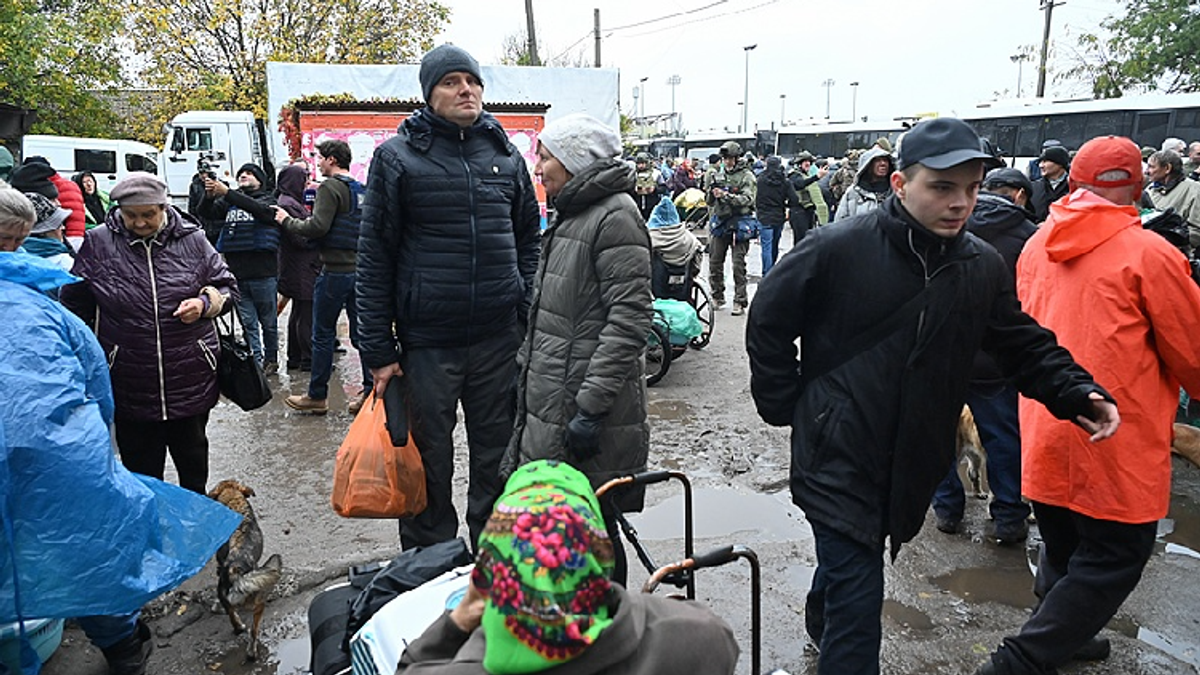
In a rare instance of direct, albeit limited, cooperation, Russia and Ukraine have reached an agreement to organize regular humanitarian missions in Oleshky, a town situated on the left bank of the Dnieper River in the Kherson region. This development follows a joint humanitarian operation that saw aid delivered to local residents and Ukrainian citizens evacuated to Ukrainian-controlled territory via Belarus. The initial mission was facilitated by a temporary ceasefire, a crucial but fleeting pause in the continuous fighting that has ravaged the area, leaving Oleshky in a state of severe humanitarian crisis with critical shortages of food, medicine, and other essential supplies.
This agreement, emerging from months of negotiations, is not a sign of broader de-escalation but rather a tactical maneuver by both sides, each with distinct incentives. For Russia, facilitating humanitarian aid in Oleshky serves multiple purposes. Firstly, it allows Moscow to project an image of humanitarian concern for residents in territories it occupies, countering narratives of neglect and hardship. This can be a low-cost way to gain a degree of legitimacy or at least mitigate international condemnation regarding the welfare of civilians under its control. Russian Human Rights Commissioner Yana Lantratova's emphasis on supporting
Oleshky is a frontline town on the left bank of the Dnieper River in the Kherson region, a strategically vital area. It has faced intense fighting since Russia's occupation of the left bank, making humanitarian access extremely difficult.
This agreement is a highly localized, temporary measure focused solely on humanitarian aid and civilian evacuation. It does not signal a broader de-escalation or a shift in the overall military or political objectives of either Russia or Ukraine.
Residents of Oleshky endure severe shortages of food, medicine, and essential supplies, living under constant threat of bombardment. The prolonged conflict has devastated infrastructure and inflicted deep psychological trauma on the community.
Editor's Note: Analysis is based on the provided raw intelligence, extrapolating geopolitical context and human impact as per TGN doctrine. The 2026 date in the source is treated as a factual reporting date for a contemporary event.
Source referenced: CGTN
This brief was synthesized by our Editorial Engine and reviewed by The Ground Narrative team.


