TRENDING

Monday, 2 November 2026
----------------------
22 Jumada Al-Awwal 1448 AH
Beijing is making a renewed diplomatic push in the Middle East, engaging Iran and Oman to secure critical energy pathways and expand its regional influence. This move comes as regional conflicts threaten global supply chains and highlight China's strategic shift.
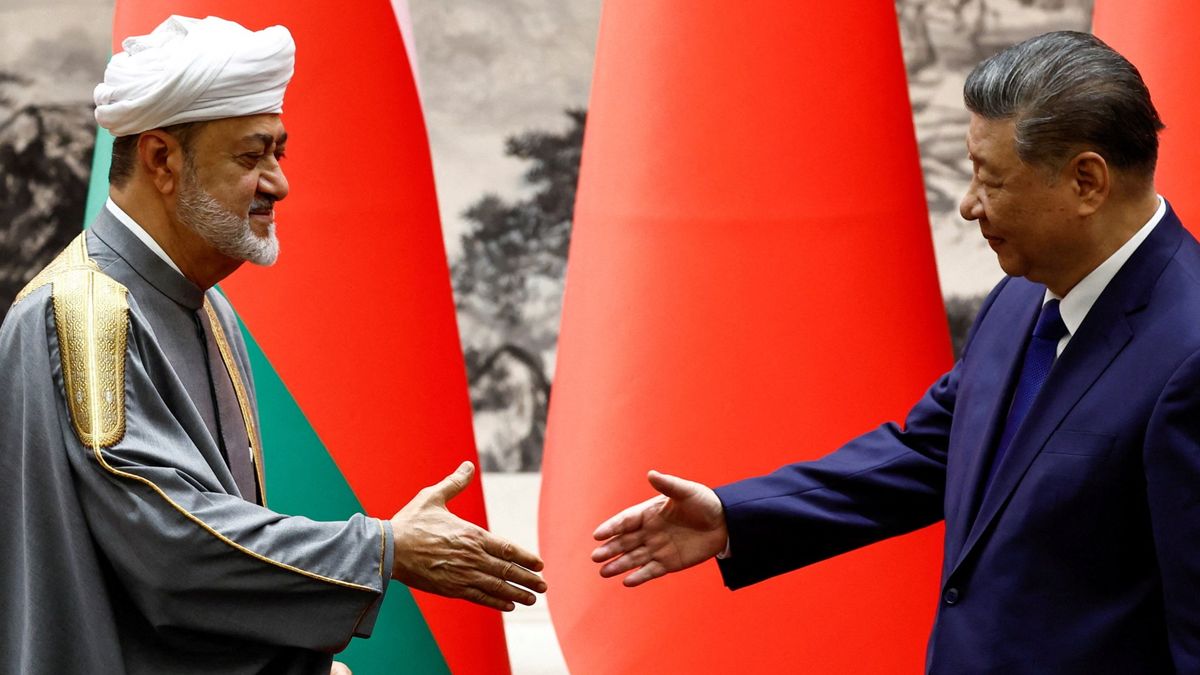
China has significantly escalated its diplomatic engagement in the Middle East, following a period of relative quiet, amidst a volatile regional landscape. This renewed push saw Chinese Foreign Minister Wang Yi meet with Ali Bagheri Kani, deputy secretary of Iran's Supreme National Security Council, in Beijing, emphasizing dialogue as the only viable path forward for a region grappling with protracted conflicts. Simultaneously, President Xi Jinping hosted Oman's Sultan Haitham bin Tariq for a landmark state visit, the first by an Omani head of state since diplomatic ties were established in 1978. During the visit, China and Oman signed 14 cooperation documents spanning artificial intelligence, green energy, supply chains, and a crucial currency swap agreement, signaling a deepening of bilateral relations. These high-level engagements are set to be followed by a visit from Zhai Jun, Beijing's special envoy on the Middle East, to Iran, Oman, and Saudi Arabia, underscoring China's determination to assert its diplomatic presence and secure its strategic interests in the region.
China's diplomatic surge in the Middle East is fundamentally driven by an urgent need to secure its economic lifelines, particularly energy imports, which have been significantly disrupted by ongoing regional conflicts. As the world's largest energy importer, China's economic stability is inextricably linked to the free flow of oil and gas from the Middle East, much of which historically transits through the Strait of Hormuz. The recent escalation of what Beijing refers to as the US-Israel war on Iran has severely restricted navigation through this critical choke point, jeopardizing a waterway through which one-fifth of global energy exports once passed. This vulnerability has forced China to seek alternatives and strengthen relationships with states that can offer strategic bypasses.
Oman emerges as a pivotal player in this calculus due to its unique geographical advantage: its ports, unlike those of many other Gulf states, lie *outside* the Strait of Hormuz. This makes Oman an invaluable partner for China, offering a potential alternative route for energy imports and a less vulnerable hub for trade. For Oman, a nation that has historically maintained a policy of strategic neutrality and mediation in regional disputes, this deepening relationship with China presents an opportunity for economic diversification, increased foreign investment, and an elevated diplomatic profile. The 14 cooperation agreements, particularly in green energy and advanced technologies, align with Oman's long-term vision to reduce its reliance on oil and gas exports.
Iran, despite its isolation from Western powers, finds a crucial economic and diplomatic lifeline in China. As Iran's biggest trading partner and largest customer for its crude oil, China's continued engagement provides essential revenue and international legitimacy. Beijing's reaffirmation of support for Iran's sovereignty and security, while urging dialogue, serves to stabilize Tehran's position and offers a counterweight to Western pressures. This dynamic illustrates China's approach to global power: leveraging economic might and strategic investment as primary tools of influence, often in contrast to the more overtly military or politically prescriptive approaches of other major powers. President Xi's assertion that the Middle East
China is intensifying its Middle East diplomacy primarily to secure its vital energy imports, which are threatened by ongoing regional conflicts and disruptions to the Strait of Hormuz. Beijing also seeks to expand its economic influence and establish alternative trade routes.
Oman's strategic location, with ports situated outside the Strait of Hormuz, offers China a less vulnerable alternative route for its energy imports. This bypass reduces reliance on the often-volatile Strait, enhancing China's long-term energy security.
The currency swap agreement with Oman is a significant step in China's broader strategy to promote the use of the Chinese Yuan in international trade, particularly for energy. This move aims to reduce global reliance on the US dollar and enhance China's financial influence.
Source referenced: ALJAZEERA
This brief was synthesized by our Editorial Engine and reviewed by The Ground Narrative team.


