TRENDING

Tuesday, 3 November 2026
----------------------
23 Jumada Al-Awwal 1448 AH
A new wave of progressive candidates, backed by New York City Mayor Zohran Mamdani, has secured primary victories and is poised to enter the US Congress, signaling a significant ideological shift within the Democratic Party. Their platforms challenge long-standing policies on foreign aid, immigration, and domestic spending.
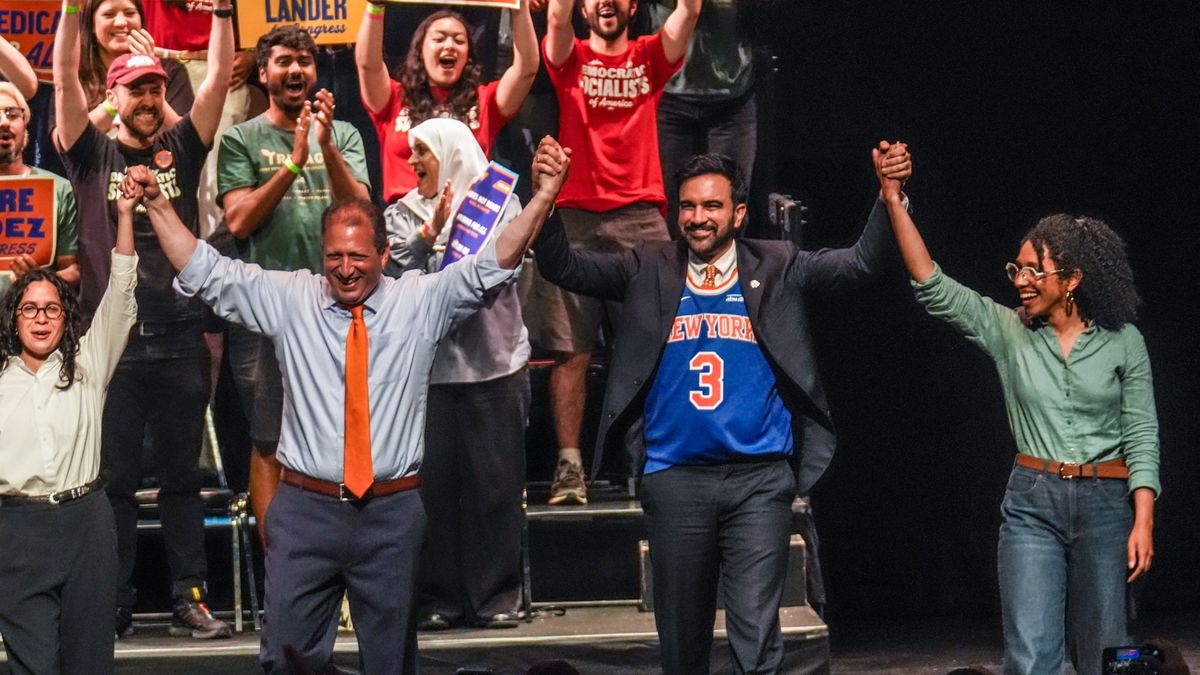
In a series of closely watched Democratic Party primaries in New York City, a slate of progressive candidates endorsed by Mayor Zohran Mamdani successfully unseated incumbents and secured nominations for the US Congress. Claire Valdez, a state assembly member and Democratic Socialists of America (DSA) member, won the race to succeed retiring Congresswoman Nydia Velazquez. Brad Lander, former New York City comptroller, defeated Congressman Dan Goldman in a contest where Israel emerged as a defining issue. Darializa Avila Chevalier, a community organizer, unseated long-time Congressman Adriano Espaillat. These victories, achieved in heavily Democratic districts, position them for likely wins in the upcoming midterm elections, fundamentally altering the ideological landscape of New York's congressional delegation and sending a clear message to Washington.
The ascendance of these New York progressive candidates is not merely a local political story; it represents a significant shift in the internal power dynamics of the Democratic Party and, potentially, the broader US Congress. For decades, the party has navigated a delicate balance between its progressive base and its more centrist, establishment wings. These primary victories demonstrate the growing organizational strength and electoral viability of the progressive movement, particularly in urban centers.
The power of these candidates stems from a combination of factors. First, they have successfully mobilized a dedicated grassroots base, often leveraging social media and community organizing rather than relying solely on traditional campaign finance structures. Their platforms—calling for policies like abolishing Immigration and Customs Enforcement (ICE), ending US military aid to Israel, implementing Medicare for All, and passing the PRO Act for labor protections—resonate deeply with a segment of the electorate disillusioned by incremental change and perceived corporate influence in politics. This ideological clarity provides a strong rallying cry, contrasting sharply with the often more cautious messaging of incumbent politicians.
Second, the endorsements from figures like Mayor Zohran Mamdani provide crucial legitimacy and organizational backing. Mamdani, himself a product of the progressive wave, has effectively used his mayoral platform to amplify the voices of his allies, demonstrating a concerted effort to build a progressive bloc from the local to the national level. This strategy mirrors, in some ways, the rise of figures like Alexandria Ocasio-Cortez (AOC), who similarly challenged and defeated an entrenched incumbent, Joe Crowley, in 2018. AOC's subsequent ability to push certain issues and even find bipartisan common ground on specific legislative initiatives, such as capping credit card interest rates, provides a blueprint for how these new members might operate.
However, the power mechanics in Washington are vastly different from those in city or state politics. While these candidates are likely to win their general elections due to the heavily Democratic nature of their districts, translating bold campaign promises into federal policy faces immense structural resistance. The US Congress is a complex ecosystem of competing interests, powerful lobbies, and entrenched legislative procedures. Ambitious goals like abolishing a federal agency or redirecting significant military aid require not just majority votes but often bipartisan consensus, or at least a significant shift in the balance of power within the entire legislative body. The Democratic Party leadership will face the challenge of integrating these new, often uncompromising voices without alienating more moderate members or jeopardizing the party's broader electoral prospects. The ability of these new progressives to form effective coalitions, both within their own party and, where possible, across the aisle, will be the true test of their power.
The policy debates ignited by these New York progressive candidates carry profound human costs, impacting diverse populations both domestically and internationally. At the heart of their agenda are issues that directly touch the lives of millions, often those most marginalized by existing systems.
The call to abolish ICE directly addresses the experiences of immigrant communities across the United States. For many, ICE represents a source of fear, family separation, and perceived injustice. The shooting of a man by ICE agents in New York City while his child was in the car, and the subsequent protests where Darializa Avila Chevalier was reportedly shoved by police, underscore the visceral human impact of current immigration enforcement policies. The cost here is borne by immigrant families living in constant apprehension, facing detention, deportation, and the fragmentation of their lives. A shift in policy, or even a serious debate about ICE's role, could alleviate immense psychological and social burdens for these communities, but the resistance from those who view ICE as essential to national security is equally strong, framing the debate in terms of national sovereignty and law enforcement.
Proposals like Medicare for All and national rent control speak directly to the economic anxieties of working-class Americans. The current private healthcare system leaves millions uninsured or underinsured, facing medical debt that can be financially ruinous. The cost is paid in lives cut short due to lack of access to care, in families driven into poverty by medical bills, and in the constant stress of navigating a complex, expensive system. Similarly, the lack of affordable housing and the struggle with rising rents impose significant costs on urban populations, forcing difficult choices between housing, food, and other necessities. The PRO Act aims to empower labor unions, seeking to reverse decades of declining worker power and stagnant wages, which have contributed to growing economic inequality. The human cost of inaction here is a widening gap between the rich and the poor, diminished social mobility, and a pervasive sense of economic insecurity for the majority.
Perhaps the most globally significant plank of their platform is the call to end US military aid to Israel. This position directly challenges decades of US foreign policy and has immediate human implications for both Palestinians and Israelis. For Palestinians, the aid is often seen as enabling an occupation and military actions that result in civilian casualties, displacement, and the erosion of their rights. Brad Lander's firsthand account of
Source referenced: ALJAZEERA
This brief was synthesized by our Editorial Engine and reviewed by The Ground Narrative team.