TRENDING

Tuesday, 3 November 2026
----------------------
23 Jumada Al-Awwal 1448 AH
The relationship between the United States and the Republic of Cyprus has quietly transformed over the past decade, moving from a distant, often troubled dynamic to a robust strategic partnership. This shift, driven by Nicosia's security concerns and Washington's re-evaluation of the Eastern Mediterranean, reshapes regional power dynamics.
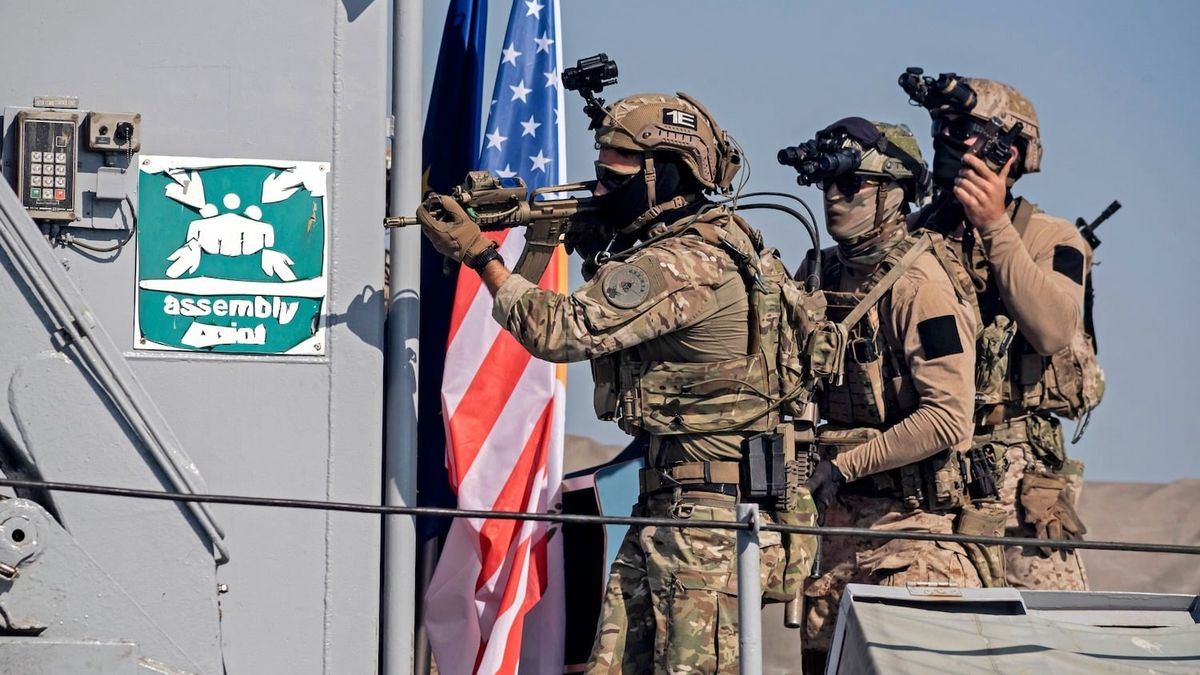
Over the past decade, the relationship between the United States and the Republic of Cyprus (ROC) has undergone a significant, yet largely unheralded, transformation. Once viewed by Washington primarily as a problem requiring resolution, the island nation has quietly emerged as a critical security partner. This shift, initiated largely by Nicosia, has seen the bilateral relationship expand dramatically, encompassing defense cooperation, military training and exercises, crisis-response planning, and regular strategic dialogue. Joint drills between Cypriot naval special forces and U.S. Navy SEALs are now routine, and Cypriot military infrastructure is being upgraded to NATO standards with U.S. support, marking a profound departure from decades of limited engagement and a prior U.S. arms embargo.
The re-alignment of U.S.-Cypriot relations is a textbook example of how shifting regional power balances and national security imperatives can reshape long-standing diplomatic postures. For Nicosia, the impetus is existential: a deep-seated desire for deterrence against perceived future threats from Turkey, which maintains a significant military presence in the island's northern third since the 1974 invasion. Cyprus, as the lone EU member outside NATO and its Partnership for Peace program, has long felt strategically exposed. Deepening ties with Washington offers not only a powerful security guarantor but also a crucial boost to its international standing, providing a strategic umbrella for its burgeoning defense relationships with other nations like France and Israel. President Nikos Christodoulides's repeated, albeit politically challenging, expressions of a desire for Cyprus to join NATO underscore this fundamental drive for strategic belonging and enhanced security. The cooperation with the United States is seen as a pragmatic pathway to professionalize the Cypriot National Guard and upgrade its military infrastructure, bringing it closer to alliance standards even without full membership.
On the U.S. side, the shift reflects a fundamental reconceptualization of the Eastern Mediterranean. For decades, Washington's policy treated the region as stable, anchored by Turkey, and largely relegated Cyprus to the context of reunification talks. This perspective began to unravel in the 2010s as relations with Turkey deteriorated significantly. Ankara's increasingly independent foreign policy, its acquisition of Russian S-400 missile systems, its interventions in Syria, and concerns over democratic backsliding prompted a search for more reliable partners. Former Assistant Secretary of State A. Wess Mitchell articulated this new vision, describing the Eastern Mediterranean as an "emerging maritime frontier" where Greece and Cyprus offered strategic opportunities and a vital hedge against an "increasingly erratic Turkey." Cyprus's strategic location at the crossroads of Europe, the Middle East, and Africa, with its deep-water ports, airfields, and offshore energy resources, became undeniably attractive. The island's demonstrated capacity for crisis response, including facilitating noncombatant evacuations from regional conflicts and supporting humanitarian deliveries to Gaza, further solidified its utility to Washington.
The changing dynamic also highlights the enduring legacy of the island's division. The Republic of Cyprus governs the southern two-thirds, enjoying near-universal international recognition, while the northern third, occupied by Turkey, declared independence as the Turkish Republic of Northern Cyprus (TRNC), recognized only by Ankara. This geopolitical reality means that while Nicosia seeks security from Turkey, Ankara views Cyprus's deepening U.S. ties with suspicion, perceiving them as a potential threat to its regional interests and its Turkish Cypriot allies. The power asymmetry is stark, with Turkey maintaining a substantial military presence in the north, estimated at 30,000-40,000 troops. Turkey's veto power within NATO remains a potent tool, effectively blocking any Cypriot aspirations for full alliance membership and complicating U.S. efforts to fully integrate Cyprus into Western security architecture without further alienating Ankara. This complex interplay of security needs, strategic re-evaluations, and historical grievances forms the bedrock of the current power mechanics in the Eastern Mediterranean.
While the deepening U.S.-Cypriot security relationship is framed by Nicosia as a path to greater stability and by Washington as a strategic necessity, the human cost is often borne by those far from the negotiating tables.
For the nearly one million Greek Cypriots in the ROC, this new alignment offers a sense of enhanced security and international validation. Yet, it also carries the inherent risk of exacerbating tensions with Turkey, potentially hardening positions on both sides of the Green Line. The dream of reunification, which has shaped generations of Cypriot identity, could become even more distant if the ROC feels less compelled to compromise due to its new security blanket, or if Turkey perceives the rapprochement as a direct challenge, leading to further entrenchment of the division.
In the TRNC, the estimated quarter-million Turkish Cypriots face increased isolation. Their political entity remains unrecognized by the international community, and their economic lifeline is almost entirely dependent on Turkey. As Nicosia strengthens its ties with Washington, the TRNC's already limited international leverage diminishes further. The prospect of a negotiated settlement, which would ideally bring economic and political benefits to both communities, becomes more remote when one side gains a powerful external patron, potentially reducing its incentive for concessions. This perpetuates a state of limbo for Turkish Cypriots, denying them the full benefits of international trade, travel, and recognition that their Greek Cypriot neighbors enjoy. The human cost here is one of continued division, limited opportunity, and a sense of being caught between larger geopolitical forces.
Beyond the island, the Eastern Mediterranean is a region already fraught with complex energy disputes, maritime boundary disagreements, and historical animosities. The quiet revolution in U.S.-Cypriot ties, while presented as a stabilizing force by its proponents, could also be seen by Turkey as a direct provocation, potentially leading to increased military posturing, naval exercises, or even resource exploration challenges in disputed waters. Such escalations, even if rhetorical or symbolic, create an environment of uncertainty that impacts shipping, trade routes, and investment, affecting ordinary citizens across the region.
Furthermore, the focus on military upgrades and strategic partnerships, while understandable from a national security perspective, diverts resources. While U.S. funding supports some infrastructure improvements, Cyprus itself is financing significant upgrades to airfields and naval bases. These are funds that could otherwise be invested in social programs, education, healthcare, or sustainable economic development for the Cypriot populace. The human cost here is a trade-off: perceived security at the expense of other pressing societal needs, and the risk of becoming a front-line actor in a broader geopolitical competition. The ordinary citizen, whether in Nicosia or Ankara, ultimately bears the brunt of these strategic decisions, often through increased anxieties, economic disruptions, or the lingering shadow of conflict.
Behind the official statements and diplomatic overtures, several critical dimensions of this evolving relationship are either downplayed or entirely omitted by the powerful actors involved.
Washington's public framing emphasizes Cyprus as a "key strategic partner" and a "security producer" in an "emerging maritime frontier." What is often downplayed is the extent to which this is a direct, calculated pivot *away* from Turkey, rather than merely a "hedge." The deterioration of U.S.-Turkey relations, particularly since the S-400 purchase and Turkey's actions in Syria, is the unspoken primary driver. By emphasizing Cyprus's inherent strategic value, the U.S. avoids explicitly acknowledging the depth of its disillusionment with Ankara, thus attempting to manage the fallout within NATO. The narrative of Cyprus "emerging" as a partner obscures the fact that the U.S. had long ignored or even actively constrained Cypriot security aspirations (e.g., the arms embargo) out of deference to Turkey. The current shift is less about Cyprus suddenly becoming strategically important and more about Turkey becoming strategically unreliable in Washington's eyes.
For Nicosia, the deepening ties with Washington are presented as an unmitigated gain for national security and international standing. However, the potential trade-offs for the long-stalled Cypriot reunification talks are rarely addressed publicly. By securing a powerful external patron, the ROC might feel less pressure to engage in difficult compromises with the Turkish Cypriot side, potentially hardening its negotiating position. This could inadvertently entrench the island's division further, despite the stated desire for a unified Cyprus. The narrative focuses on deterrence against Turkey, but it glosses over how this new security dynamic impacts the internal Cypriot political process and the prospects for a lasting peace agreement between the two communities. There's an unspoken gamble that enhanced security will eventually lead to a more favorable negotiating position, but it risks alienating the Turkish Cypriots and their patron, Turkey, even further.
Turkey has, so far, watched these developments "warily, though without a forceful response." This apparent restraint is a significant untold story. Ankara's silence is not necessarily an acceptance. It could be a calculated strategy, perhaps waiting for a more opportune moment to react, or prioritizing other pressing foreign policy challenges (e.g., Syria, Iraq, domestic issues). Turkey is keenly aware of its leverage within NATO and its historical role in the Eastern Mediterranean. Its lack of an immediate "forceful response" might also be a tactic to avoid further alienating Washington at a time when Turkey itself seeks to re-calibrate its relationship with the West. What Ankara is omitting is its long-term strategic calculation regarding this shift and how it plans to protect its interests and those of the TRNC without triggering a direct confrontation with the U.S. The current quiet might be the calm before a more assertive, albeit non-military, response, perhaps through increased naval presence, energy exploration, or diplomatic pressure on U.S. allies.
While the article mentions Cyprus's offshore energy resources, the full implications of this security alignment for the contentious Eastern Mediterranean energy landscape are largely understated. The region is rich in natural gas, and claims over exploration rights have been a major source of friction between Cyprus, Greece, Turkey, and other regional players. U.S. support for Cypriot security implicitly strengthens Nicosia's hand in these energy disputes, potentially emboldening it to pursue exploration in areas contested by Turkey. This unspoken aspect of the relationship adds another layer of complexity, where security cooperation is inextricably linked to economic interests and resource control, a fact often downplayed in official narratives focusing purely on defense.
The quiet revolution in U.S.-Cypriot relations is far from its final chapter. Observers should closely monitor several key indicators to understand its trajectory and broader regional impact.
First, Turkey's eventual response will be critical. While currently "wary," Ankara's strategic patience has limits. Will it escalate its rhetoric, increase its military presence in the TRNC or Eastern Mediterranean waters, or seek to exert diplomatic pressure on Washington through its NATO membership? Any overt moves by Turkey could quickly transform the "quiet revolution" into a more overt regional confrontation.
Second, the future of U.S.-Turkey relations within NATO will be profoundly affected. If Washington continues to deepen its security ties with Cyprus as a counter-balance to Ankara, it risks further fracturing the alliance. How will NATO manage this internal tension, and what will be the long-term consequences for its cohesion and effectiveness, particularly in the face of broader global challenges?
Third, watch for any renewed efforts, or lack thereof, in Cypriot reunification talks. If the ROC feels sufficiently secure due to its U.S. backing, will it become less flexible at the negotiating table? Conversely, could U.S. engagement with Cyprus eventually provide a new diplomatic avenue to pressure both sides towards a settlement, or will it simply entrench the division further?
Fourth, keep an eye on developments in Eastern Mediterranean energy exploration. Any new drilling activities by Cyprus or its partners, especially in disputed maritime zones, could trigger a strong reaction from Turkey, potentially involving naval posturing or diplomatic protests. The interplay between security guarantees and resource claims will be a continuous flashpoint.
Finally, observe the continued professionalization and upgrading of the Cypriot National Guard and its military infrastructure. The extent of U.S. investment and the scope of joint exercises will signal the depth of Washington's commitment and the role it envisions for Cyprus in its regional security architecture. These developments will offer tangible evidence of how this new strategic partnership is reshaping the power dynamics of a volatile and strategically vital region.
The U.S. is re-evaluating its approach to the Eastern Mediterranean, seeking more reliable partners due to deteriorating relations with Turkey. Cyprus's strategic location and its willingness to enhance security cooperation make it an attractive ally for Washington.
This new alignment could harden positions on both sides. While it offers the Republic of Cyprus enhanced security, it might reduce incentives for compromise in reunification talks and further isolate Turkish Cypriots, potentially entrenching the island's long-standing division.
Turkey is watching these developments warily, but has so far refrained from a forceful response. Its silence may be a calculated strategy to avoid further alienating Washington, while it assesses long-term implications for its regional interests and its relationship with NATO.
Editor's Note: The analysis relies on the provided raw intelligence but expands significantly on its geopolitical implications, motivations, and potential consequences from The Ground Narrative's editorial perspective.
Source referenced: FOREIGNPOLICY
This brief was synthesized by our Editorial Engine and reviewed by The Ground Narrative team.


