TRENDING

Tuesday, 3 November 2026
----------------------
23 Jumada Al-Awwal 1448 AH
Gunmen have killed police officers protecting polio vaccination teams in Pakistan's Khyber Pakhtunkhwa province, highlighting the deadly struggle to eradicate the disease amidst deep-seated mistrust and insurgency.
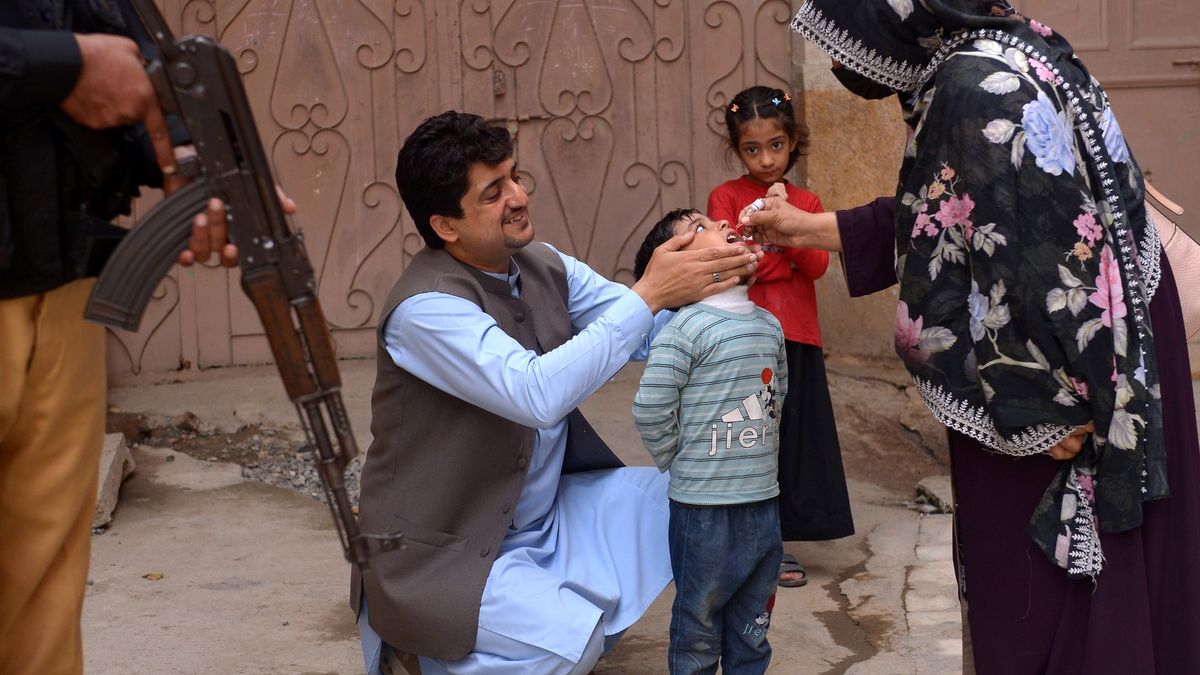
In a grim reminder of the ongoing struggle against both disease and violence, two Pakistani police officers were shot dead and another injured while protecting polio vaccination teams in Khyber Pakhtunkhwa (KP) province. The attack, carried out by gunmen on a motorcycle, occurred just one day after four other officers assigned to polio protection duties were abducted in the same volatile region. No group has officially claimed responsibility for these specific incidents, but the Pakistan Taliban (TTP) and other armed factions have a documented history of targeting vaccination efforts, fueled by false claims that the campaigns are a Western conspiracy to sterilize children. These attacks coincide with a critical nationwide drive aimed at immunizing nearly 24 million children across 97 high-risk districts, as Pakistan, alongside Afghanistan, remains one of only two countries where wild poliovirus is still endemic.
The attacks on polio vaccination teams in Pakistan are not random acts of violence; they are a calculated projection of power by non-state actors seeking to undermine state authority and control local populations. The Pakistan Taliban (TTP), a militant umbrella group, leverages a potent mix of religious extremism, anti-Western sentiment, and historical grievances to establish a parallel governance structure in areas where the state's writ is weak. By targeting vaccination teams, the TTP achieves several objectives:
Firstly, they exploit and deepen existing mistrust of government and international health initiatives. Their narrative, portraying vaccination as a foreign plot, resonates in communities where historical events have sown suspicion, allowing them to recruit and maintain influence. This narrative is a powerful tool to delegitimize the state's efforts to provide public services, thereby reinforcing the perception that the state cannot protect its citizens or deliver on its promises.
Secondly, these attacks demonstrate the TTP's ability to operate with impunity in certain regions, challenging the Pakistani state's monopoly on violence. The deployment of police and security forces to protect health workers underscores the state's recognition of the threat, yet the continued success of these attacks highlights the limitations of its security apparatus in remote and restive areas. For the state, the dilemma is acute: withdrawing security risks leaving health workers vulnerable and halting critical public health campaigns, while deploying security risks escalating conflict and further alienating communities.
Thirdly, the attacks serve as a form of psychological warfare, instilling fear among health workers, their families, and the communities they serve. This fear disrupts the vaccination drives, creating pockets of unvaccinated children and ensuring the continued circulation of the virus. The TTP effectively uses polio as a weapon, not by spreading the disease, but by preventing its eradication, thereby maintaining a state of instability that serves its broader political and ideological goals.
International health organizations like the WHO and UNICEF, while providing crucial funding, technical expertise, and logistical support, operate within the constraints of state sovereignty and local security realities. Their power is primarily soft power – persuasion, scientific evidence, and humanitarian aid. They are heavily reliant on the Pakistani government to provide a secure environment, a task that often proves insurmountable in the face of entrenched militancy. This creates a dependency that limits their ability to independently navigate the complex local power dynamics, often making them unwitting participants in the broader conflict between the state and non-state actors.
The relentless campaign against polio vaccination in Pakistan exacts a devastating human cost, primarily borne by the most vulnerable segments of society: children, their families, and the dedicated frontline workers who put their lives on the line.
At the forefront of this tragedy are the children themselves. Polio, a highly contagious viral disease, can lead to irreversible paralysis, lifelong disability, and even death. For every reported case, many more children are silently infected, carrying the virus and potentially transmitting it. A child crippled by polio faces a future dramatically altered, often marked by limited mobility, reduced educational opportunities, and significant social stigma. Their families bear the immense emotional and financial burden of care, often in communities already struggling with poverty and limited healthcare access. The dream of a healthy, productive life is snatched away, not by fate, but by a preventable disease exacerbated by human conflict.
For the families living in the affected districts, particularly in Khyber Pakhtunkhwa, the choice is agonizing. They are caught between the very real threat of their children contracting a debilitating disease and the equally terrifying reality of violence from armed groups. Sending their children to be vaccinated means exposing them to a perceived risk from militants; refusing vaccination means exposing them to the certainty of a deadly virus. This constant state of fear and uncertainty erodes community cohesion and trust, making it harder for parents to make informed health decisions. The psychological toll on these communities, living under the shadow of both disease and gunfire, is immense and often overlooked.
The police officers and health workers who undertake the vaccination drives are heroes operating in an undeclared war zone. They are often local residents, deeply committed to their communities, yet they are targeted as symbols of a state or international agenda that militants oppose. The killing of police officers, the abduction of others, and the constant threat of violence create an environment of extreme danger. These individuals, many of whom are women, face not only physical threats but also social ostracization and intimidation from those who believe the militant narrative. Their sacrifices, though lauded by the state, often come with inadequate protection and support, leaving their families to bear the brunt of their loss. The erosion of their ranks due to fear or death directly impacts the reach and effectiveness of vaccination campaigns, creating further vulnerabilities for children.
While official statements condemn the violence and emphasize the national duty of polio eradication, they often downplay or omit the deeper, more complex historical and socio-political factors that fuel this deadly resistance. The narrative frequently simplifies the issue to one of
Source referenced: ALJAZEERA
This brief was synthesized by our Editorial Engine and reviewed by The Ground Narrative team.


