TRENDING

Tuesday, 3 November 2026
----------------------
23 Jumada Al-Awwal 1448 AH
An Al Jazeera correspondent was arrested during an Israeli raid on his home in Hebron, raising questions about media freedom and the tactics of control in occupied territories. This incident casts a long shadow over the lives of ordinary citizens.
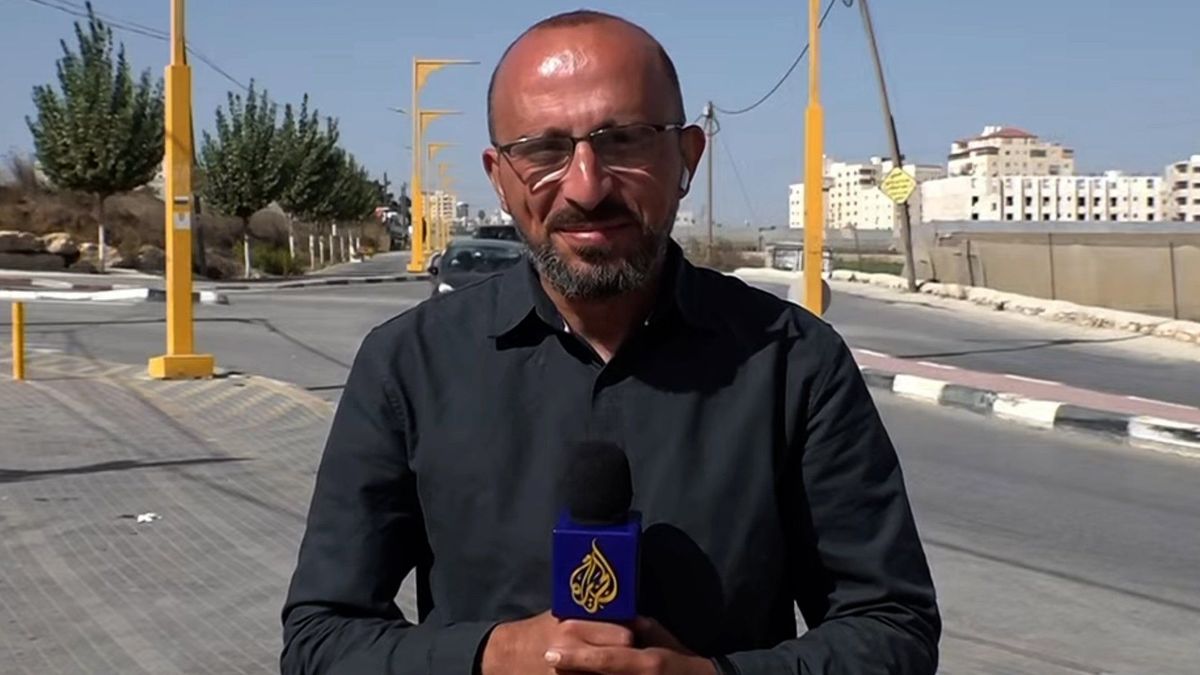
On November 3, 2026, Israeli forces conducted a raid on the home of Montaser Nassar, a correspondent for Al Jazeera Arabic, in Dura, a town south of Hebron in the occupied West Bank. During the operation, Nassar reported that his wife was assaulted, and he was subsequently arrested along with approximately 20 other residents. Following his release, Nassar stated that the raid's primary intention was to intimidate the residents of Dura, signaling a broader message to the community through the targeting of a prominent media figure.
The arrest of a journalist, particularly one from a high-profile outlet like Al Jazeera, during a military raid is not a random occurrence; it is a calculated projection of power within a deeply asymmetrical conflict. For Israel, maintaining security control over the West Bank is paramount, often framed as a necessity to prevent attacks and ensure stability. This objective frequently translates into extensive military operations, arrests, and restrictions on movement, all justified under the umbrella of security doctrine. The targeting of a media professional, however, adds another layer to this dynamic.
Al Jazeera holds significant sway in the Arab world and beyond, often providing a narrative that diverges sharply from official Israeli government statements. From Israel's perspective, outlets like Al Jazeera can be perceived as contributing to incitement or presenting a biased portrayal of events, thereby undermining Israeli security efforts and international legitimacy. By arresting a journalist, Israel sends a clear message that even those who document and disseminate information are not immune to its security apparatus. This tactic serves multiple purposes: it can disrupt reporting, potentially deter other journalists from covering sensitive issues, and assert dominance over the information space.
For the Palestinian Authority and the broader Palestinian population, the incident underscores the reality of living under military occupation. The ability of Israeli forces to enter homes, make arrests, and exert control over daily life without judicial oversight from Palestinian institutions highlights the severe limitations on Palestinian sovereignty. The raid on Nassar's home, a public figure, amplifies the sense of vulnerability and the arbitrary nature of power, reinforcing the idea that no one is truly safe from such operations.
Furthermore, the incident exposes the deep chasm in legal frameworks. Israel operates under military law in the West Bank, which grants broad powers to its forces, including administrative detention—the practice of holding individuals without charge or trial. This contrasts sharply with international legal standards and the expectations of due process. The very act of a raid, followed by arrests without immediate clear charges, exemplifies this disparity and the inherent power imbalance. The objective is often not just to apprehend specific individuals but to demonstrate the omnipresence and omnipotence of the occupying power, thereby shaping the psychological landscape of the population.
The immediate and most profound cost of such operations falls on individuals like Montaser Nassar and his family. The trauma of a home invasion, the alleged assault on his wife, and his subsequent arrest are deeply personal experiences that leave lasting scars. For a journalist, such an event is not merely a personal ordeal but a direct attack on their professional integrity and their ability to perform their duties. The fear and uncertainty that follow an arrest, even if temporary, can have significant psychological impacts, affecting not only the individual but also their loved ones who endure the anxiety of their absence and potential fate.
The residents of Dura, like many communities in the West Bank, bear a collective human cost. The raid on Nassar's home, a prominent figure, sends a chilling message to the entire town. It fosters an environment of pervasive fear, where any individual could be next, and where the sanctity of the home is routinely violated. This constant state of alert and vulnerability erodes trust in any semblance of normalcy or security. Daily life becomes punctuated by the threat of sudden military incursions, checkpoints, and arrests, leading to chronic stress, anxiety, and a sense of powerlessness among the population. The disruption of daily routines, the economic impact of curfews or closures, and the general atmosphere of intimidation collectively degrade the quality of life for thousands.
Beyond the immediate victims, the incident has a broader chilling effect on Palestinian journalism and freedom of the press in the region. When a journalist is targeted, it signals to others in the profession that their work, particularly critical reporting, carries significant personal risks. This can lead to self-censorship, where journalists might shy away from covering sensitive topics or adopt a more cautious tone to avoid becoming targets themselves. Such an environment undermines the public's right to information and hinders the ability of independent media to provide accurate and comprehensive accounts of events on the ground. Local journalists, who are often the primary source of information for the international community, find themselves caught between their professional duty and personal safety.
More broadly, these actions contribute to the systematic erosion of human rights and dignity for the Palestinian population. The lack of due process, the use of force, and the arbitrary nature of arrests diminish the sense of legal protection and reinforce a perception of second-class citizenship. For those arrested, even if eventually released without charge, the experience often involves detention in harsh conditions, interrogations, and a profound sense of injustice. This continuous assault on fundamental rights fuels resentment and further entrenches the cycle of conflict, making any pathway to a just and lasting peace significantly more difficult.
Governments and official statements often meticulously craft narratives to justify their actions, and the incident involving Montaser Nassar is no exception. The Israeli government, if it comments publicly, will likely frame the raid as a legitimate security operation aimed at apprehending individuals suspected of security offenses. They would likely downplay or entirely omit the alleged assault on Nassar's wife and the specific targeting of a journalist, instead focusing on the broader security context of the Hebron area. The narrative would emphasize the need to protect Israeli citizens and maintain order, thereby deflecting criticism regarding press freedom or human rights abuses. Any connection to Nassar's journalistic work would be denied or dismissed as irrelevant to the security imperative.
What is often omitted from official statements is the historical and systemic pattern of media suppression in the occupied Palestinian territories. This is not an isolated incident but part of a long-standing strategy that includes closing media offices, confiscating equipment, restricting journalists' movement, and arresting reporters. For instance, Al Jazeera's offices have been raided before, and its journalists have faced numerous challenges in reporting from Gaza and the West Bank. This broader context reveals that the targeting of Nassar is not an anomaly but a continuation of efforts to control the narrative and limit the visibility of Palestinian experiences. The powerful actors want the public to see individual incidents, not the overarching strategy.
The deliberate choice to target a journalist, especially one from a prominent outlet, also serves as a form of psychological warfare. It's a message not just to the individual or the media organization, but to the entire population. The message is clear: if even a well-known journalist is not safe, then no one is. This tactic aims to instill fear and discourage any form of dissent or even critical documentation. This subtle but potent aspect of power projection is rarely acknowledged by those in authority, who prefer to present their actions as purely reactive and security-driven, rather than proactive and intimidatory.
Another untold story is the often-limited leverage of the international community. While press freedom organizations and human rights groups may issue condemnations, these often have little tangible impact on the ground. The Israeli government, with strong backing from key allies, frequently dismisses such criticisms as biased or uninformed, asserting its right to self-defense. This dynamic allows for a continuation of practices that might otherwise draw more severe international repercussions, leaving local populations and journalists feeling abandoned and unprotected by global norms and institutions. The gap between international outcry and concrete action is a significant part of the story that powerful states prefer to keep in the shadows.
Moving forward, several key areas will indicate the trajectory and broader implications of this incident. The first is the legal fate of Montaser Nassar and the other individuals arrested. Will they be formally charged, or will they be held under administrative detention, a practice that allows for indefinite imprisonment without trial? The nature of any charges, or the lack thereof, will reveal whether the arrests were genuinely security-related or primarily punitive and intimidatory.
Another critical aspect to observe is the response from international press freedom organizations and human rights bodies. While their condemnations may not halt such operations, a concerted and sustained international outcry can at least raise the political cost for Israel and draw greater global attention to the conditions faced by journalists in the occupied territories. Pay attention to whether these bodies move beyond statements to advocate for specific protective measures or accountability mechanisms.
Furthermore, watch for how Al Jazeera and other media outlets continue to cover this story and similar incidents. Will this event lead to increased scrutiny of Israeli military operations in the West Bank, or will it contribute to a chilling effect that discourages aggressive reporting? The resilience of the journalistic community in the face of such pressure will be a crucial indicator of the ongoing struggle for information control. Finally, observe any shifts in Israeli policy or rhetoric regarding media access and the treatment of journalists in the West Bank. While unlikely to be a direct consequence of a single incident, a pattern of such events could eventually force a re-evaluation, or conversely, signal an escalation of tactics aimed at controlling the narrative on the ground.
Montaser Nassar is a correspondent for Al Jazeera Arabic. He was arrested during an Israeli military raid on his home in Dura, south of Hebron, along with 20 other residents. He claims the raid was intended to intimidate the city's residents.
Targeting a journalist, especially from a prominent outlet like Al Jazeera, serves as a message of intimidation to the broader community and can have a chilling effect on media freedom. It signals that even those documenting events are not immune to military operations, potentially leading to self-censorship.
Such raids highlight the pervasive sense of vulnerability and the arbitrary nature of power under military occupation. They contribute to an environment of fear, erode trust, and underscore the limitations on Palestinian sovereignty and the erosion of human rights for ordinary citizens.
Source referenced: ALJAZEERA
This brief was synthesized by our Editorial Engine and reviewed by The Ground Narrative team.


