TRENDING

Tuesday, 3 November 2026
----------------------
23 Jumada Al-Awwal 1448 AH
Tehran is simultaneously pursuing high-level regional diplomacy to foster peace and security while appointing a hardline defense minister focused on offensive military capabilities. This dual approach signals Iran's hedging strategy amid regional uncertainties and external pressures.
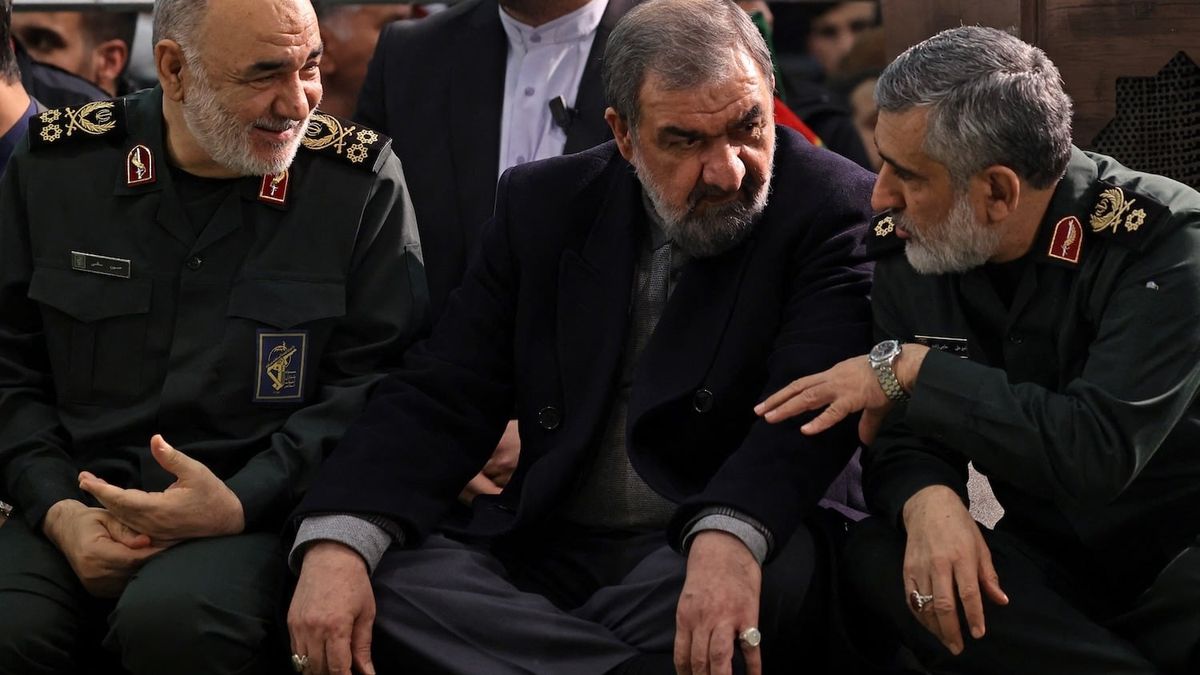
In a significant development, Iran recently hosted high-ranking officials from Saudi Arabia, Pakistan, and Turkey in Tehran. The Iranian delegation, led by Mohsen Rezaei, head of the Supreme National Security Council (SNSC) and former commander of the Islamic Revolutionary Guard Corps (IRGC), included President Masoud Pezeshkian and Foreign Minister Abbas Araghchi. This high-level meeting concluded with a joint statement committing the nations to continued dialogue and regional peace. Simultaneously, Iran appointed Mehrdad Akhlaghi as its new defense minister, a figure known for his work on developing advanced offensive missile and drone capabilities, signaling a strategic shift towards military rebuilding and deterrence.
Iran's seemingly contradictory actions—engaging in robust diplomacy while simultaneously bolstering its offensive military posture—reveal a sophisticated hedging strategy driven by deep-seated power dynamics. The participation of Rezaei, Pezeshkian, and Araghchi in the diplomatic talks is crucial. It signifies a rare consensus across Iran's diverse political and military establishments, granting diplomatic initiatives a weight and legitimacy they often lacked when solely managed by the foreign ministry. This unified front projects strength and seriousness to regional partners, indicating that any agreements forged will have the backing of Iran's most influential institutions, including the powerful IRGC.
The presence of top officials from Saudi Arabia, Pakistan, and Turkey, all members of the Mecca defense pact, underscores a broader regional re-alignment. For Iran, engaging these nations, particularly Saudi Arabia—a historical rival that has faced attacks from Iran's Houthi allies—is an attempt to integrate into a regional security architecture rather than remain an isolated actor. This offers a pathway to de-escalation and potential economic benefits for all parties, easing the constant threat of conflict in the Persian Gulf.
However, the appointment of Mehrdad Akhlaghi as defense minister provides the critical counterpoint to this diplomatic overture. Akhlaghi's background in developing solid-fuel ballistic missiles and overseeing the entire missile and drone program signals a clear priority: rapidly rebuilding and enhancing Iran's offensive military capabilities. Solid-fuel missiles are strategically superior to liquid-fuel variants due to their ease of storage, lower maintenance, and reduced vulnerability to detection and pre-emptive strikes. This focus is a direct response to past U.S. and Israeli attacks that degraded Iran's military assets, particularly during recent conflicts. Akhlaghi's rhetoric, threatening severe retaliation against U.S. forces if attacked, is not merely bluster; it's a calculated projection of deterrence, designed to raise the cost of any future military intervention against Iran.
This dual strategy of diplomatic engagement and military build-up is Iran's way of navigating profound uncertainties, particularly regarding U.S. and Israeli intentions. With U.S. midterm elections and Israeli government formation in flux, Tehran is preparing for various scenarios. A more hawkish U.S. administration or an aggressive Israeli government could reignite conflict, making robust deterrence essential for Iran's survival and regional influence. The ability to project both a willingness for peace and a formidable capacity for war gives Iran significant leverage, allowing it to negotiate from a position of perceived strength while simultaneously preparing for the worst-case scenario.
While high-level diplomatic meetings and military appointments dominate headlines, the human cost of this delicate balance between peace overtures and war preparations is borne by ordinary citizens across the Middle East. The constant threat of renewed conflict creates an environment of pervasive instability, impacting daily life, economic prospects, and the psychological well-being of millions.
For civilians in the Gulf region, the specter of missile and drone attacks is a grim reality. Past conflicts have demonstrated the devastating impact on infrastructure, livelihoods, and human lives. Communities living near strategic targets or in areas prone to proxy conflicts face chronic anxiety, disrupting education, healthcare, and basic services. The very air they breathe is thick with uncertainty, making long-term planning for families and businesses nearly impossible. This perpetual state of alert drains national resources that could otherwise be invested in social welfare, education, and public health, trapping populations in a cycle of underdevelopment.
The significant resources Iran pours into its military-industrial complex, particularly for missile and drone development, represent a massive opportunity cost for its own citizens. Under severe international sanctions, Iran's economy already struggles to provide basic necessities and opportunities. Diverting funds to advanced weaponry means less investment in job creation, infrastructure development, and social safety nets. For ordinary Iranians, this translates to higher unemployment, inflation, and a declining quality of life. Similarly, for Saudi Arabia and other Gulf states, the need to maintain robust defense capabilities against potential Iranian threats means substantial military spending, diverting funds from diversification efforts and social programs that could benefit their own populations.
Past and ongoing conflicts in the broader Middle East, often linked to regional power struggles, have led to immense human displacement. Escalation of tensions between Iran and its adversaries could trigger new waves of refugees and internally displaced persons, further straining humanitarian resources and fragmenting communities. Families are torn apart, children miss years of schooling, and entire generations grow up knowing only conflict and instability. The human toll extends beyond immediate casualties to the long-term trauma and disruption of social fabric, which can take decades to heal.
Behind the carefully orchestrated diplomatic smiles and the stern warnings from military leaders, several critical narratives are often downplayed or omitted by powerful actors, both within Iran and among its regional and international counterparts.
While Iran's diplomatic efforts appear unified, the swift appointment of Akhlaghi and his hardline stance suggest a powerful internal faction prioritizing military might above all else. The
Iran's dual strategy is a form of hedging against regional uncertainties and external threats, particularly from the U.S. and Israel. It aims to project a willingness for peace while simultaneously building deterrence against potential military action, ensuring it can negotiate from a position of strength.
Key figures include Mohsen Rezaei, head of the Supreme National Security Council, who leads diplomatic efforts, and Mehrdad Akhlaghi, the new defense minister focused on rebuilding missile and drone capabilities. Their combined influence reflects a consensus across Iran's political and military establishments.
Iran is primarily focusing on rapidly rebuilding and enhancing its offensive missile and drone capabilities, particularly solid-fuel ballistic missiles. These are favored for their operational advantages, such as easier storage, lower maintenance, and reduced vulnerability to detection compared to liquid-fuel missiles.
Source referenced: FOREIGNPOLICY
This brief was synthesized by our Editorial Engine and reviewed by The Ground Narrative team.


