TRENDING

Tuesday, 3 November 2026
----------------------
23 Jumada Al-Awwal 1448 AH
The 2026 midterms could reshape federal authority and foreign policy. While parties battle for seats, ordinary voters and local economies bear the hidden costs.
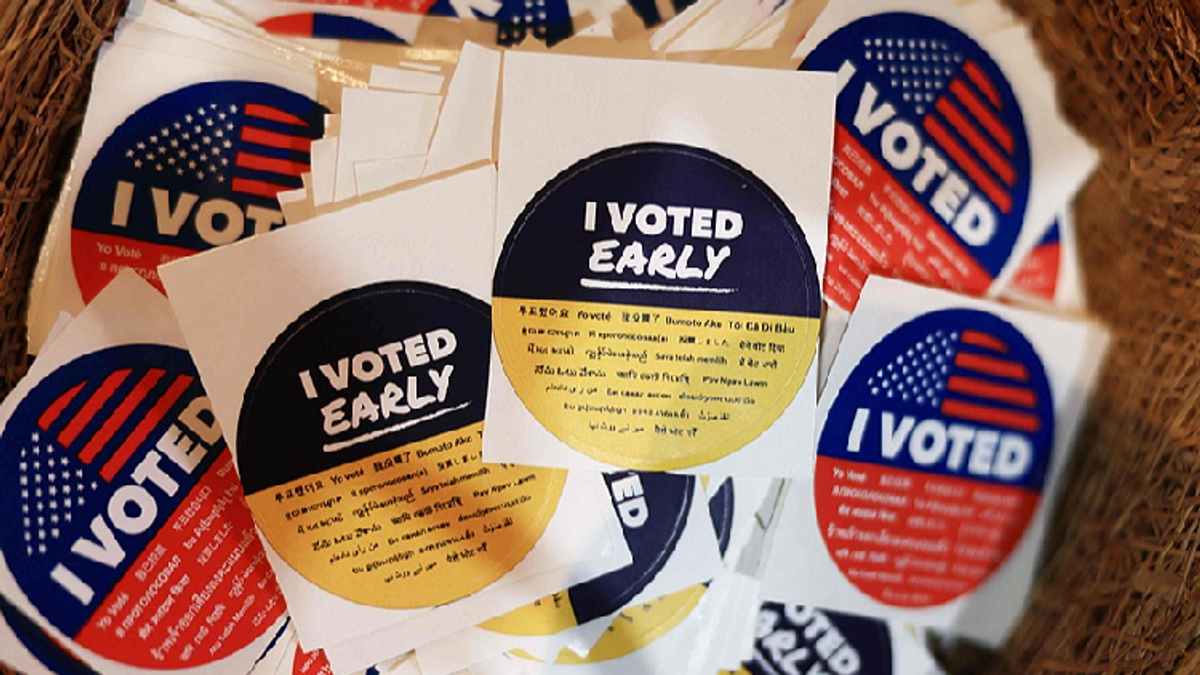
Americans headed to the polls in early November 2026 to choose all 435 members of the House of Representatives, 35 of the 100 Senate seats, and governors in 36 states. Early voting already topped 50 million, about eight million more than the same point in 2022, signaling heightened public engagement. The Republican Party currently enjoys a trifecta—control of the White House, the House, and the Senate—but a shift in either chamber could force the administration to recalibrate its domestic agenda and, crucially, its stance on foreign affairs.
The midterm contest is less a simple partisan duel than a convergence of institutional incentives, campaign finance structures, and electoral math. Incumbency remains a potent force: of the 35 Senate seats up for grabs, Republicans defend 22, giving them a structural edge. Yet the generic ballot shows a nine‑point advantage for Democrats, a gap that translates into a strategic calculus for both parties. Republicans must not only defend vulnerable seats in swing states like Georgia and North Carolina but also flip a handful of Democratic strongholds to preserve their legislative agenda.
Campaign financing amplifies the power imbalance. The Federal Election Commission still permits unlimited contributions to super‑PACs, allowing wealthy donors and corporate interests to pour millions into targeted races. In battleground states, dark money groups fund attack ads that focus on cultural flashpoints—abortion, immigration, and gun rights—rather than policy substance. This tactic nudges candidates toward ideological purity tests that satisfy donor bases while sidelining moderate voices.
At the same time, the Senate’s procedural rules—filibuster thresholds, committee chair assignments, and the Vice President’s tie‑breaking vote—create high‑stakes incentives for both sides. A Democratic majority would erode the Trump‑aligned agenda on tax cuts, deregulation, and defense spending, potentially reopening debates on aid to Ukraine and climate commitments. Conversely, a continued Republican hold could cement a more isolationist posture, limiting congressional oversight of executive foreign‑policy moves.
State‑level contests also matter. Governors control Medicaid expansion, education funding, and election administration. In states like Texas and Florida, where redistricting battles loom, gubernatorial outcomes will shape the next round of congressional maps, entrenching or dismantling partisan advantages for a decade.
- Voter fatigue and disenfranchisement
Rural precincts in the Midwest report long lines, limited polling places, and reduced early‑voting hours. Communities already grappling with declining public services find the logistical burden of voting an added strain.
- Economic uncertainty for workers
Industries tied to federal contracts—defense manufacturers in the South, renewable‑energy firms in the Pacific Northwest—watch the Senate balance closely. A shift toward Democratic control could revive green‑energy subsidies, while a Republican sweep might preserve defense spending but stall climate‑related job growth.
- Social services at risk
Medicaid expansion and SNAP benefits depend on congressional appropriations. In states like Kansas and Iowa, where poverty rates hover above the national average, a partisan swing could mean the difference between expanded coverage or tightened eligibility.
Farmers in the Great Plains often feel ignored by Capitol politics. The 2026 races in Kansas and Iowa pit long‑standing agricultural interests against candidates promising infrastructure investment. Yet campaign rhetoric rarely addresses the rising cost of fertilizer, drought‑related losses, or the impact of trade tariffs on grain exports.
Cities such as Detroit and Atlanta are watching Senate contests that could reshape federal policing grants. A Democratic win may channel more resources into community‑based programs, while a Republican majority could prioritize federal law‑enforcement funding, influencing local budget allocations and public safety outcomes.
Mainstream coverage emphasizes candidate personalities and poll numbers, but several layers of the power equation remain under‑reported.
- Corporate lobbying’s quiet hand
Energy conglomerates, tech giants, and defense contractors have intensified lobbying efforts ahead of the midterms, funneling millions into issue‑specific ads that obscure the broader policy stakes. Their messaging often frames the election as a cultural war, deflecting attention from legislation that would directly affect their profit margins.
- Foreign influence via digital platforms
While the United States has tightened regulations on foreign political advertising, sophisticated bot networks continue to amplify divisive content on social media. These operations aim to depress turnout among demographic groups likely to support Democrats, subtly tilting the electoral balance.
- The cost of redistricting wars
The article mentions gubernatorial races but glosses over the fact that many states will redraw congressional districts after the 2026 Census. The party that controls state legislatures can engineer maps that lock in advantages for a generation, a process known as gerrymandering. Voters rarely see how a governor’s race can set the stage for future congressional dominance.
By casting the midterms as a pure referendum on the Trump administration, outlets downplay the fact that congressional control determines budget allocations for everything from school lunches to infrastructure repair. The narrative reduces complex policy battles to a single‑issue popularity contest.
Federal budget negotiations are set to begin shortly after the election. If Democrats gain a Senate majority, the likelihood of a more expansive fiscal stimulus rises, potentially increasing the national debt. Conversely, a Republican hold could tighten spending, affecting social‑service programs that millions rely on. This fiscal tug‑of‑war is rarely explained to voters who focus on candidate charisma.
- Senate swing states: Keep an eye on Georgia, North Carolina, and Michigan where candidate quality and fundraising gaps could tip the balance.
- Redistricting timelines: State legislatures will begin the post‑census map‑drawing process in early 2027; early victories in gubernatorial races may signal which party will control that process.
- Foreign‑linked disinformation spikes: Monitor social‑media trends for coordinated narratives that emerge in the final weeks, especially those targeting minority voters.
- Budget negotiations: The first congressional session after the election will reveal whether the new majority pushes for a large stimulus package or a austerity agenda, directly impacting public services.
- Voter turnout patterns: Early‑voting data suggests higher participation among younger voters; however, turnout among low‑income and minority groups remains volatile. Shifts in these demographics could be decisive.
Staying attuned to these dynamics will help ordinary citizens understand how the 2026 midterms shape not just who sits in Washington, but how power translates into everyday realities across the United States.
The contests in Georgia, North Carolina, Michigan, and Kansas are closely watched because they feature competitive incumbents, high fundraising, and potential swing voters that could tip the Senate balance.
State legislatures will redraw congressional districts, and the party controlling each legislature can craft maps that favor its candidates, influencing House composition for the next decade.
Corporations pour money into super‑PACs and issue ads, shaping voter perceptions on cultural issues while keeping attention away from policy changes that could affect their profits.
Source referenced: CGTN
This brief was synthesized by our Editorial Engine and reviewed by The Ground Narrative team.