TRENDING

Wednesday, 4 November 2026
----------------------
24 Jumada Al-Awwal 1448 AH
An opposition party organizer was killed in South Africa's KwaZulu-Natal province, fueling fears of political violence before local elections. This incident is part of a broader pattern of politically motivated murders in the region.
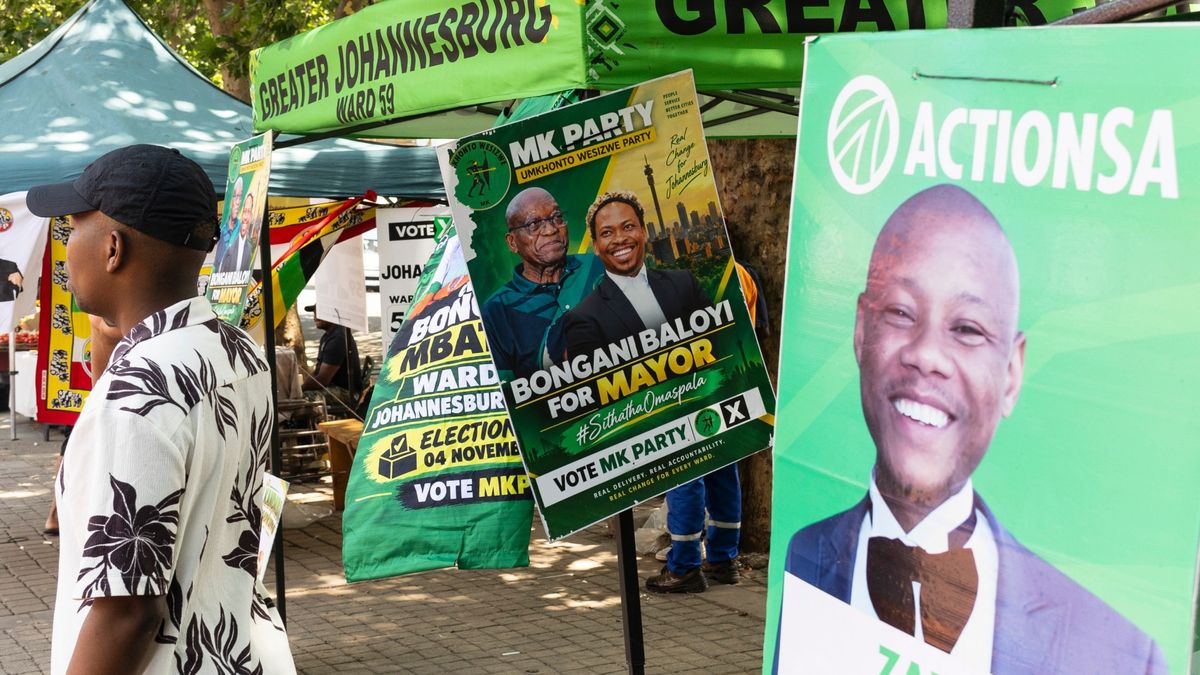
Lastborn Shazi, an organizer for the opposition uMkhonto weSizwe Party (MKP), was shot dead at his home in South Africa's KwaZulu-Natal province while coordinating election campaigns via a Zoom call. The murder, which occurred just days before crucial local government elections, has intensified concerns about political violence in the region. Police have launched a murder investigation, noting that this incident is one of at least 20 politically linked killings recorded during the current municipal election period. In response to the escalating tensions, President Cyril Ramaphosa ordered the deployment of over 500 soldiers to KwaZulu-Natal to support police efforts, identifying more than 165 polling stations as high-risk areas.
The killing of Lastborn Shazi is not an isolated act but a stark symptom of the fierce struggle for power unfolding in South Africa, particularly in KwaZulu-Natal. The ruling African National Congress (ANC), which has dominated the political landscape since the end of apartheid, is facing unprecedented challenges to its authority. After losing its parliamentary majority in the 2024 national elections and being forced into a unity government, the ANC's grip on power is visibly weakening at all levels.
Local government elections, often overlooked by international observers, are critical battlegrounds. They determine who controls municipal budgets, service delivery contracts, and local patronage networks – resources that translate directly into jobs, influence, and economic survival for many. In a country grappling with high unemployment and inequality, control over these local levers of power is immensely valuable, making the stakes incredibly high.
The MKP, led by former President Jacob Zuma, represents a significant challenge to the ANC's hegemony, especially in KwaZulu-Natal, Zuma's home province. The party's rapid rise, fueled by Zuma's enduring popularity among certain segments of the population and disillusionment with the ANC's performance, has eroded the ruling party's support base. Polls project the MKP could emerge as the largest party in the closely contested eThekwini metropolitan area, the economic heart of KwaZulu-Natal, potentially displacing the ANC from a crucial stronghold.
KwaZulu-Natal itself has a deeply troubled history of political violence, particularly during the transition to democracy in the late 1980s and early 1990s, when clashes between the ANC and the Inkatha Freedom Party (IFP) claimed thousands of lives. While the context has changed, the underlying dynamics of intense political rivalry, often intertwined with ethnic and regional identities, persist. The deployment of soldiers underscores the state's recognition of the severity of the situation and the potential for further destabilization. It also highlights a potential weakness in the capacity of civilian law enforcement to manage politically charged unrest, necessitating military intervention to uphold order and secure the electoral process.
The most immediate and tragic human cost of this escalating political violence is borne by individuals like Lastborn Shazi and the 19 other victims whose lives have been cut short. These are not just statistics; they are community members, family providers, and active citizens whose participation in the democratic process has cost them everything. Their deaths send a chilling message to others who might consider engaging in political activism, creating an environment of fear and intimidation that undermines the very foundation of free and fair elections.
Beyond the direct casualties, the pervasive threat of violence casts a long shadow over the entire electorate. When political organizers are targeted, ordinary citizens become wary of attending rallies, expressing their views, or even going to the polls. This fear can lead to reduced voter turnout, particularly in high-risk areas, thereby distorting the democratic will and disenfranchising communities already marginalized. The act of voting, a fundamental right, transforms into a risky endeavor, forcing citizens to weigh their civic duty against their personal safety.
For residents in KwaZulu-Natal, the political instability translates into tangible disruptions to daily life. Essential municipal services, which are the purview of local governments, can suffer when political transitions are violent or contested. Water supply, sanitation, and waste collection — basic necessities that impact public health and quality of life — become vulnerable to administrative paralysis or corruption in a volatile political climate. Moreover, the repeated failure to ensure the safety of political actors and citizens erodes public trust in state institutions, including the police and the electoral commission. When justice for political killings is perceived as elusive, it fosters a sense of impunity among perpetrators and deepens cynicism among the populace, further weakening the social contract between the government and its people.
Political violence also carries a significant economic toll. Uncertainty and instability deter investment, both local and foreign, in affected regions. Businesses may delay expansion plans, or even relocate, leading to job losses and diminished economic opportunities for communities already struggling. The focus shifts from development and growth to security and crisis management, diverting resources and attention from critical social and economic challenges that directly impact the livelihoods of millions of South Africans.
Official statements surrounding the killing of Lastborn Shazi and the broader pattern of political violence tend to focus on law enforcement responses:
KwaZulu-Natal has a history of intense political rivalries, dating back to the apartheid era. The province is also a critical battleground for control over local government resources and patronage networks, making local elections highly contested and prone to violence.
The MKP, led by former President Jacob Zuma, is a relatively new opposition party that has rapidly gained support, particularly in KwaZulu-Natal. Its rise challenges the long-standing dominance of the African National Congress (ANC) and could significantly alter the provincial political landscape.
Political violence directly impacts citizens through fear and intimidation, potentially reducing voter participation and eroding trust in democratic institutions. It can also disrupt essential municipal services and deter economic investment, affecting the daily lives and livelihoods of communities.
Editor's Note: Analysis draws on provided facts and contextual understanding of South African political history and power dynamics, particularly the role of local government in patronage networks.
Source referenced: ALJAZEERA
This brief was synthesized by our Editorial Engine and reviewed by The Ground Narrative team.


