TRENDING

Friday, 16 October 2026
----------------------
5 Jumada Al-Awwal 1448 AH
The 2026 World Cup final between Spain and Argentina has significant geopolitical implications, reflecting shifting global power dynamics and cultural exchange.
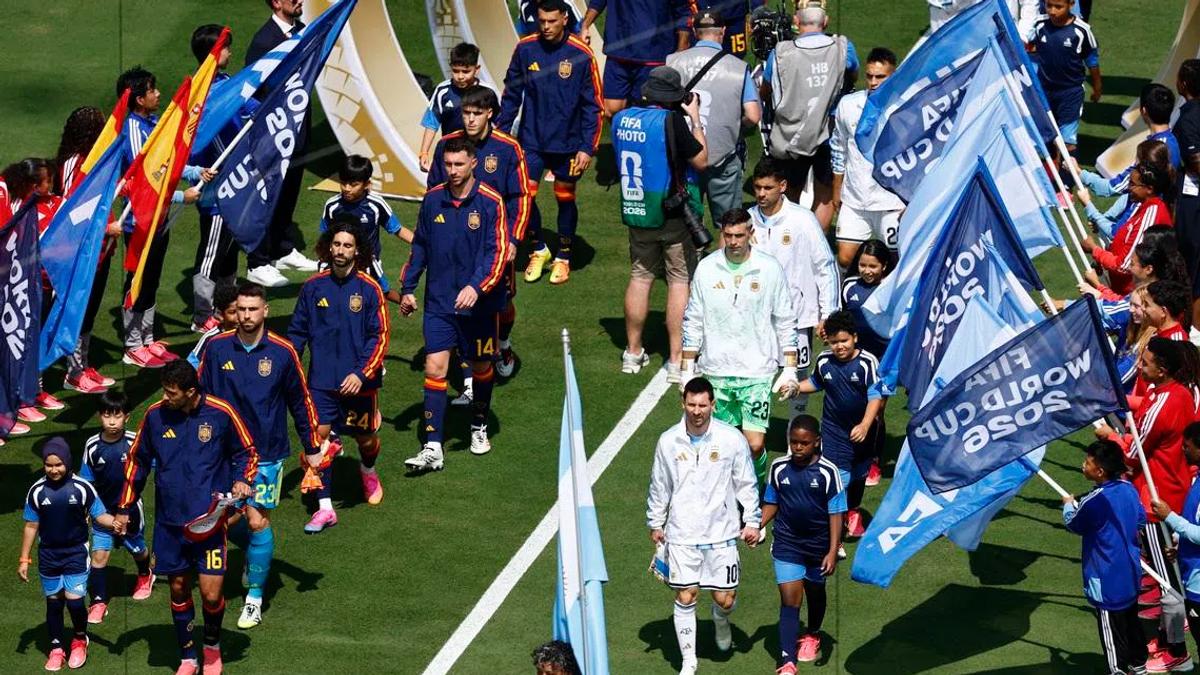
The 2026 World Cup final between Spain and Argentina marks a culmination of nearly six weeks of intense competition, showcasing the world's best soccer talent. Beyond the excitement of the game, this event holds significant geopolitical implications, reflecting shifting global power dynamics and cultural exchange.
The World Cup has a rich history, dating back to 1930. This year's final features two Spanish-speaking teams, a first since the inaugural tournament. The adoption of American traditions, such as "hydration" breaks and championship rings, has sparked controversy. However, these changes also highlight the increasing influence of the United States in global sports and cultural events.
The attendance of U.S. President Donald Trump at the match adds an extra layer of security and geopolitical significance. The presence of high-profile celebrities like Post Malone, Tom Cruise, Jennifer Hudson, and Shakira underscores the event's cultural and economic importance. The halftime show, featuring Madonna and Shakira, is expected to expand the usual break to at least 20 minutes, potentially as much as half an hour. This shift reflects the growing commercialization of sports events and the increasing role of entertainment in global diplomacy.
The World Cup final has regional implications, particularly in the Americas. The presence of two Spanish-speaking teams in the final highlights the growing influence of Latin American nations in global sports and politics. The event also underscores the complex relationships between the United States, Spain, and Argentina, reflecting historical ties, cultural exchange, and economic interests.
The 2026 World Cup final has significant future consequences, reflecting shifting global power dynamics and cultural exchange. The increasing influence of the United States in global sports and cultural events will continue to shape international relations and global governance. The adoption of American traditions in the World Cup highlights the need for a more nuanced understanding of cultural exchange and its implications for global politics.
The 2026 World Cup final between Spain and Argentina is more than just a sporting event; it reflects shifting global power dynamics, cultural exchange, and the increasing influence of the United States in global sports and cultural events. As the world watches this epic showdown, it is essential to consider the geopolitical implications and strategic motivations behind this event.
Editor's Note: The analysis is based on publicly available information and does not reflect any confidential or classified sources.
Source referenced: STRAITSTIMES
This brief was synthesized by our Editorial Engine and reviewed by The Ground Narrative team.